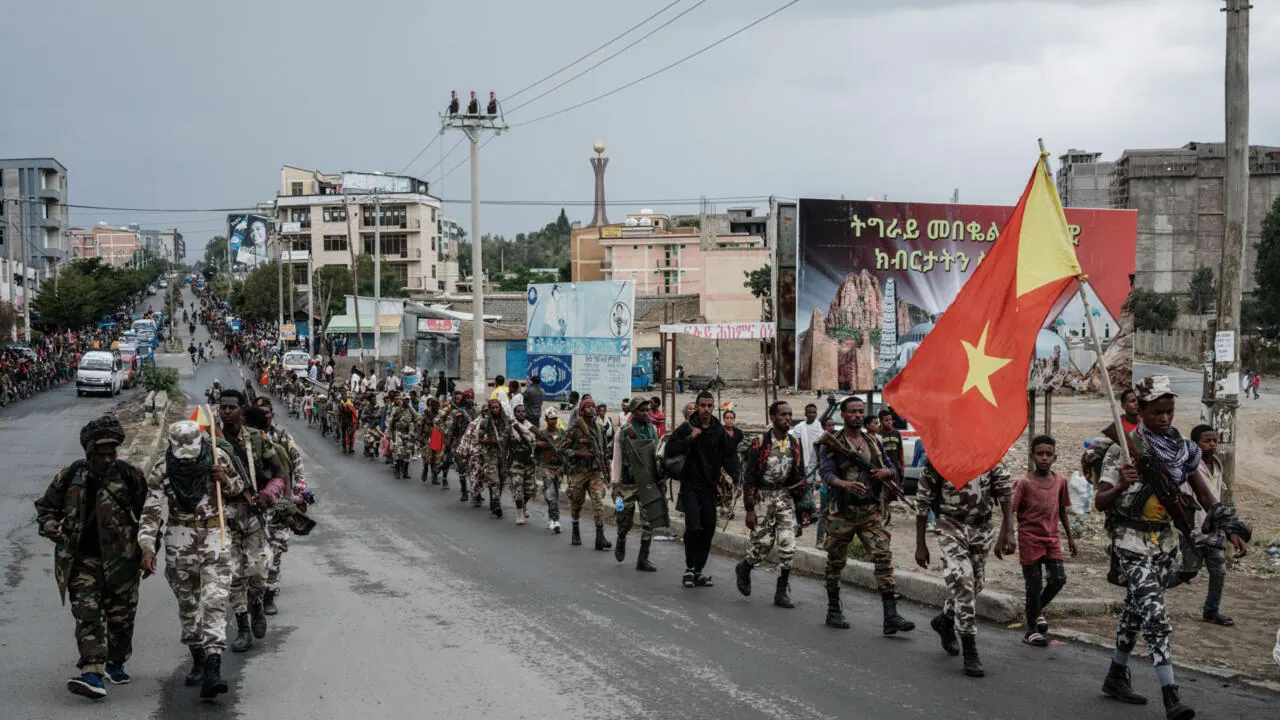
Ethiopia's army commander, Field Marshal Birhanu Jula, has accused Eritrea and Sudan of backing armed groups fighting federal troops in the north of the country. The accusations come as heavy clashes have resumed between the Tigray People's Liberation Front (TPLF) and the federal government since Wednesday. The TPLF has seized airports and launched attacks into neighboring states, saying they are engaged in a "defensive war" against the government of Prime Minister Abiy Ahmed.
The conflict has resulted in significant displacement, with at least 150,000 people displaced in Afar, according to a humanitarian source. The source also reported that the Afar town of Erebti, near the border with Tigray, fell to the rebels on Sunday after being pounded by heavy artillery. The TPLF is now advancing towards the town of Afdeera, some 100 kilometers to the east. The situation is raising fears of a return to the 2020-2022 civil war, which resulted in an estimated 600,000 deaths.
The TPLF has allied with seven armed groups around the country and appears to be repeating a strategy from the last war of pushing south through Amhara towards Addis Ababa. Its offensive in Afar is aimed at cutting supplies from Djibouti, which provides almost all of Ethiopia's international trade cargo, including fuel. The federal government has a significant military advantage, with a large arsenal of drones, some 500,000 troops, and support from abroad, notably the United Arab Emirates.
The conflict has also affected media outlets, with the headquarters of Tigrai TV, seen as the key outlet for the rebel authorities in the Tigrayan capital, Mekelle, being hit by a drone on Sunday. A journalist from the station reported that they heard a loud bang from a drone strike and fled the building. Photos showed the building's facade damaged and blackened, with numerous windows blown out by the explosion.
Communications have been limited since Friday, when telecoms providers reported major disruption to phone and internet services in Tigray, making reporting on the conflict difficult. Many in Tigray fear a repeat of a blockade imposed by the federal government during the 2020-2022 conflict, when electricity, banking, and almost all aid were cut off. United Nations chief Antonio Guterres raised the alarm on Friday, his spokesman saying Guterres was "particularly troubled by reports of the use of drones as well as incidents of harm to civilians".
The conflict could draw in neighboring Eritrea on the side of the rebels, as it fears landlocked Ethiopia has been planning to invade and seize a direct point of access to the Red Sea. Eritrea's President Isaias Afwerki has maintained a close relationship with the TPLF, and there are concerns that Eritrea may provide military support to the rebels. Sudan has also been accused of supporting the TPLF, although the Sudanese government has denied these allegations.
The international community is watching the situation closely, with the United Nations and other organizations calling for restraint and a negotiated solution to the conflict. The Pretoria Peace Agreement of 2022, brokered by African institutions and Washington, maintained an uneasy calm until last year, but it was never fully implemented, leaving around one million people unable to return to their homes. The current conflict has raised concerns about the humanitarian situation in Tigray and the potential for further escalation.
Key points
- Ethiopia's army chief accuses Eritrea and Sudan of backing Tigray rebels.
- Clashes between TPLF and federal government intensify, raising fears of civil war.
- Humanitarian situation in Tigray deteriorates, with significant displacement and disruption to services.