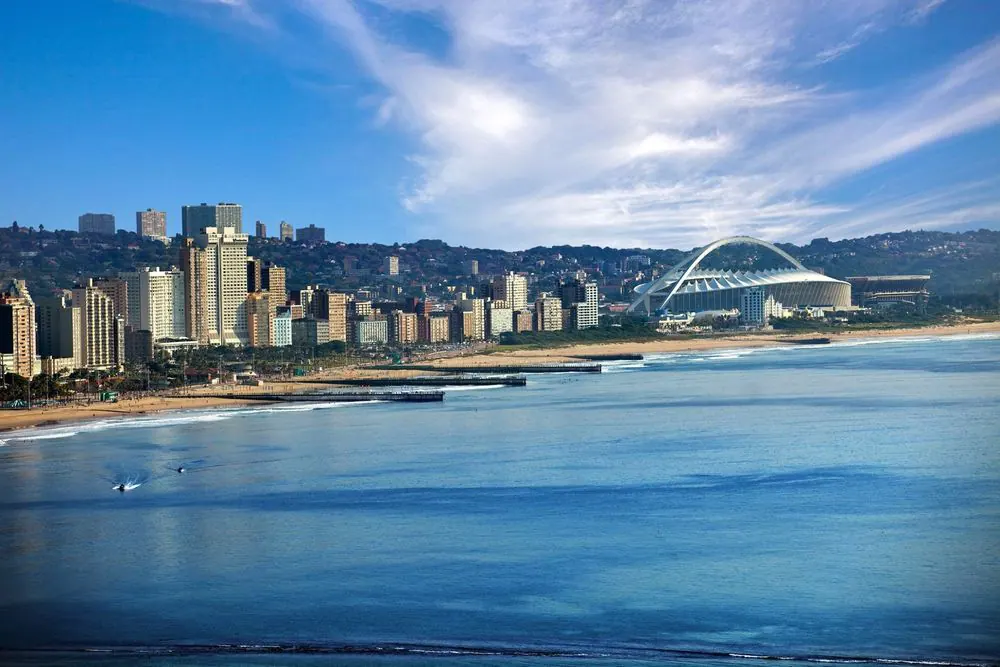
eThekwini Municipality, located in South Africa, is facing a significant jobs crisis, with a labour underutilisation measure of 37.8%, according to Statistics SA. This revised indicator documents not only unemployment but also the number of people who are discouraged work-seekers, capable of working but have given up hope of finding suitable employment. The municipality's poor infrastructure and municipal failure have contributed to this crisis, despite its formidable tourism advantage, including a breathtaking coastline, warm waters, and abundant natural assets.
In contrast, the City of Cape Town has managed to capitalise on tourism, becoming a world-renowned destination. This success is attributed to years of stable, clean governance focused on infrastructure development and strategic marketing through agencies such as WesGro. The city's investment in maintaining its infrastructure and investing in new infrastructure has led to further investment and flourishing business, revitalising precincts and attracting visitors.
eThekwini has at least the same if not more tourism potential as Cape Town, but it is not reaching its full potential. One key indicator of a functioning municipality is Blue Flag status, which demonstrates a city's ability to manage its water quality. Cape Town currently boasts eight Blue Flag beaches for the 2025/26 season, while eThekwini has none. This is significant, as tourism is one of the easiest ways to turn natural assets into jobs in a province like KwaZulu-Natal.
The tourism economy in Cape Town generated approximately R24.5 billion in direct tourism spending in 2025 and sustained more than 106,000 jobs. Its airport handled 11.1 million two-way passengers during the year, including 3.3 million international passengers. The 2024/25 cruise season brought 83 liners to Cape Town, including 11 inaugural visits. This success is not a happy accident, but rather the result of intentional investment in working, functional, and resilient infrastructure.
Cape Town is investing billions in bulk sewer upgrades and sewer-spill reduction, committing to replacing or rehabilitating around 100 kilometres of sewer pipeline annually. The city uses digital telemetry for early warnings at pump stations and has dedicated sewer-spill response teams. In 2025/26 alone, approximately R92 million was allocated to sewer cleaning, with a target of cleaning 300 kilometres of sewer lines.
eThekwini Municipality itself has acknowledged the impediments to tourism, including "crime and grime" and the need for investment in infrastructure, as identified in its 2025/26 Spatial Development Framework. For KwaZulu-Natal to succeed, eThekwini needs to be fixed. The municipality's loss of all its Blue Flag beach status has devastated the tourism sector, but all is not lost, as eThekwini holds amazing potential if local government and infrastructure work again.
The voters of KwaZulu-Natal's only Metro are the key to making this happen when they go to the polls in the Local Government Elections on 4 November. The opinion piece was written by Hannah Lidgett, MPL and DA KZN spokesperson on Economic Development, Tourism and Environmental Affairs, and is based on a debate delivered in the KwaZulu-Natal Legislature on September 17, 2026.
Key points
- eThekwini Municipality's labour underutilisation measure is at 37.8%, significantly higher than the City of Cape Town's 24.3%.
- Cape Town's tourism economy generated approximately R24.5 billion in direct tourism spending in 2025 and sustained more than 106,000 jobs.
- eThekwini Municipality has lost all its Blue Flag beach status, devastating the tourism sector.