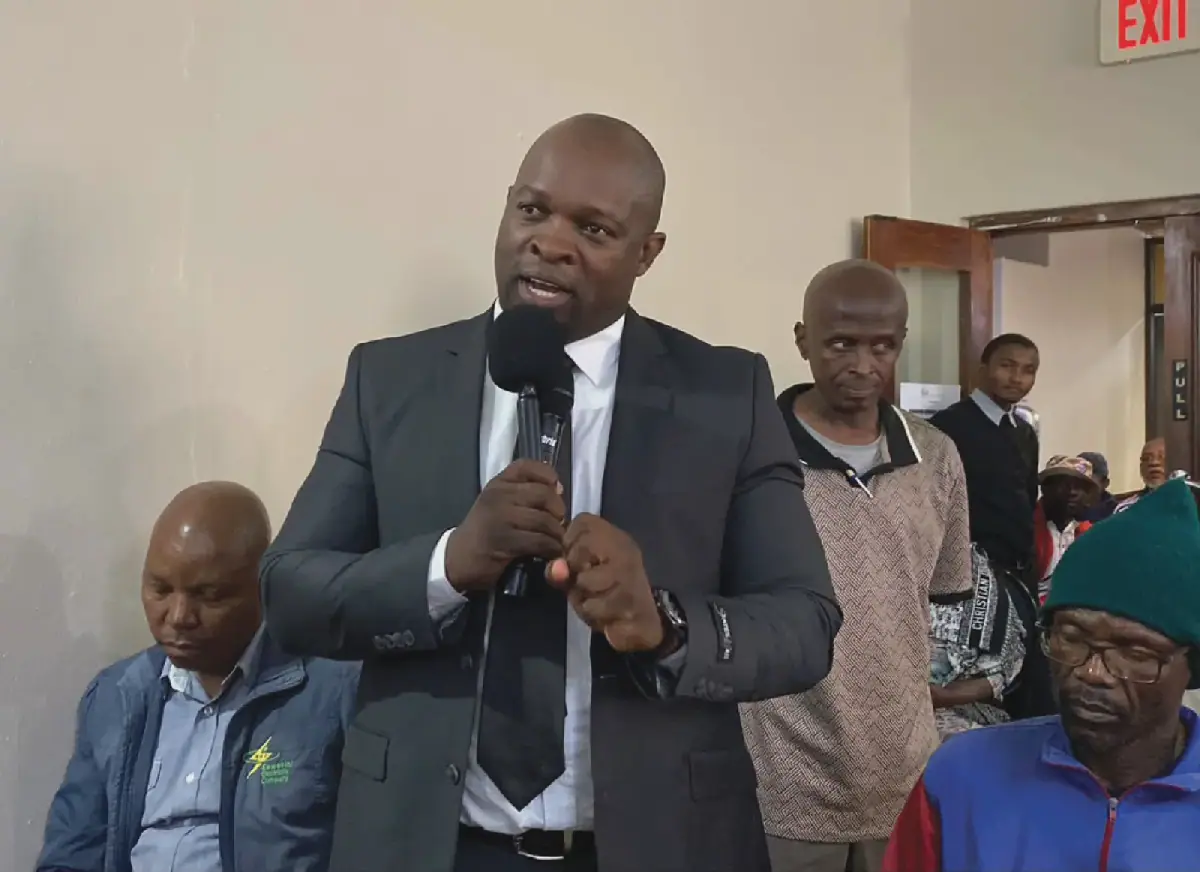
Civil society representatives and trade union leaders in the Manzini region of Eswatini have rejected proposed electricity tariff increases. They argue that households are already struggling with low wages, unemployment, and higher bus fares, and cannot afford two successive years of increases. The Eswatini Energy Regulatory Authority (ESERA) hearing at The George Hotel was attended by various stakeholders, including the Swaziland National Association of Teachers (SNAT), which called for a zero increase and warned of potential protests if the hikes went ahead.
The Eswatini Electricity Company (EEC) is seeking an average tariff increase of 18.38% for the 2027/28 financial year and a further 14.68% for 2028/29. The proposed increases exclude the 2.5% Electrification Access Fund levy and 15% VAT. EEC cited the cost of purchasing bulk electricity, much of it imported, and the recovery of past revenue shortfalls as reasons for its application. SNAT President Sikelela Dlamini stated that some workers earned as little as E2 000 a month and had little room in their budgets for another increase.
SNAT President Sikelela Dlamini warned that if the increases went ahead, workers would take to the streets in protest. He stated that workers had submitted a position paper during the previous round of consultations and were still waiting for a response. Dlamini also urged the government, as the owner of EEC, to step in financially to ease the pressure on consumers. He questioned whether the regulator's record of granting smaller increases than what EEC had requested offered much reassurance to consumers who were already struggling to pay for electricity.
SNAT Secretary General Lot Vilakati stated that civil servants had received a zero percent cost-of-living adjustment, while commuters were already paying higher bus fares. He argued that an electricity increase would also affect unemployed people and pensioners, whose budgets were already stretched. Vilakati urged EEC to explore sourcing cheaper equipment from mainland China. Dlamini raised concerns about relying on independent power producers, saying their need to make a profit could put further pressure on the prices consumers were paying.
Other participants at the hearing, including Fire Ngwenya, called for immediate government intervention alongside medium- and long-term measures to reduce the country's reliance on imported electricity. Ngwenya urged ESERA to engage government on funding, saying households and businesses should be considered separately when tariff options were drawn up. He also pressed for more domestic generation, asking, "Why can we not generate our own electricity?"
ESERA has stated that EEC's application would be subjected to independent scrutiny before it makes a decision. The regulator has also stated that claims to recover past revenue shortfalls must be backed by verified financial information and assessed against the regulatory framework. ESERA Chief Executive Officer Sikhumbuzo Tsabedze said the regulator would verify the financial information and determine which costs were prudent, necessary, and eligible for recovery.
The proposed increases have sparked concerns among stakeholders, with some questioning whether EEC had a turnaround plan and how much it would cost to implement without placing a further burden on consumers. Sakhile Nxumalo asked how much EEC needed to turn its finances around and what would prevent it from seeking further increases after the two years. ESERA's Tsabedze defended the public hearings, stating that the regulator would independently scrutinize EEC's application and consider public submissions before deciding how much the utility could recover from consumers.
Key points
- Eswatini workers reject proposed electricity tariff increases due to low wages and unemployment.
- The Eswatini Electricity Company seeks an average tariff increase of 18.38% for 2027/28 and 14.68% for 2028/29.
- The Eswatini Energy Regulatory Authority will independently scrutinize EEC's application and consider public submissions before making a decision.
Reporting sources
- Workers reject power hike, threaten protest · Swazi Observer