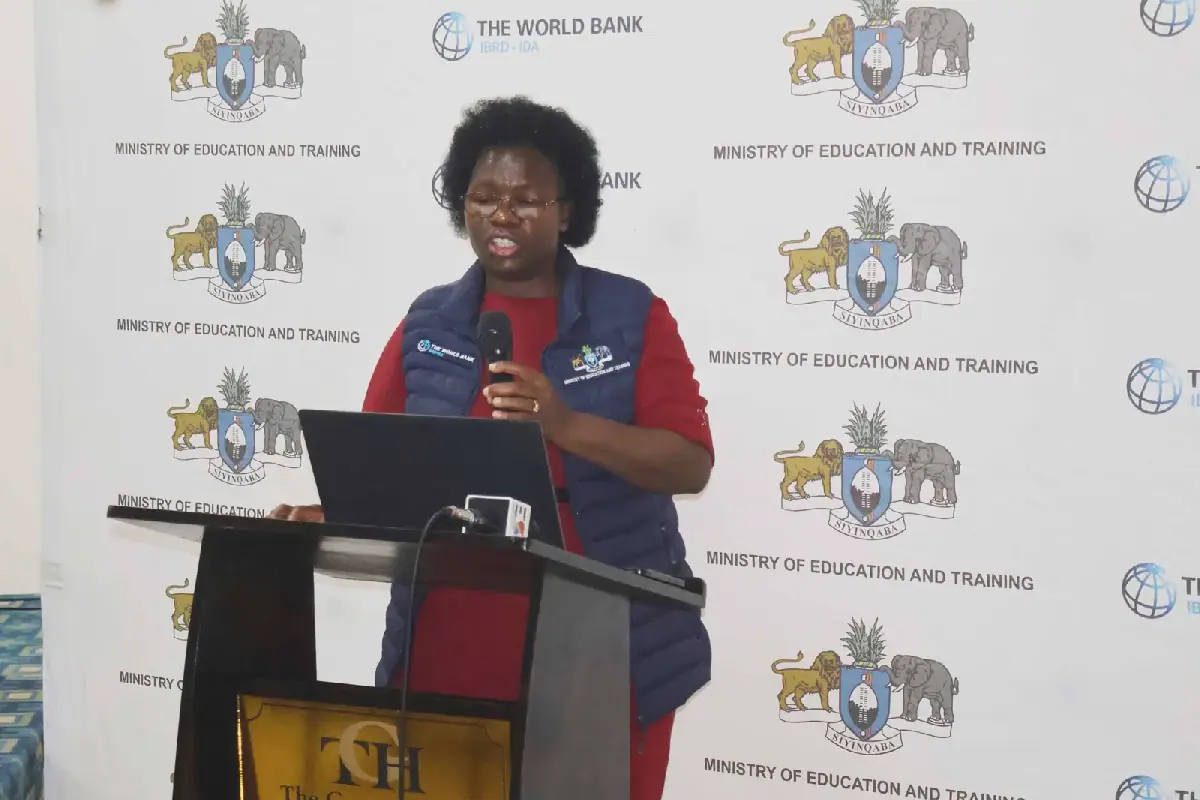
The Ministry of Education and Training in Eswatini is set to introduce technology-driven classroom learning in 160 secondary and high schools across the country. This move aims to improve performance in Mathematics and Science by introducing interactive lessons that encourage participation, collaboration, critical thinking, and practical problem-solving. The initiative, which is being implemented under the World Bank-funded Strengthening Basic Education Support to Human Capital Development in Eswatini project, seeks to address persistent concerns over learners' performance in these subjects.
The nationwide expansion of the Progressive Mathematics Initiative and Progressive Science Initiative (PMI/PSI) is expected to transform classroom instruction and strengthen the country's education system. According to Chief Inspector of Secondary Education Phumlile Dlamini, national examination data and education sector analyses have repeatedly pointed to poor performance in foundational and junior secondary Mathematics and Science as a persistent challenge requiring deliberate intervention. The Chief Inspector described the expansion as a major step towards improving learners' performance in these subjects.
The PMI/PSI model places learners at the centre of the learning process, incorporating interactive touch screens, digital polling devices, and structured social-constructivist teaching methods. This approach allows learners to work together, exchange ideas, and solve problems during lessons. Teachers are expected to assume a more facilitative role, guiding learners through challenging concepts instead of simply providing answers. The model also enables teachers to identify misconceptions and areas of difficulty immediately through live formative assessments.
The experience from the initial project schools has been encouraging, with measurable improvements reported in teachers' subject-matter mastery and increased confidence among learners. There has also been stronger classroom engagement among both boys and girls, while the general learning environment has begun to shift from one in which Mathematics and Science were approached with fear to one characterised by curiosity and active participation. These developments informed the Ministry's decision to expand the initiative to 160 schools.
The expansion aims to address concerns over persistent gender gaps in STEM pass rates, emphasising the need for classroom practices that give both boys and girls equal opportunities to participate, develop confidence, and excel. The Chief Inspector stressed that the success of the expansion would not depend on the technology alone but also on how schools were managed and how effectively those entrusted with leadership responsibilities supported the programme.
A sensitisation workshop was held at The George Hotel in Manzini to prepare Head Teachers and School Committee Chairpersons from the Lubombo and Manzini regions for their responsibilities in implementing the initiative. The workshop brought together stakeholders to discuss the programme's goals, implementation, and expected outcomes. The Ministry expects both Head Teachers and School Committee Chairpersons to play a crucial role in supporting the programme.
The introduction of technology-driven Maths and Science learning in 160 schools is expected to have a positive impact on learners' performance and interest in these subjects. The programme's success will be closely monitored, and its outcomes are expected to inform future education initiatives in Eswatini. The Ministry's efforts to improve education in the country are ongoing, with a focus on providing learners with the skills and knowledge needed to succeed in an increasingly demanding labour market.
Key points
- The initiative aims to improve performance in Maths and Science by introducing interactive lessons that encourage participation, collaboration, critical thinking, and practical problem-solving.
- The programme's expansion to 160 schools is expected to address persistent concerns over learners' performance in Maths and Science.
- The success of the expansion will depend on the technology and effective support from school leaders and management.
Reporting sources
- 160 schools to get technology boost in Maths, Science · Times of Swaziland