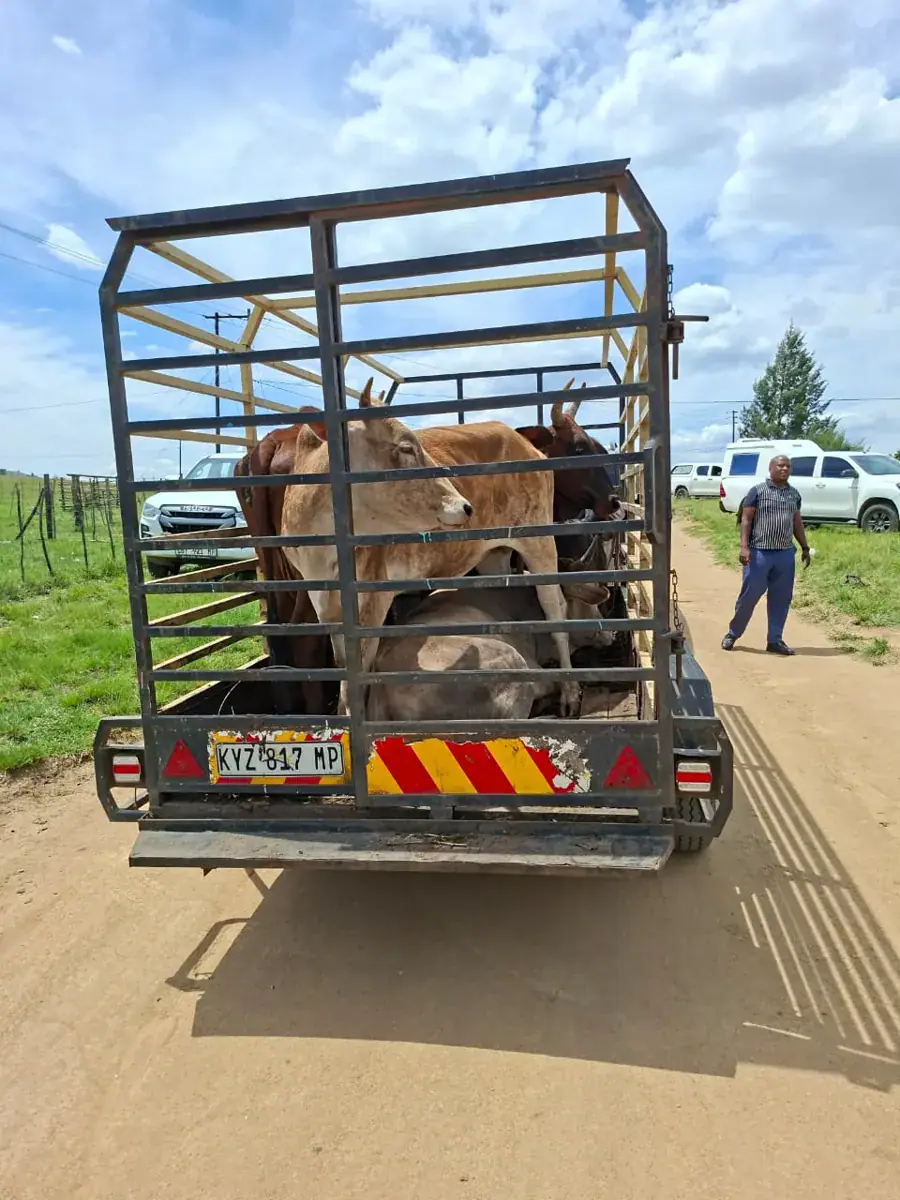
A recent joint operation between the Royal Eswatini Police Service (REPS) and the South African Police Service (SAPS) has exposed the vulnerabilities of Eswatini's porous borders in combating stock theft. The operation, which took place from November 15 to 21, 2026, resulted in the recovery of 17 stolen cattle. The joint teams targeted stock theft hotspots along the common border between the two countries, aiming to combat escalating incidents of stock theft.
The operation was intelligence-led and identified the vast and porous nature of the border as a major challenge in effectively patrolling and monitoring livestock movement. According to Assistant National Commissioner of Police (ANCP) Thabo Hlophe, who led the REPS team, the operation resulted in the recovery of eight cattle stolen from Eswatini, found in the Ndonga area in South Africa, and nine cattle stolen from South Africa, recovered at the Emahangeni area in Eswatini.
The recoveries bring to light the cross-border dimension of stock theft and the importance of cooperation between law enforcement agencies. The eight cattle recovered at Ndonga were booked into a pound in Ermelo, South Africa, pending further investigations and identification by their rightful owners. Meanwhile, the nine cattle recovered at Emahangeni were verified and repatriated to South Africa before being handed over to their rightful owners through SAPS.
The joint operation covered several identified stock theft hotspots along the border, including Ndonga, Mayflower, Fernie, Amsterdam, and Piet Retief. The teams also inspected public livestock auctions in Belfast, Ermelo, Witbank, and Standerton to establish whether stolen animals were being traded. Members of the two police services carried out roadblocks, foot patrols, farm visits, kraal inspections, and auction inspections throughout the seven-day operation.
The operation encountered several challenges, including livestock found without clear brand marks, making identification difficult. Delays in verifying livestock ownership due to communication challenges between the two countries also hindered the process. These challenges, coupled with the extensive and porous border, complicate efforts to prevent stolen livestock from being moved across the two countries.
This is not an isolated incident, as previous reports have highlighted the extent of stock theft and the role played by Eswatini's porous borders in facilitating the movement of stolen livestock. In January 2026, the Umbutfo Eswatini Defence Force (UEDF) intercepted 35 stolen goats being transported towards the border at Goboyane in the Lubombo Region.
The latest operation has prompted recommendations for regular bilateral operations, preferably at least once every quarter, and the establishment of a more effective system to verify livestock ownership and track stolen animals. The persistence of stock theft poses a significant threat to livestock farmers, particularly those living in communities close to the country's borders, and efforts to control animal diseases.
Key points
- Eswatini and South African police recovered 17 stolen cattle during a joint operation targeting stock theft hotspots along their porous border.
- The operation highlighted the challenges of policing the porous border and the importance of cooperation between law enforcement agencies.
- Recommendations have been made for regular bilateral operations and a more effective system to verify livestock ownership and track stolen animals.
Reporting sources
- Porous borders expose Eswatini to stock theft · Times of Swaziland