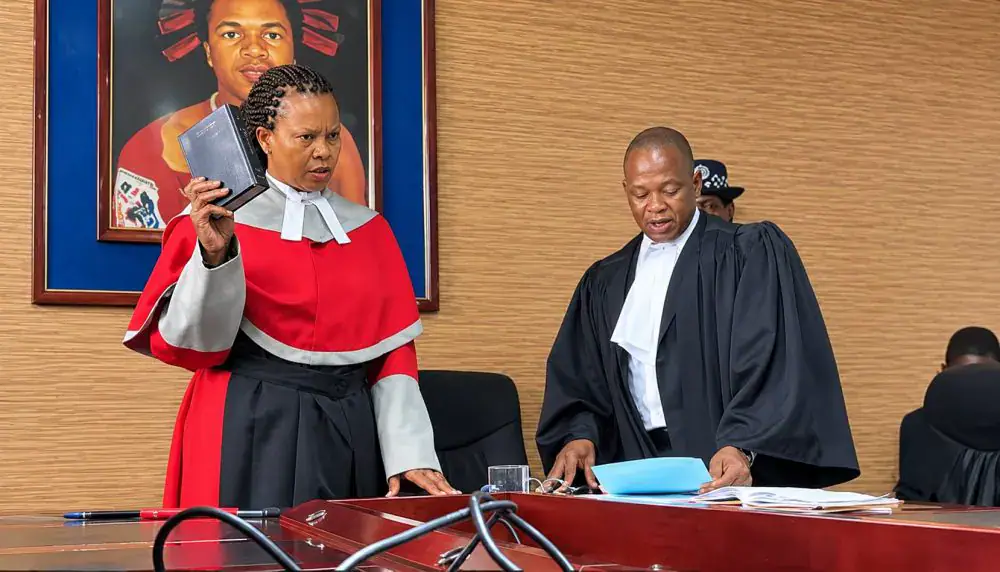
Acting Chief Justice Mumcy Dlamini has taken her first significant step in addressing the judicial backlog and institutional problems in Eswatini. Within five days of being sworn in on November 9, 2026, she issued a directive halting all non-fully sponsored trips for judges, registrars, and other Judiciary officials until further notice. This move aims to prioritize the use of limited public funds for court operations, case management systems, and staffing.
The directive comes amid substantial institutional problems, including a backlog of over 29,000 pending cases in crucial categories. These cases have been waiting for years, eroding faith in the legal system for families awaiting property dispute resolutions, civil claims, or criminal trials. The Judiciary, Ministry of Justice and Constitutional Affairs, the United Nations Development Programme, the African Commission on Human and Peoples' Rights, and the International Commission of Jurists have reported a system under tremendous pressure.
Chief Justice Dlamini's argument is that limited public money should be spent on courtrooms, case management systems, and staffing, not on trips. Exemptions will only be considered in compelling and extraordinary circumstances, following consultation with the Judicial Service Commission. Funds earmarked for trips will be diverted to the courts' main job, signaling a statement of priorities.
The problems in the Judiciary are multifaceted, including delayed judgments, pending referrals to the High Court, and numerous adjournments due to missing witnesses and expiry of contracts for acting judicial officers. Shortages of judges, magistrates, and crucial support staff, such as registrars, clerks, and estate examiners, further compound the burden. Judges and magistrates still share few courtrooms and operate in under-funded facilities.
Chief Justice Dlamini has over 20 years of expertise in the relevant field, having served as a director of public prosecutions, a magistrate, a High Court judge, and a regional judge. Her exposure to both prosecution and adjudication, as well as to the system's real restrictions, is valuable. The Law Society of Eswatini has shown its willingness to support efforts to re-establish trust, and gender equality advocates have asked for a fair and fearless administration of justice.
Lasting improvement will require more than the efforts of a single office; it will require sustained institutional support, realistic prioritizing, and political will to make difficult reforms. Female chief justices on the continent have demonstrated that strong leadership can make a difference, even in challenging circumstances. Examples include Aloysie Cyanzayire in Rwanda, Georgina Theodora Wood in Ghana, Martha Koome in Kenya, Meaza Ashenafi in Ethiopia, and Mandisa Maya in South Africa.
For the average liSwati, the test lies in answers to whether the Judiciary can address the backlog, improve case clearance rates, and provide a fair and fearless administration of justice. Chief Justice Dlamini's first big directive shows she is willing to put fiscal discipline and core operations ahead of lesser demands on the budget. The impact of her leadership and the support she receives will be crucial in determining the success of her reforms.
Key points
- Chief Justice Mumcy Dlamini issues directive to halt non-essential trips, diverting funds to court operations.
- Eswatini's Judiciary faces institutional problems, including a backlog of over 29,000 pending cases.
- Lasting improvement will require sustained institutional support, realistic prioritizing, and political will to make difficult reforms.
Reporting sources
- A hopeful first step for justice · Times of Swaziland