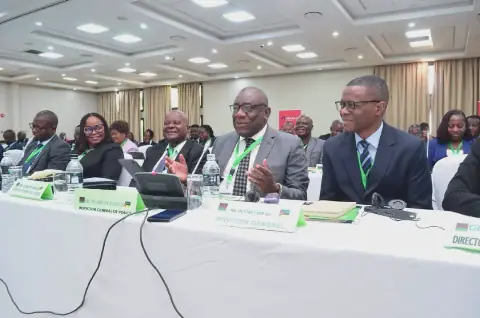
The Ministry of Public Works and Transport in Eswatini is making significant progress in its capital budget expenditure for the 2026/27 financial year. According to the Second Quarter Performance Report, the Ministry has spent E904.9 million out of its E1.71 billion capital allocation, representing a 53% expenditure rate at mid-year. The Treasury had released E1.11 billion by the end of September, enabling the Ministry to drive its road infrastructure projects.
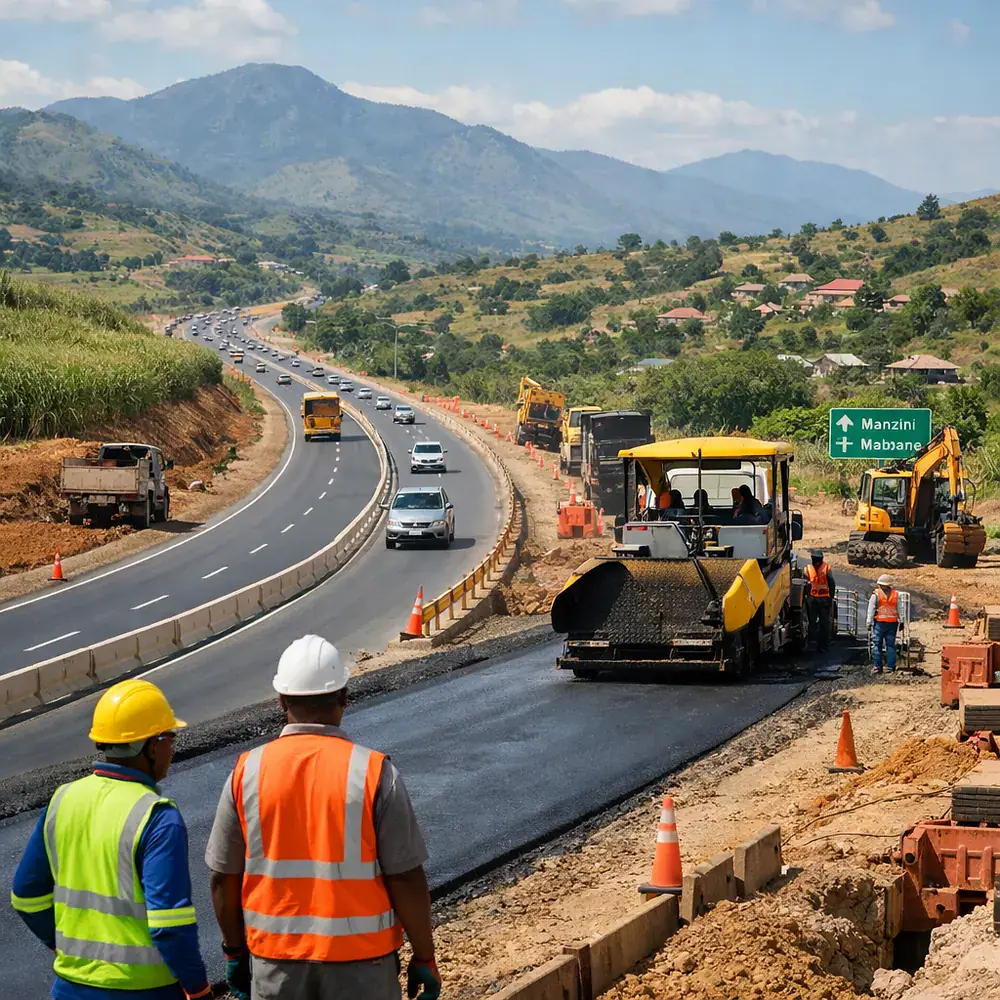
One of the key projects driving the Ministry's expenditure is the upgrading of the Siphofaneni-Sithobela-Maloma-Nsoko and Maloma-Siphambanweni roads, also known as the MR14 and MR21 corridor. This corridor is the anchor of the Eswatini Road Infrastructure Improvement Programme, Phase I, valued at US$175.7 million or E2.94 billion. The programme is supported by the African Development Bank and aims to improve the country's road infrastructure.
The MR14 and MR21 corridor project has made significant progress, with the main civil works contract for 105.8 kilometres concluded, financial securities cleared, and the contractor mobilized on site with personnel, equipment, and site facilities. However, physical tarring had not started pending the Engineer's instruction. The project has moved from procurement to implementation, with disbursement standing at US$23.9 million or approximately E399.6 million, representing 13.61% of the total cost.
The Ministry's expenditure on the MR14 and MR21 corridor project is part of a broader effort to transform the country's road infrastructure. The project also involves environmental and social safeguards, including compensation of affected persons, which was completed last year. Permits for quarry mining and water abstraction are being processed, ensuring that the project is implemented in a responsible and sustainable manner.
The transformation of the Roads Department into the Eswatini Roads Authority is another significant development in the country's transport sector. The Government has established governance structures and Board Committees, initiated recruitment of key executive positions, and is benchmarking with regional road agencies. This institutional reform is supported by US$13.8 million or E230.73 million Institutional Support Component under the AfDB programme.
The Institutional Support Component covers six principal areas, including transport policy and planning, axle-load control, road safety institutional reform, technical specifications, road maintenance, and development of transport public-private partnerships. Procurement for these reforms is advancing, with the Axle Load Policy and pilot programme having received expressions of interest in June. Capacity building programmes for the Roads Department and auditors received No Objection in August.
The Ministry of Public Works and Transport is confident that it will exhaust its full budget by year-end, driven by the MR14 and MR21 corridor project and other initiatives. The transformation of the Roads Department into the Eswatini Roads Authority is expected to enhance the country's road infrastructure management and improve service delivery. The Ministry's progress in implementing its capital budget and advancing institutional reforms is a positive development for Eswatini's transport sector.
Key points
- The Ministry of Public Works and Transport has spent 53% of its capital budget for 2026/27, with the upgrading of the MR14 and MR21 corridor being a key driver of expenditure.
- The transformation of the Roads Department into the Eswatini Roads Authority is underway, with governance structures and Board Committees established and recruitment of key executive positions initiated.
- The Eswatini Road Infrastructure Improvement Programme, Phase I, is valued at US$175.7 million and aims to improve the country's road infrastructure.