Eswatini's education sector faces a significant challenge in expanding Grade 0 to more schools due to a shortage of teachers. According to Chief Inspector for Early Childhood Care, Development and Education (ECCDE) Mxolisi Maphosa, 344 public primary schools have met the basic readiness requirements for Grade 0 but are unable to operate because they have no teachers. These schools have Grade 0 classrooms, curriculum, and teaching materials, but no government-employed Grade 0 teacher has been posted.
The country's education system has 603 public primary schools, with only 76 schools, representing 12.6%, currently implementing Grade 0 with government-employed teachers. Maphosa noted that readiness outpaces delivery, with many schools having the necessary infrastructure but lacking teachers. He emphasized that teacher deployment is the single step that turns readiness into service, enabling more schools to offer Grade 0.
The allocation for ECCDE/Grade 0 stands at E7 million, which is about 0.1% of the Ministry of Education and Training budget. Maphosa described this as insufficient, stating that less than one Lilangeni in every thousand Emalangeni spent on education goes to the foundation of the system. He argued that E7 million cannot support the expansion of Grade 0, citing that actual ECCDE recurrent spending has been small and volatile over the past three financial years.
Government spending on ECCDE has fluctuated significantly, with E5.8 million spent in 2022/23, dropping to E4 million in 2023/24, and further declining to E2.8 million in 2024/25. Maphosa attributed this volatility to the lack of a predictable, protected budget line, making it challenging to plan teacher recruitment, training, and materials supply. He stressed the need for stable financing to support Grade 0 expansion.
To address the challenges, Maphosa called on the Joint Sector Review to review the adequacy of the E7 million allocation and agree on a costed, multi-year financing plan for Grade 0. He emphasized that without a protected budget line, Grade 0 will continue to rely on ad hoc allocations that cannot sustain expansion. This, in turn, affects the quality of education and the ability to provide structured early learning to children in 344 communities.
The implementation of Grade 0 is critical in providing children with a solid foundation for future learning. Maphosa noted that every classroom, curriculum guide, and box of materials already in schools should translate into a child learning. However, in 344 schools, this link is missing due to the lack of teachers. He urged stakeholders to address the teacher shortage and funding constraints to ensure that more schools can offer Grade 0.
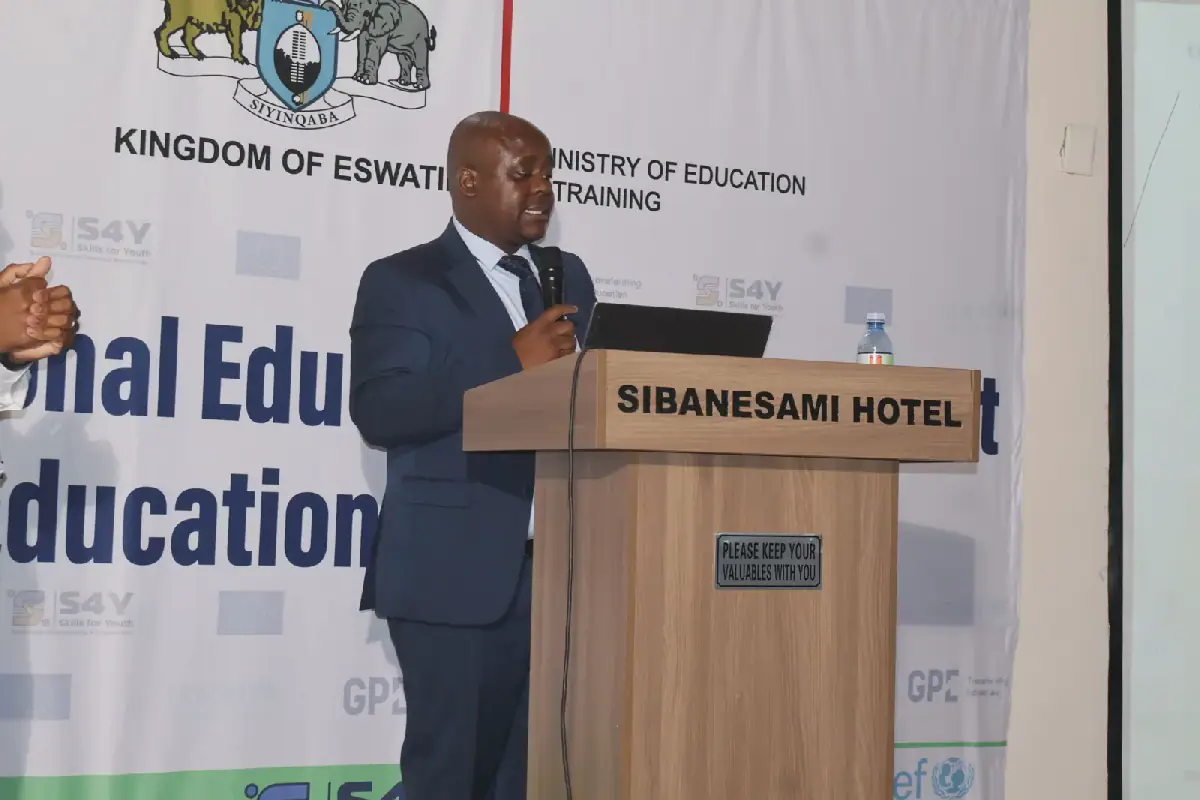
The Eswatini Education Joint Sector Review / Indaba 2026, held at Sibane Sami Hotel, provided a platform for stakeholders to discuss the challenges facing the education sector. Maphosa's presentation highlighted the need for collaborative efforts to address the issues hindering Grade 0 expansion. The review aimed to identify solutions to ensure that all children have access to quality education, starting from Grade 0.
Key points
- Eswatini has allocated E7 million for Grade 0, which is 0.1% of the education budget.
- 344 public primary schools are ready to offer Grade 0 but lack teachers.
- The education sector requires a predictable, protected budget line to support Grade 0 expansion.