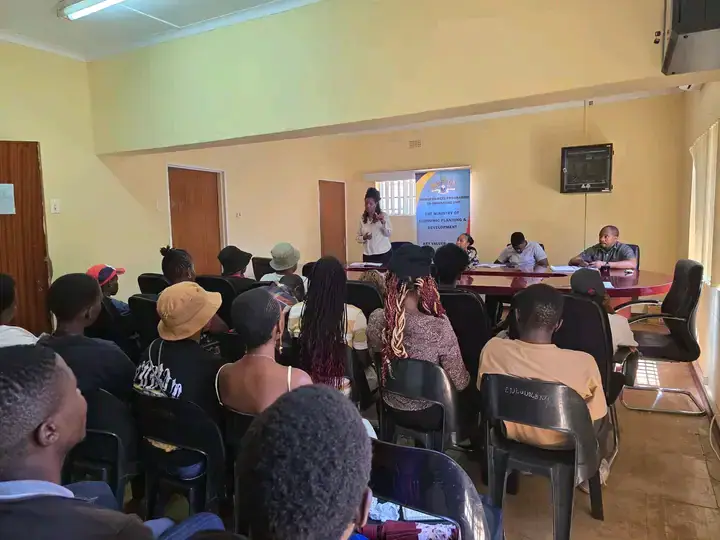
The Eswatini Youth Employment Opportunities Project (EYEOP) is encouraging young people in Piggs Peak and Ntondozi to turn their skills and business ideas into sustainable sources of income. The project, implemented through the Microprojects Programme and the Eswatini Water and Agricultural Development Enterprise (EWADE), targets young people aged between 18 and 35, with priority given to those not in education, employment or training (NEET). This initiative aims to equip young people with practical skills, recognised qualifications and financial support to pursue employment or establish their own businesses.
Applications for the project opened on October 13 and will close on November 13, 2026. During engagements in Piggs Peak and Ntondozi Inkhundla, representatives from the two implementing institutions outlined the benefits of the initiative. The Microprojects component will provide selected participants with six months of on-the-job training at construction sites, where they will acquire practical skills in infrastructure development. Participants will report to their designated sites daily, receive personal protective equipment (PPE) and earn a monthly stipend of E1 500 during the training period.
Microprojects Regional Compliance and Skills Development Officer Sthobile Mabilisa explained that the programme is designed to prepare young people for opportunities in the construction industry by combining practical experience with formal skills assessment. At the end of the six-month training period, the Directorate of Industrial and Vocational Training (DIVT) will assess participants’ competencies. Those who meet the required standards will receive a Grade 3 certificate, which could strengthen their prospects of securing employment or working independently.
Through engagement with the Construction Industry Council (CIC), participants will also have opportunities to explore employment pathways and establish construction businesses. Start-up kits containing basic tools will support those seeking to use their newly acquired skills to generate income. This will enable young people to kick-start their careers in the construction industry. The project also offers mindset shift training covering business planning, identifying profitable markets and recognising viable business opportunities.
The mindset shift training is intended to help young people view their skills not only as a route to employment but also as a foundation for entrepreneurship. This training will empower participants to make informed decisions about their careers and create their own opportunities. The project's focus on both technical and business skills will equip young people with a comprehensive understanding of the construction industry.
Meanwhile, the EWADE component will focus on agricultural production, agribusiness and opportunities across the agricultural value chain, offering young people an alternative route into income generation. Speaking on behalf of EWADE, Anastasia Khoza highlighted the range of agricultural activities young people could pursue, including the production of onions, tomatoes, potatoes, baby vegetables and beans. Other opportunities include poultry, goat, sheep and fish farming, as well as buying and selling agricultural produce.
The approach seeks to enable young people to participate at different stages of the agricultural value chain, including those with limited experience. The project offers a total of E10 000 in farming support and construction training, providing a significant boost to young entrepreneurs. By supporting young people in both construction and agriculture, the EYEOP project aims to create sustainable sources of income and promote economic growth in Eswatini.
Key points
- The Eswatini Youth Employment Opportunities Project provides training and financial support to young people in construction and agriculture.
- The project targets young people aged between 18 and 35, with priority given to those not in education, employment or training (NEET).
- Participants will receive practical skills, recognised qualifications and financial support to pursue employment or establish their own businesses.