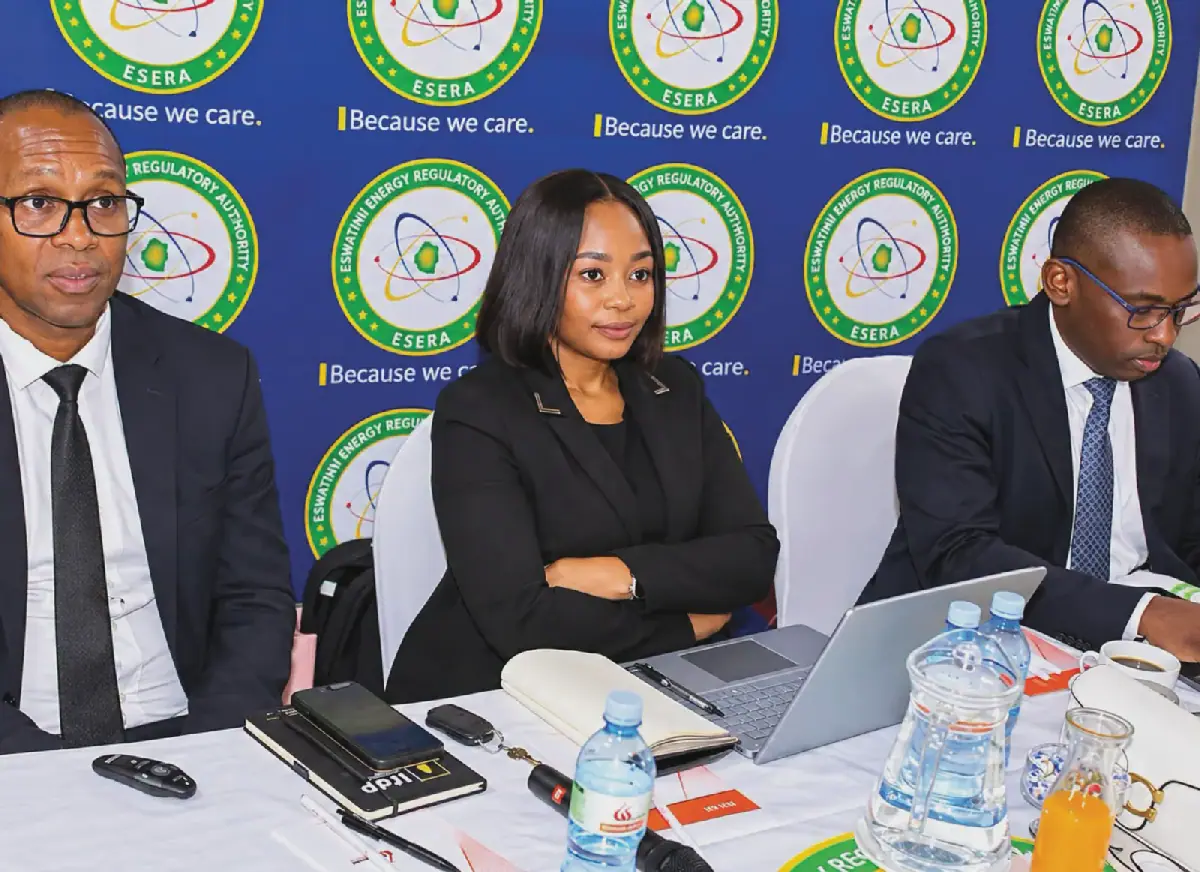
The Eswatini Energy Regulatory Authority (ESERA) has assured the public that it will not automatically approve the Eswatini Electricity Company's (EEC) request for an electricity tariff increase. During the first session of public consultations on the proposed tariff hike, ESERA Chief Executive Officer Sikhumbuzo Tsabedze explained that the regulator considers both the revenue requirements of the electricity company and the interests of consumers. The meeting was held at SibaneSami Hotel on November 24, 2026.
EEC has requested an 18.38% electricity tariff hike for the 2027/28 financial year and 14.68% for the 2028/29 financial year, driven by the cost of bulk electricity purchases, which constitute approximately 61% of the total revenue requirement. The company also seeks to recover E533.1 million in past under-recoveries. EEC's proposed revenues of E4.683 billion for 2027/28 and E4.939 billion for 2028/29 aim to cover prudently incurred costs, maintain network operations, and ensure reliable electricity supply.
ESERA will assess EEC's application against the requirements of the Electricity Act of 2007, the tariff methodology, and the interests of electricity consumers. The regulator will scrutinize EEC's financial information to determine whether the proposed expenditure is necessary, reasonable, and efficiently incurred. This assessment will consider the economic circumstances of households, businesses, and vulnerable consumers.
EEC has also applied for approval to restructure its Time-Of-Use (TOU) tariffs by removing the distinction between high and low demand season energy charges. The proposal aims to realign tariff structures with the current cost of supply and is intended to be revenue neutral. Additionally, EEC seeks approval for embedded generation feed-in tariffs and related connection and administrative charges for 2027/28 and 2028/29.
The proposed tariff restructuring and feed-in tariffs are part of EEC's application, which ESERA will carefully evaluate. The regulator will consider several technical, financial, economic, legal, and consumer-protection factors when determining whether to approve the electricity tariff application. This evaluation will ensure that the proposed increases are reasonable and that EEC's operating costs and revenue requirements are justified.
The ongoing national public hearings will play a significant role in determining the tariff increases, as ESERA considers submissions from consumers, businesses, government, and other stakeholders. These public consultations will help the regulator assess the impact of the proposed increases on the cost of living in Eswatini. The regulator's consideration of public interest and consumer submissions is consistent with its regulatory methodology.
The proposed electricity tariff increases will significantly affect the cost of living in Eswatini, making it essential for ESERA to carefully evaluate EEC's application. The regulator's assessment will ensure that the proposed increases are reasonable and that EEC's financial requirements are balanced with the interests of consumers. The final decision on the tariff increases will be made after considering all submissions and evaluating EEC's application.
Key points
- ESERA will consider public interest and consumer submissions when determining EEC's proposed electricity tariff increases.
Reporting sources
- ‘ESERA will consider public interest in tariff determination’ · Swazi Observer