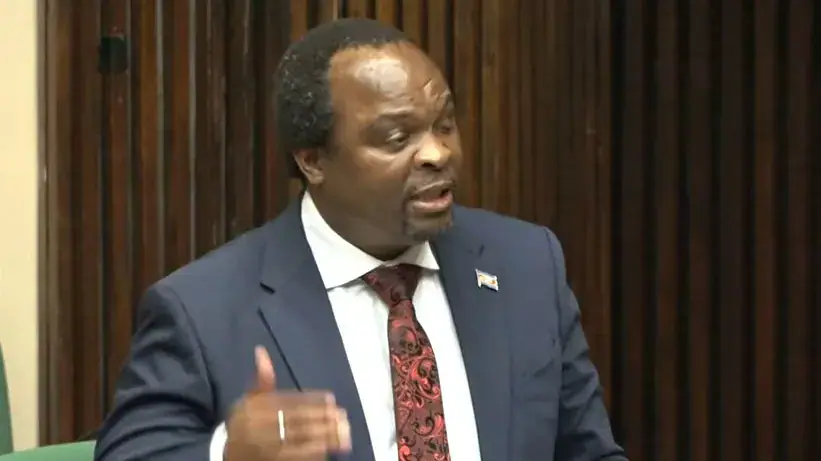
Mbabane East MP Welcome Dlamini has questioned the vetting process followed by the Eswatini Communications Commission (ESCCOM) in awarding two commercial radio broadcasting licences. Dlamini alleges that one of the awarded companies is linked to individuals associated with progressive political movements involved in the 2021 unrest. He raised concerns during the portfolio committee debate on the Ministry of Information, Communication and Technology's (ICT) second-quarter performance report in Parliament.
The licences were officially announced in August by ESCCOM, which granted free-to-air commercial radio broadcasting service licences to two entities. This marked a significant milestone in Eswatini's broadcasting industry, as the two stations became the first privately operated commercial radio broadcasters to receive such licences since independence. The successful applicants have 12 months to commence broadcasting operations, failing which they risk losing their licences.
Dlamini commended the liberalisation of the broadcasting industry, particularly radio, but expressed concerns over the possibility of individuals with questionable political backgrounds operating influential broadcasting platforms. He noted that the history of radio licensing in Eswatini made it necessary for authorities to exercise caution when assessing applicants. The MP questioned the decision to grant two licences when the initial announcement indicated only one would be issued.
Dlamini linked his concerns to the 2021 political unrest in Eswatini, suggesting that individuals with certain political postures were now licence holders. He argued that radio's influence on society, particularly during politically sensitive periods, made it essential to carefully consider the backgrounds of those operating broadcasting stations. The MP referenced the 1994 genocide in Rwanda, where radio was used to spread propaganda and incite violence.
During the same parliamentary sitting, MPs raised concerns over the deteriorating financial position of the Eswatini Television Authority (ESTVA). They warned that the public broadcaster could face a similar situation to the Eswatini Posts and Telecommunications Corporation (EPTC), which has faced financial difficulties. Dlamini questioned the ministry's efforts to stabilise ESTVA's financial position, given its reported difficulties in meeting financial obligations.
The persistent cash flow crisis at ESTVA was attributed to its reliance on overdrafts, delays in paying suppliers, and honouring pension obligations. Dlamini also raised concerns about the welfare and job security of ESTVA employees, alleging that some workers were employed on one-year contracts, creating an unstable working environment. He questioned how the ministry intended to address the situation.
The Eswatini Communications Commission (ESCCOM) awarded the licences in August, marking a significant development in the country's broadcasting industry. The commission granted licences to two entities, which are expected to commence operations within 12 months. The awarding of licences has been hailed as a milestone, but concerns have been raised over the vetting process and the potential impact on the industry.
Key points
- Eswatini MP Welcome Dlamini questions the vetting process for radio licences.
- Concerns raised over the potential impact of licence holders' political backgrounds.
- Eswatini Television Authority faces financial difficulties, prompting concerns from MPs.