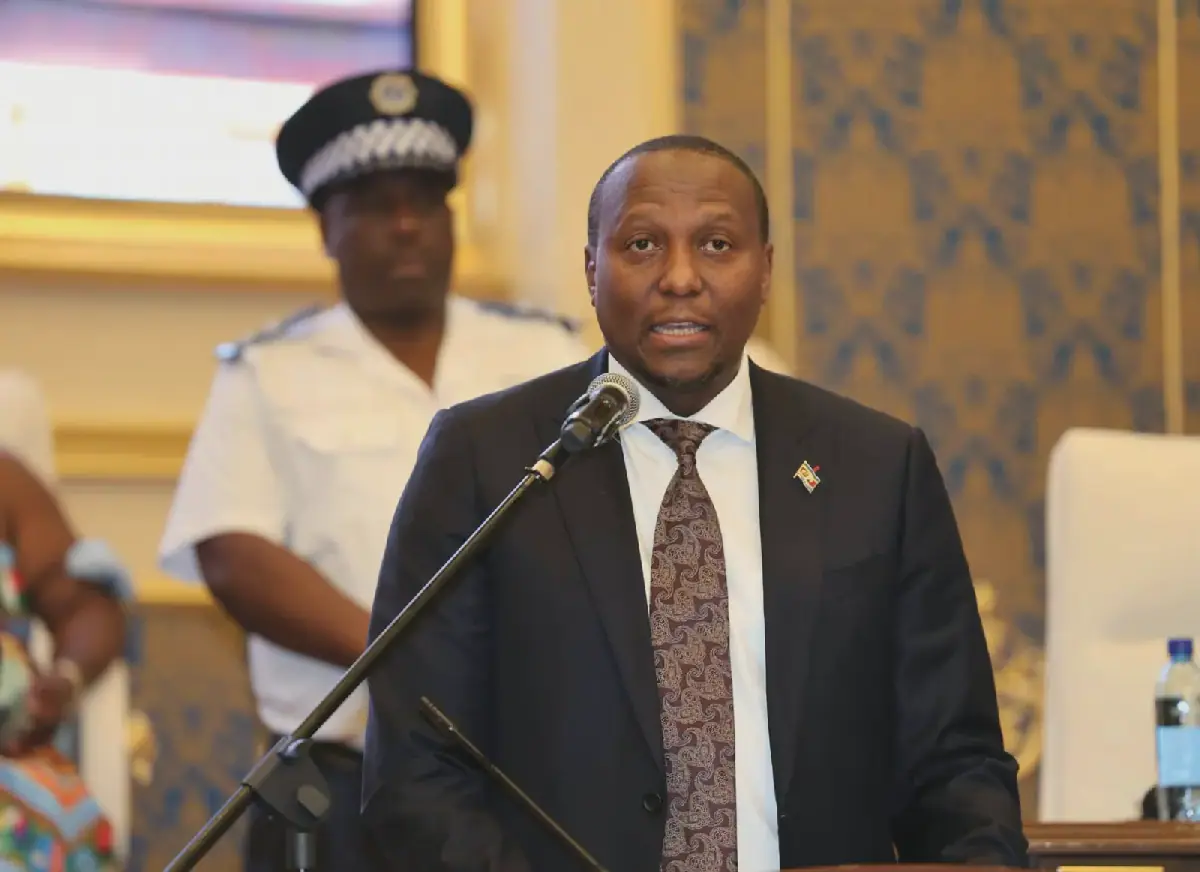
Prime Minister Russell Mmiso Dlamini of Eswatini has emphasized that poverty and economic pressures play a significant role in fueling child marriage in the country. Speaking at the 59th SADC Parliamentary Forum Plenary Assembly in Ezulwini, he noted that while prohibiting child marriage through legislation is necessary, it is not enough to address the circumstances that expose children to the practice.
According to the Prime Minister, poverty is a powerful driver of child marriage, and efforts to end the practice must go beyond legal restrictions to include social protection, education, livelihoods, and support for families. He highlighted the financial challenges that prevent girls from remaining in school, including the costs associated with schooling, such as transport, and the need for safe routes to school and protection from violence.
The Prime Minister's remarks suggest that governments need to consider whether their budgets and social programs are reaching vulnerable households and addressing the conditions that contribute to child marriage. He called for practical support for households and measures that make it possible for children to continue attending school. This includes strengthening social protection and supporting family livelihoods, while ensuring that girls can access and remain in education.
The SADC Parliamentary Forum Plenary Assembly, which took place on November 21, 2026, in Ezulwini, brought together leaders to discuss the issue of child marriage in the region. The assembly is themed "Harnessing Political Leadership, Progressive Culture and Data to Accelerate the Eradication of Child Marriage in the SADC Region." The gathering marks a decade since the SADC PF adopted the Model Law on Eradicating Child Marriage and Protecting Children Already in Marriage on June 3, 2016.
Despite the adoption of the Model Law, the region has made uneven progress in addressing child marriage. The SADC PF identified inconsistencies between statutory, customary, and religious laws, limited enforcement capacity, inadequate financing, fragmented services, and persistent social pressures as challenges that continue to impede implementation.
SADC PF President Randrianasoloniaiko Siteny Thierry urged Parliaments to use their powers to ensure governments act on commitments to protect children. He emphasized that parliamentarians should scrutinize government action and ensure that efforts to address child marriage go beyond declarations. The assembly also considered practical recommendations to guide the next phase of regional action.
The regional assessment comes as a challenge to SADC leaders to turn child marriage laws into action. The assembly is expected to use data to strengthen monitoring and accountability through the regional child marriage monitoring dashboard, which aims to consolidate available evidence on the domestication and implementation of the Model Law.
Key points
- Poverty and economic pressures are key drivers of child marriage in Eswatini.
- Legislation alone cannot address the issue of child marriage.
- Governments need to provide practical support for households and measures that make it possible for children to continue attending school.
Reporting sources
- Poverty fuelling child marriage – PM · Swazi Observer