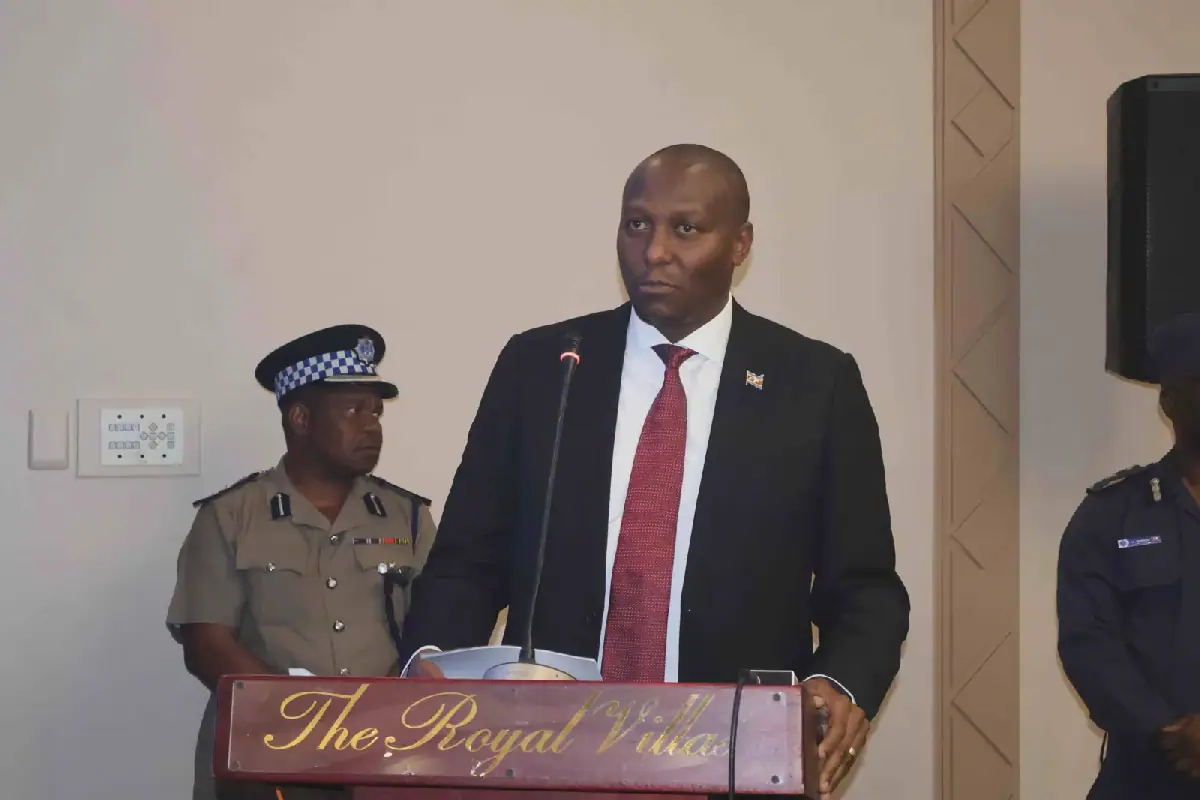
Eswatini's Prime Minister Russell Dlamini has emphasized that the government's performance will be evaluated based on its results, not the number of meetings held. Speaking at the Royal Villas during the official opening of the First Semi-Annual Government Performance Review, Dlamini stated that the review aims to assess progress made in implementing commitments set at the beginning of the financial year. The review brings together ministries to evaluate their performance and identify areas for improvement.
The performance review is intended to establish whether the priorities agreed upon by Cabinet have translated into action and improvements in the lives of the people. It provides an opportunity for ministries to account for work completed, outstanding commitments, and the reasons for any deviations from their plans. Dlamini said the exercise should not be viewed as a punishment or an opportunity to apportion blame, but rather as a process of leadership, institutional learning, and strengthening public administration.
The review comes after the government presented its first-ever Government Performance Report for the 2025/2026 financial year in August. The report showed that the government's overall performance had improved from 22 per cent in the first quarter to 48 per cent for the financial year. However, the 48 per cent score also indicated that the government had not achieved more than half of its targeted programmes during the period under review.
The report identified several challenges affecting implementation, including delays in the release of budgets, procurement bottlenecks, difficulties in coordination between ministries, legislative delays, and dependence on external funding partners. It also highlighted weaknesses in planning and reporting as factors that contributed to delays in implementing planned outputs. The findings provided an assessment of the government's implementation of the Nkwe Programme of Action during the 2025/2026 financial year.
Dlamini emphasized that ministries should not mistake activity for achievement, expenditure for development, or the completion of administrative processes for the attainment of national objectives. He stressed that the people benefit when policies are implemented, services improve, employment opportunities expand, and economic activity flourishes. The prime minister said each ministry was expected to provide a candid and evidence-based account of its performance, clearly showing what had been planned, what had been accomplished, and what remained outstanding.
The prime minister further stated that the assessment needed to distinguish between poor effort, institutional weaknesses, and resource constraints. This would enable the government to identify the actual causes of underperformance and determine the appropriate corrective measures. He also called for stronger cooperation between ministries, noting that the government's priorities could not be achieved if institutions worked in isolation.
Dlamini reminded ministries that the Government Performance Review was linked to the commitments made to emaSwati during Sibaya, including calls for better public services, employment opportunities, improved healthcare, decisive action against corruption, economic growth, and a government that was responsive to the needs of the people. He said those expectations should remain central to the work of ministries.
Key points
- The Eswatini government is conducting a performance review to assess progress made in implementing commitments set at the beginning of the financial year.
- The review aims to evaluate the government's performance based on results, not the number of meetings held.
- The government has identified several challenges affecting implementation, including delays in budget releases, procurement bottlenecks, and weaknesses in planning and reporting.
Reporting sources
- History will judge govt by results, not meetings – PM · Times of Swaziland