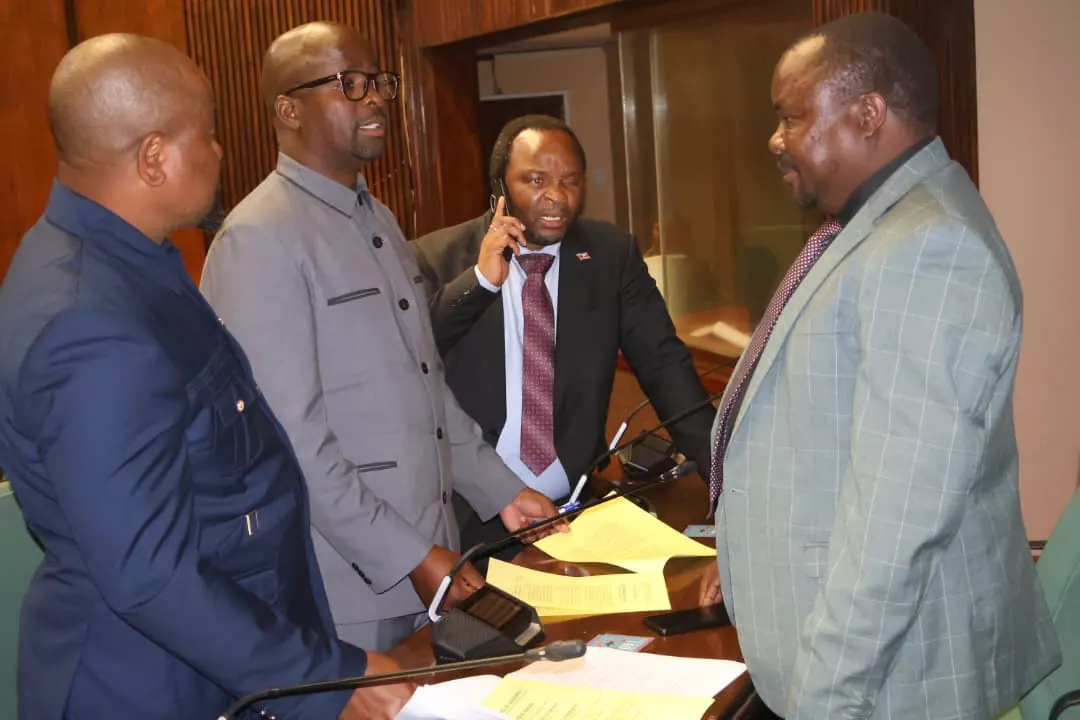
Members of Parliament in Eswatini have challenged the Minister for Natural Resources and Energy, Prince Lonkhokhela, over the Eswatini Electricity Company's (EEC) contentious customer billing practices. Mtfongwaneni MP Nathi Hlophe raised concerns that the EEC erects power poles on or near private land without proper consent, then charges property owners for relocation. He asked if the government was aware of this practice and what procedures the EEC follows for erecting infrastructure.
Prince Lonkhokhela responded, stating that the EEC maintains over 37,000 kilometers of power lines across Eswatini and has positive relations with the public. He claimed that any improper installations are isolated incidents, not standard practice. The minister outlined the legal framework under Sections 55 and 57, detailing the required protocol for erecting infrastructure, including direct engagement with property owners to seek consent.
According to Prince Lonkhokhela, if a property owner objects, the matter is referred to the Eswatini Energy Regulatory Authority (ESERA) for formal arbitration. A mandatory 30-day waiting period is observed before poles are erected, allowing property owners time to reconsider. The minister defended relocation fees, stating that initial installations are conducted with owner approval, and subsequent requests to move a pole require the property owner to cover the costs.
MP Hlophe pressed the minister on transparency, asking if written documentation exists for citizens to reference these regulatory procedures. KuMethula MP Jabulani Simelane added to the debate, citing severe cable theft in his constituency and questioning why victims are forced to pay replacement fees for stolen electricity wires, even after the police have apprehended the thieves.
Prince Lonkhokhela confirmed that written documentation governing these procedures exists and promised that ministry officials would visit affected constituencies to inspect local grievances directly. However, regarding the contentious issue of charging theft victims for replacement cables, the minister advised lawmakers to table a formal motion in Parliament through established procedures.
The debate highlights the need for clarity on the EEC's procedures and the government's role in regulating the utility company. The EEC's practices have sparked concerns among property owners and lawmakers, who argue that the company's actions are unfair and lack transparency. The government's response to these concerns will be crucial in resolving the issue.
The issue has also raised questions about the balance between the needs of the EEC and those of property owners. As the government and the EEC move forward, they will need to consider the concerns of all stakeholders and work towards finding a solution that is fair and equitable for all.
Key points
- EEC's pole relocation fees have sparked controversy in Eswatini, with MPs questioning the company's transparency and consent procedures.
- The government has promised to investigate the matter and provide clarity on the regulatory procedures in place.
- The issue has raised concerns about the balance between the needs of the EEC and those of property owners in Eswatini.