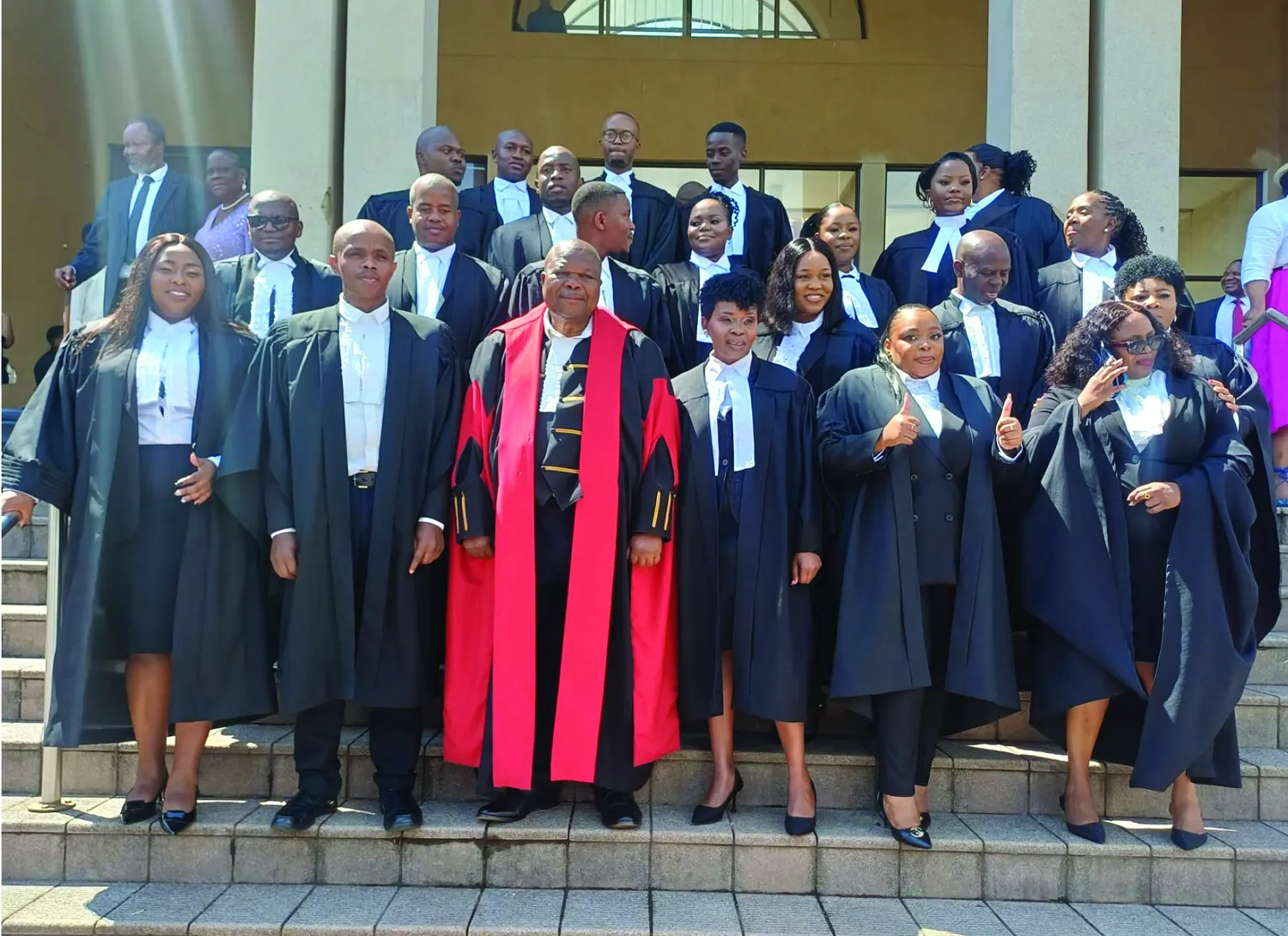
The nation of Eswatini has come together to mourn the passing of Chief Justice Bheki Maphalala, who left an indelible mark on the country's judicial system. Maphalala's journey to the highest corridors of power began in Lawuba, where he grew up as one of five children raised by his mother in a family with limited material privilege. Despite facing numerous challenges, he demonstrated exceptional academic ability from an early age, particularly in mathematics and science. His early life experiences shaped his determination to succeed and make a positive impact on his community.
Maphalala's educational journey was marked by periods of uncertainty, including a time when he had to drop out of school due to financial constraints. He worked as a laborer at Ubombo Ranches, but his desire to continue his education led him to seek help from his maternal uncles. They agreed to support his education, enabling him to attend Franson Christian High School, where he excelled in arts subjects. This unexpected turn of events ultimately led him to study law at the University of the Witwatersrand, where he obtained his BProc and LLB degrees in 1990.
Maphalala's entry into private legal practice in 1992 marked the beginning of a distinguished career in law. He was appointed to the High Court in 2009 and two years later became a judge in the Supreme Court, making history as the first Liswati to be permanently appointed to that court. In 2015, he was appointed Chief Justice, becoming the first liSwati to hold that office. Throughout his career, Maphalala played a significant role in Eswatini's constitutional development, serving on the Constitutional Review Commission in 1996 and the Constitution Drafting Committee in 2002.
As Chief Justice, Maphalala carried significant responsibilities, including upholding and protecting the Constitution. His associates described him as someone who took his duties seriously, particularly in matters of law and constitutional interpretation. However, the burden of judicial office often took a personal toll, with Maphalala facing challenges and criticisms that came with making difficult decisions. Despite this, he remained committed to his role and continued to serve the nation with integrity.
Beyond the courtroom, Maphalala was known for his kindness and generosity, often assisting people with legal problems and personal challenges. He reportedly supported individuals with their education, from primary school to higher education, drawing from his own experiences of struggling to access education. His connection to his community remained strong, and he continued to play a role in traditional structures as an Indvuna, demonstrating the importance of balancing modern and traditional responsibilities.
The outpouring of tributes and condolences during the period of mourning highlighted the impact Maphalala had on the nation. As the country reflected on his life and legacy, there were also discussions about the circumstances surrounding his death. The family and friends of Maphalala have urged the public to respect the facts and avoid speculation, allowing the nation to come together in a spirit of unity and celebration of his life.
As Eswatini continues to pay tribute to Chief Justice Bheki Maphalala, his legacy serves as a testament to the power of determination and hard work. From his humble beginnings in Lawuba to the highest judicial office in the land, Maphalala's journey is an inspiration to many. His commitment to upholding the Constitution and serving his community has left a lasting impact on the nation, and his memory will continue to be celebrated for generations to come.
Key points
- Chief Justice Bheki Maphalala's life and journey serve as an inspiration to many, demonstrating the power of determination and hard work in overcoming challenges and achieving success.