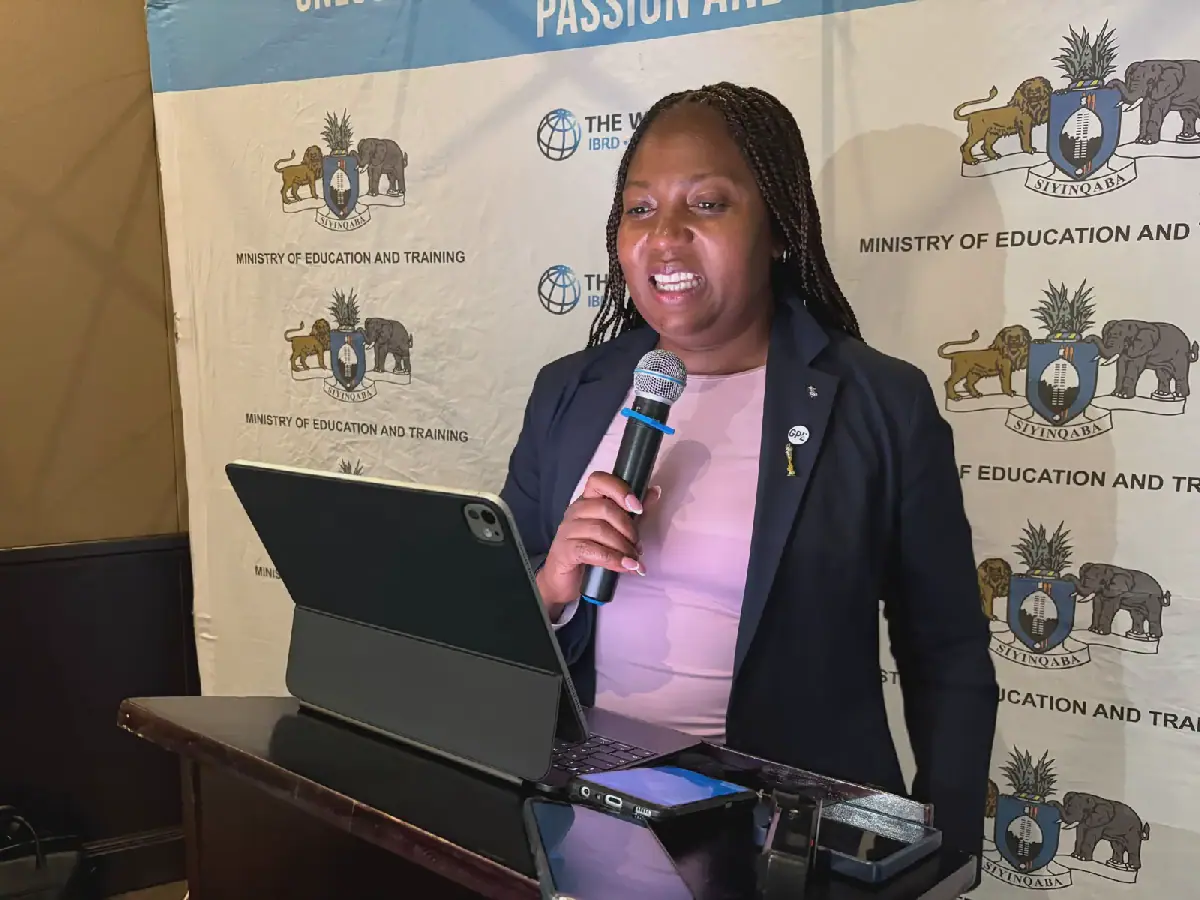
The Eswatini government is investing over E528 million in a project aimed at transforming the country's basic education sector. Principal Secretary in the Ministry of Education and Training, Nanikie Mnisi, announced this during a media sensitisation workshop on the World Bank-funded project. The project focuses on enhancing human capital development, particularly in basic education, from early childhood care to junior secondary level.
The project is supported by a World Bank loan of $27.35 million, equivalent to E449 899 021.50, and a grant of $4.75 million from the Global Partnership for Education (GPE), equivalent to E78 203 572.50. Mnisi expressed gratitude to the World Bank and GPE for their partnership, saying their commitment goes beyond financial support, demonstrating a belief in the potential of Eswatini's youth.
The project targets key areas in the education system, primarily focusing on basic education. It aims to address gaps in early childhood care, development, and education (ECCDE), as well as Grades 1 to 3 and Mathematics and Science at lower secondary levels. Mnisi highlighted that 340 Grade 0 classes will receive indoor and outdoor materials, and assessment tools have been developed to test learner development milestones.
In Grades 1 to 3, the project focuses on strengthening numeracy and literacy in Mathematics, siSwati, and English. A total of 251 primary schools are being provided with teaching and learning materials that complement Competency-Based Education. Additionally, assessment tools have been developed to test learner literacy and numeracy skills acquisition. The project also includes the Teach at the Right Level (TaRL) intervention, piloted in 30 schools.
The project also addresses a skills gap in Mathematics and Science at lower secondary levels in 126 secondary schools. Mnisi emphasized that proficiency in these subjects is crucial for innovation, economic growth, and individual opportunity in an increasingly technological and competitive global environment. The Ministry aims to foster a generation of critical thinkers and problem-solvers.
The media sensitisation workshop aimed to equip journalists with accurate facts and a clear understanding of the project, ensuring they can effectively communicate its essence to the public. Mnisi acknowledged the media's role as a bridge between policy and the public, highlighting their invaluable contribution to the project's success.
The project is strategically designed to enhance human capital development by focusing on foundational years, numeracy, and literacy. With the support of the World Bank and GPE, the Eswatini government is committed to transforming its basic education sector, ultimately contributing to the country's economic growth and development.
Key points
- Eswatini government invests E528 million in basic education project with World Bank and GPE support
- Project focuses on ECCDE, Grades 1 to 3, and Mathematics and Science at lower secondary levels
- Media plays a crucial role in communicating the project's essence to the public
Reporting sources
- E528m set to transform Eswatini basic education through project · swazidailynews.com