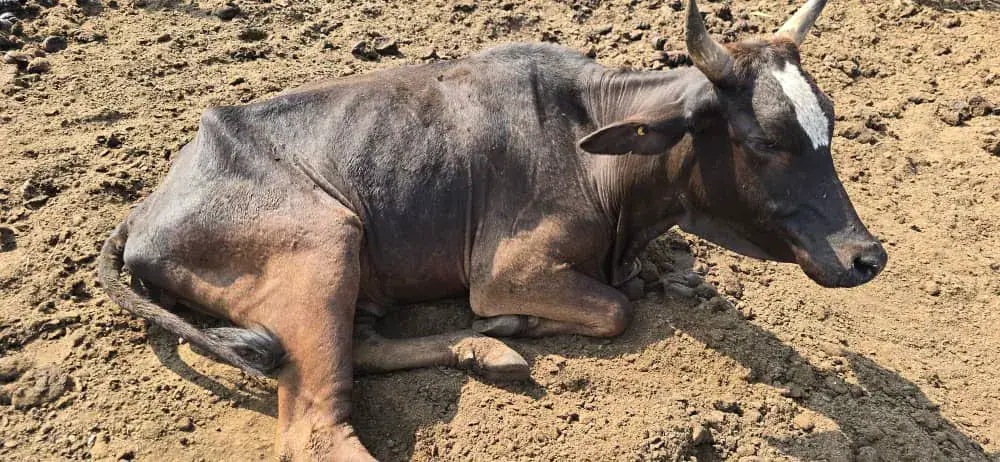
A high-level emergency stakeholder meeting was held at Phumula Guest House in Nhlangano, Eswatini, to address the growing threat to local farmer livelihoods and national food security. Shiselweni Regional Veterinary Officer Dr. Allen Simbai Maruve revealed that over 50 cattle have died due to severe shortages of grazing pasture and drinking water. The mortalities represent a growing threat to local farmer livelihoods and national food security.
The worst-affected communities are Hluti and Lavumisa, with Hluti reporting 10 to 20 cattle deaths and Lavumisa experiencing more than 20 livestock deaths. Dr. Maruve highlighted that in Hluti, dip tanks facing critical stress include Tsekwane and Qomintaba, while those experiencing moderate stress include Hlalukane, Dabe, Hlongamanzi, Mgcuphane, Mthontela, Mdumela, Msila, Manzawayo, Siyaya, Goodwill, and Mesutha.
In Lavumisa, acute livestock water shortages have severely impacted dip tanks at Msuzaneni, Nquthu, Sikhalasabhodo, Mabande, Machanchasa, Tibane, Ntuthwakazi, and Nyaningo. Dr. Maruve detailed that common challenges shared across both Hluti and Lavumisa include severe pasture depletion, damaged and drying water sources, long-distance livestock movement, increased disease susceptibility, and reduced reproductive performance.
Dr. Maruve called for immediate emergency assistance over the next zero to three months, outlining the need for emergency feed support such as hay bales, feed concentrates, mineral licks, and community feed banks. He added that immediate emergency water support must include water tankers, bowsers, storage tanks, livestock drinking troughs, and the urgent rehabilitation of existing water points.
Operations Director Sandile Tfwala of the National Disaster Risk Management Authority (NDRMA – Umvalo Wesive) presented an urgent El Niño climate update sourced from the Eswatini Meteorological Services. Tfwala warned that global models indicate sea-surface temperature anomalies will peak between November 2026 and January 2027 before declining in mid-2027, overlapping directly with the upcoming planting season and agricultural lean period.
Tfwala stressed that below-normal rainfall and elevated temperatures forecast from October to December 2026 pose immediate risks to crop establishment, with drought conditions expected to persist through March 2027. He noted that irregular rainfall has already reduced 2026 maize production down to roughly 70,000 tonnes, compounding high food prices and early stock depletion across the country.
Dr. Mvuyo Mabaso from the Ministry of Agriculture presented a detailed report on crop establishment failures and emerging agricultural risks across the region. Dr. Mabaso revealed that farmers who planted early in October in hopes of capturing early Spring rains have suffered major losses after seeds failed to emerge under extreme heat and dry soil conditions. He emphasized that persistent livestock strain and pasture deficits will continue while high temperatures elevate livestock water stress and drive up tick infestations across affected areas.
Key points
- Over 50 cattle have died in Eswatini's Shiselweni Region due to severe feed and water shortages caused by the El Niño-induced drought.