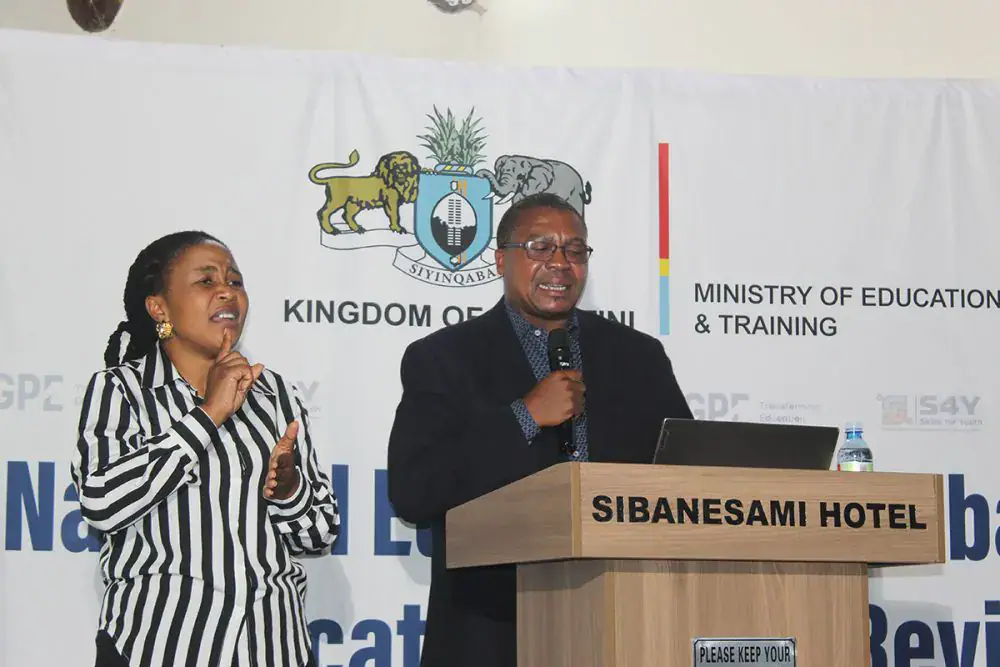
The Ministry of Education and Training in Eswatini has been urged to take immediate action to address several pressing issues, including learner dropout, poor performance in mathematics and science, and inadequate funding for vulnerable learners. These concerns were raised during the first joint review of the Education Sector Strategic Plan (ESSP) 2022–2030, which assessed the implementation of the plan's first operational phase. The review was conducted with technical support from UNICEF and other development partners.
According to the review, although access to primary education has largely been achieved, many learners are failing to remain in school and progress through the education system. Learner repetition and dropout were identified as significant concerns, particularly around Grades V and VI at primary level and Forms II and IV at secondary level. The review reported that secondary school repetition stood at 15.2 per cent, while secondary school dropout had increased by approximately 61 per cent over two years.
The review attributed these challenges to several factors, including the cost of schooling beyond tuition, learner pregnancy, hunger, and unmet psychosocial needs. Although the government provides school grants, these were estimated to cover between 30 and 69 per cent of the actual cost of schooling, leaving families to meet the remaining expenses. Some schools allegedly require deposits ranging from 30 to 90 per cent in January, adding to the financial pressure on parents.
The review also raised concerns about the measurement of learning outcomes, particularly in the early grades and in mathematics and science. Although the Grade Seven pass rate was reported at 99.5 per cent, the country lacks a comprehensive national framework for measuring learning outcomes. Only eight per cent of early-grade learners were reported to have basic numeracy skills, and there were concerns about reading comprehension.
Furthermore, the review noted that approximately one in eight candidates sitting the Cambridge Certificate of Secondary Education examinations achieved a grade C or better in English and five other subjects. The figures cited ranged between 12.59 and 12.86 per cent. At the same time, between 85 and 92 per cent of candidates in the assessment referred to as LSCA reportedly performed below average in mathematics and science.
The review identified significant gaps in the education system, including the absence of a national assessment framework and a dedicated assessment unit. It also noted that competency-based education had been introduced before the development of an appropriate assessment framework. At foundation phase level, the curriculum was described as carrying a heavy subject load, while specialist teachers remained in short supply.
The allocation and use of education funding also emerged as key concerns. Although education receives approximately 20 per cent of the national budget, spending on education as a proportion of gross domestic product declined from 5.2 per cent in 2022 to 3.8 per cent in 2026. The review called for improvements in assessment systems and greater attention to whether learners were acquiring the expected skills and knowledge.
Key points
- Eswatini's education ministry faces urgent calls to address learner dropout and poor performance in maths and science.
- The country's education system suffers from inadequate funding, with spending on education as a proportion of GDP declining.
- A comprehensive national framework for measuring learning outcomes is lacking, contributing to concerns about learner achievement.