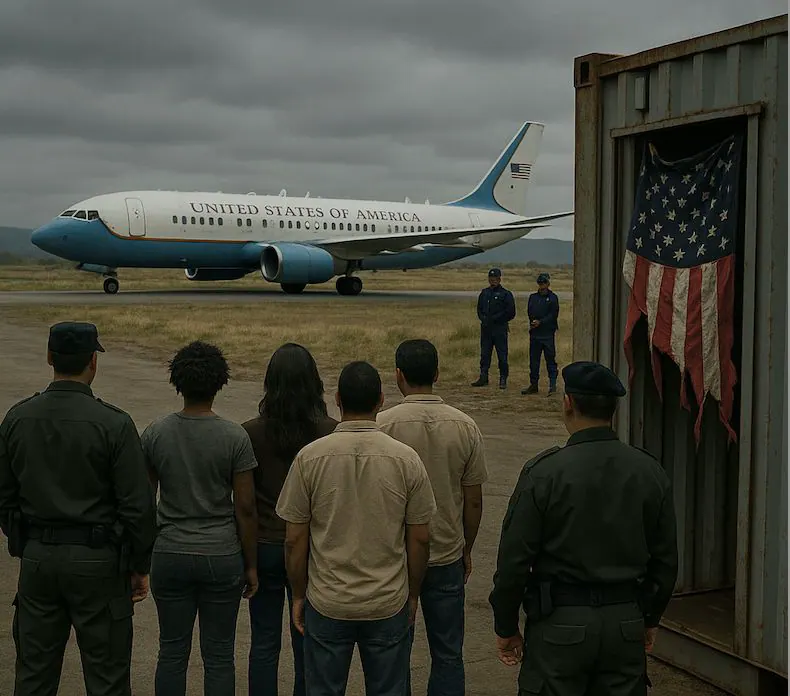
The Department of International Relations and Cooperation and Border Management Authority in South Africa have addressed claims that three US deportees entered the country illegally. The individuals, from Yemen, Belize, and Laos, were part of a group transferred to Eswatini under a US-Eswatini agreement. According to Eswatini's acting government spokesperson, Thabile Mdluli, the three men voluntarily departed the kingdom to return to their home countries. Their journeys were facilitated by relevant authorities and partners.
The US-Eswatini agreement, signed in May 2025, allows for the transfer of up to 160 third-country nationals removed from the US. Washington has committed around $5.1 million to support Eswatini's border and migration-management capacity. The arrangement has faced criticism from human rights organizations, which question its legality and the detention of people in Eswatini with no known ties to the country. Amnesty International has called for greater transparency, legal access, and due process.
Eswatini's government has confirmed that the three deportees – a Yemeni national, a Belizean national, and a Laotian national – departed the kingdom on September 8, 2026, September 30, 2026, and October 4, 2026, respectively. Their departures suggest that some individuals transferred under the arrangement are being assisted to leave Eswatini and return to their countries of origin. The government continues to work with relevant authorities to facilitate such requests.
The deportation program has been marred by controversy, particularly in the case of Phone Chomsavanh, a Laotian national who was among the first five people sent to Eswatini. Chomsavanh was released from a maximum-security prison in Eswatini after spending over a year and was reported to be making his way to Laos. His case has become a symbol of the controversy surrounding the third-country deportation program.
South Africa's Border Management Authority has issued a statement clarifying that the country's land ports of entry are secured, with access control measures implemented at designated entry and exit points. The authority dismissed claims that deportees are entering South Africa through informal border crossings. Dirco's Head of Diplomacy, Clayson Monyela, shared a statement from the Government of Eswatini confirming the process undertaken in the men's journey.
The Eswatini government has reiterated its commitment to ensuring the rights, dignity, and well-being of third-country nationals are respected and protected throughout their temporary stay in the kingdom. The government expressed appreciation to countries and authorities that cooperated in facilitating the transit of the deportees as they traveled to their respective countries of origin.
The controversy surrounding the US-Eswatini deportation program highlights the complexities of international migration and the need for transparency and accountability. As the program continues to face scrutiny, Eswatini's government must balance its obligations under the agreement with its commitment to protecting the rights and dignity of those transferred to the kingdom.
Key points
- Eswatini confirms three US deportees have returned to their home countries.
- South Africa dismisses claims deportees entered the country illegally.
- The US-Eswatini deportation program faces criticism from human rights organizations.