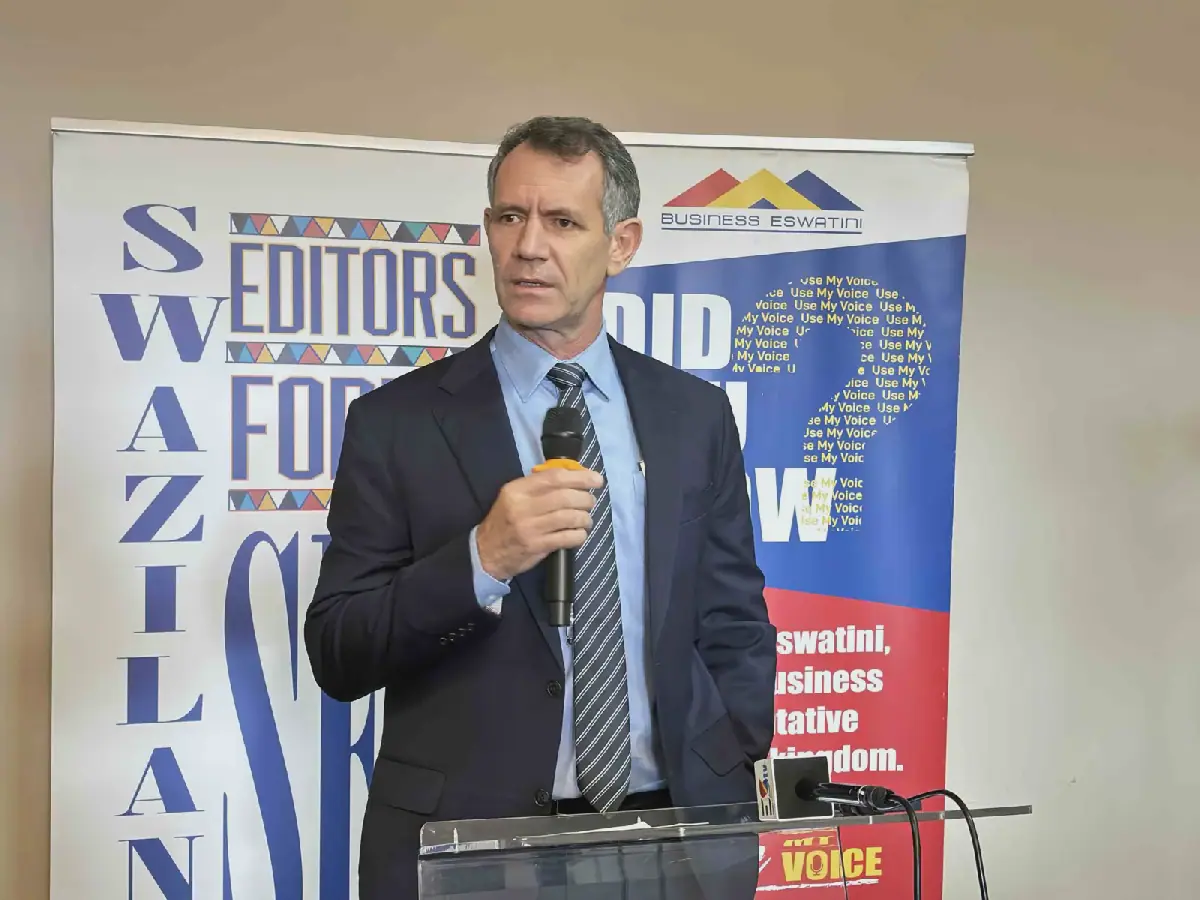
The Eswatini Cabinet has given its approval for a judicial inquiry into corruption, as per a motion recently passed in Parliament. This development was revealed during an engagement between the Minister for Finance, Neal Rijkenberg, and members of the Eswatini Editors Forum. Rijkenberg, accompanied by Minister for Agriculture, Mandla Tshawuka, and the principal secretary in the Ministry of Public Works and Transport, addressed concerns about corruption and the government's efforts to eradicate it.
According to Rijkenberg, the estimated amount of money lost to corruption has increased from E80 million per month in previous years to E90 million. The Minister assured that the government is taking steps to combat corruption, including the establishment of a task team. However, it was noted that no one has been arrested so far. Tshawuka emphasized that the Cabinet's approval of the inquiry is a collective effort to address corruption.
The motion calling for the judicial inquiry was moved by Hhukwini MP, Alec Lushaba, who argued that the country has spent two decades discussing corruption without achieving the desired results. Lushaba cited warnings from His Majesty King Mswati III in 2006 that corruption could destroy the country's economy and reverse developmental gains. The MP proposed that the commission investigate why institutions mandated to fight corruption have failed to fulfil their responsibilities.
Rijkenberg acknowledged concerns about the effectiveness of the country's anti-corruption institutions, particularly the Anti-Corruption Commission (ACC), which has not secured any convictions in recent years. He attributed some of the challenges to institutional and constitutional issues, which have since been addressed. Rijkenberg expressed hope that changes made will help restore the effectiveness of the country's anti-corruption efforts.
The Minister for Finance also referred to developments involving the newly-appointed acting Chief Justice, saying the Judiciary is now accepting matters arising from the revised arrangements. Rijkenberg maintained that the changes offer an opportunity for the relevant institutions to resume their work with greater clarity and alignment.
Lushaba's motion proposes that the Minister for Justice and Constitutional Affairs, Prince Simelane, establish the commission within 14 days of its adoption. The commission is expected to investigate the scourge of corruption, establish what has gone wrong, and recommend a way forward. Its findings could provide the country with a clear direction on how to address the problem.
The government's move to address corruption has raised hopes that concrete measures will be taken to root out the problem. The Cabinet's endorsement of the judicial inquiry is seen as a step in the right direction, and stakeholders are eagerly awaiting the outcome of the commission's investigations.
Key points
- The Eswatini Cabinet has endorsed a judicial inquiry into corruption, a move that could lead to concrete measures to address the long-standing problem.
- The estimated amount of money lost to corruption has increased from E80 million per month to E90 million.
- The government's efforts to combat corruption include the establishment of a task team and a judicial inquiry.
Reporting sources
- Cabinet endorses corruption inquiry · Times of Swaziland