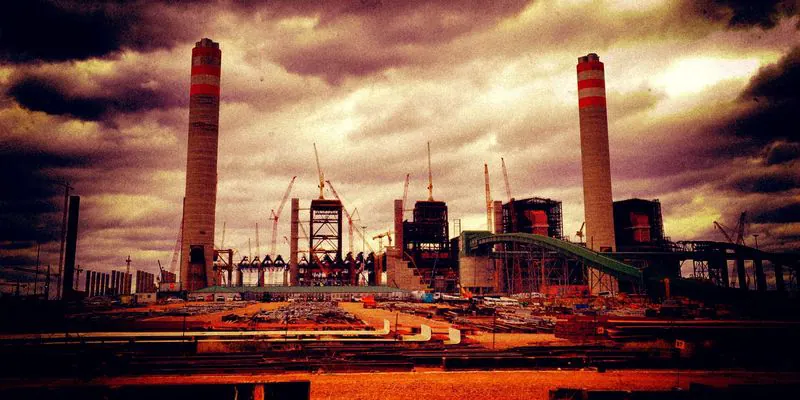
Eskom has responded to media reports on the cost of Medupi and Kusile power stations, stating that the approved construction budgets for the two stations are R160.5-billion and R145-billion, respectively. However, these figures have been criticized for being incomplete and misleading, as they exclude major capital and consequential costs. Eskom's own figures answer a much narrower question, and the utility's refusal to disclose what is excluded raises concerns about transparency and accountability.
EE Business Intelligence had requested clarification from Eskom on whether its Medupi and Kusile cost figures included direct capital costs such as owner's development costs, capitalized interest during construction, and rate-of-exchange variation claims. Eskom's Media Desk replied that its previous statement "constitutes Eskom's response", effectively refusing to provide further clarification. This refusal is telling, as it suggests that Eskom is not willing to be transparent about its costs.
One major omission from Eskom's cost figures is capitalized borrowing costs. Eskom's 2016 integrated report recorded approval of Medupi's R145-billion P80 business case, excluding capitalized borrowing costs of R43.7-billion. The same report recorded Kusile's R161.4-billion P80 business case as likewise excluding capitalized borrowing costs. The significance of this exclusion grows with every year of delay, as interest during construction is a cost that balloons when a megaproject takes many years longer than planned.
Medupi's location in water-scarce Lephalale required major water augmentation infrastructure, and further water infrastructure is required for its flue gas desulphurization (FGD) retrofit. Eskom's own current plans still identify delivery of the Mokolo-Crocodile Water Augmentation Project Phase 2A as necessary for Medupi FGD. In addition, both Medupi and Kusile required major transmission integration works to evacuate about 4200 MW from each power station into the national grid. These are not trivial capital costs, and whether such expenditure sits on the Generation project ledger, Transmission's books, or with another state entity does not alter the economic reality.
A further striking exclusion from Eskom's budget figures is Medupi's FGD plant, which Eskom's 2026 integrated report puts at R41.7-billion. FGD was not conceived as some optional extra, but rather as part of Eskom's commitment to SO2 abatement under its World Bank financing arrangements. The retrofit forms part of meeting South Africa's statutory minimum emission standards (MES) and environmental obligations. The World Bank has repeatedly recorded the FGD commitment as part of the Medupi financing arrangements.
The consequences of serious plant failures at Medupi and Kusile also carry significant costs. Medupi Unit 4 was out of service from a generator explosion on 8 August 2021 until its return to service on 6 July 2025 – almost four years without roughly 700 MW of new baseload capacity. At Kusile, the October 2022 flue-duct failure rendered Units 1, 2 and 3 unavailable, removing about 2,100 MW for much of the following year. These failures result in lost sales revenue and additional diesel costs incurred by Eskom.
In conclusion, Eskom's reported costs for Medupi and Kusile power stations are incomplete and misleading, with billions of rand in costs left out. The utility's refusal to disclose what is excluded raises concerns about transparency and accountability. It is essential for Eskom to provide a clear and comprehensive picture of its costs to avoid further criticism and scrutiny.
Key points
- Eskom's reported costs for Medupi and Kusile power stations exclude major capital and consequential costs, including capitalized borrowing costs and FGD plant costs.
- The utility's refusal to disclose what is excluded from its cost figures raises concerns about transparency and accountability.
- The costs of plant failures and delays at Medupi and Kusile are significant, resulting in lost sales revenue and additional diesel costs.