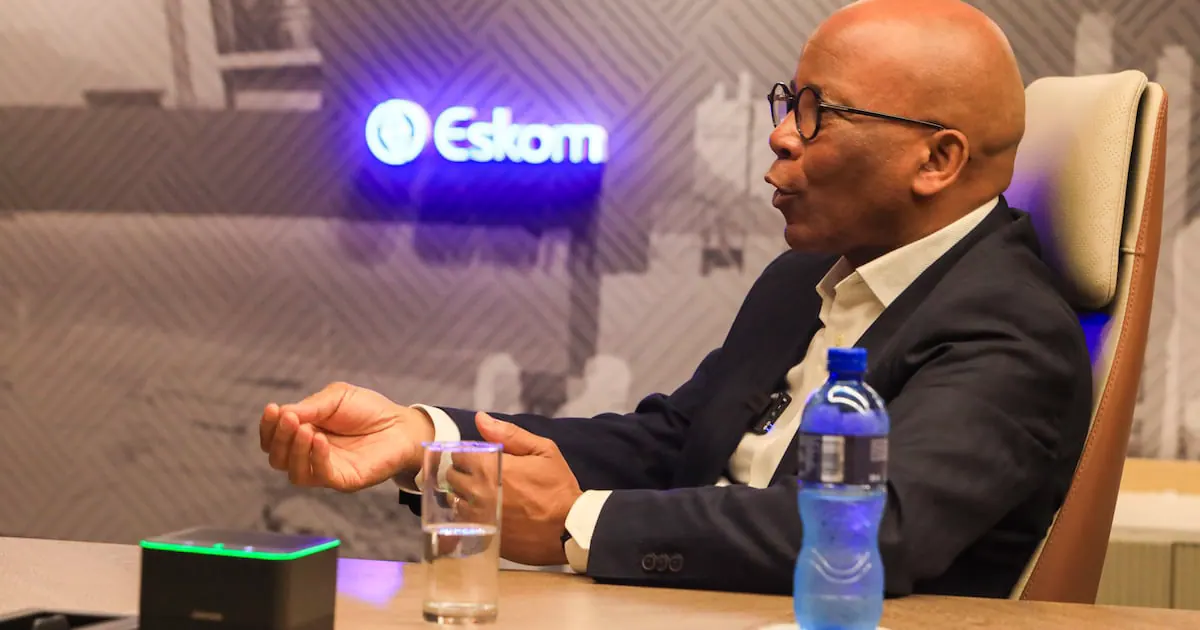
Eskom, the South African power utility, is entering a period of leadership uncertainty as the renewable term of its chair, Mteto Nyati, comes to an end next month. Despite this, Nyati remains sanguine about the future, expressing his willingness to continue serving if asked. His continued tenure is contingent upon various factors, including nomination by the line minister and endorsement by the cabinet.
Electricity minister Kgosientsho Ramokgopa appears to have a good working relationship with Nyati and the Eskom team, which has been instrumental in turning the company around. The triumvirate of CEO Dan Marokane, Nyati, and Ramokgopa has successfully ended load-shedding, limited load reduction, returned Eskom to profitability, and begun a complex restructuring. When they took over, Eskom was debt-ridden and struggling to keep the lights on.
Under Nyati's leadership, Eskom has made significant progress, including a notable improvement in the energy availability factor, which recovered from around 50% to about 70% by August. Nyati's ability to provide a political umbrella to his executives has been a rare skill, shielding them from turf wars among politicians. The simplification of reporting lines has made his job easier, but politics remain a challenge.
Nyati has played a crucial role in steering Eskom's complex restructuring, including the legal separation of its three divisions into subsidiaries under a holdings company. He has also overseen the appointment of CEOs for these entities. However, the tricky part of the restructuring lies ahead, particularly in ensuring the integrity of Eskom's balance sheet is maintained.
The introduction of private sector participation into the transmission space requires careful management to ensure risks and rewards are equally shared, and Eskom's balance sheet is not compromised. This is a critical phase of Eskom's restructuring, requiring continuity and steady hands. The interests of various stakeholders, including financiers, guarantors, workers, and suppliers, need to be protected.
Nyati's credentials are impressive, and he will not struggle to find new opportunities. However, he still has energy to contribute to public service. As the cabinet meets to consider Eskom's future, they must weigh the need for change against the importance of continuity. The blowback seen during power station shutdowns was avoidable, and threats of litigation by labour require genuine conversations with all role players.
Ultimately, the cabinet must consider what Eskom needs most at this time: change or continuity. With Nyati's departure nearing, the company requires certainty and momentum to maintain its progress. The decision will have significant implications for Eskom's future and its ability to continue providing electricity to the country.
Key points
- Eskom's leadership uncertainty may impact its ongoing restructuring efforts.
- Nyati's departure could bring change, but also risks disrupting the company's momentum.
- The cabinet must balance the need for change with the importance of continuity at Eskom.