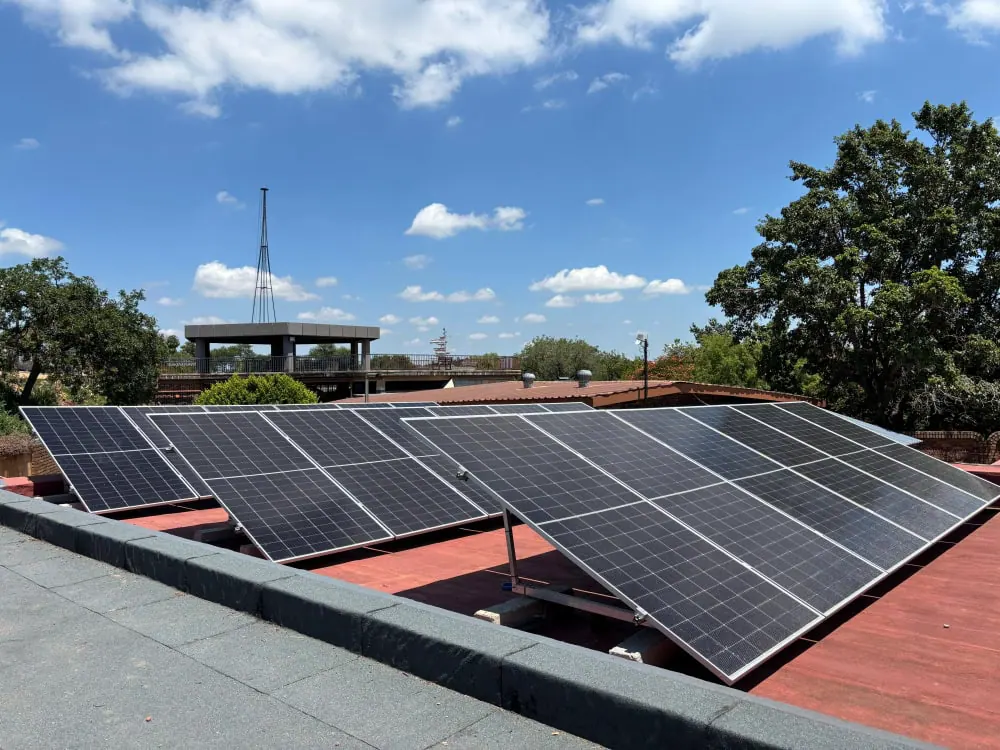
Eskom has announced that it will continue to exempt qualifying grid-connected solar power systems from registration-related costs until further notice. This exemption, initially set to expire on September 30, applies to qualifying generation systems of up to 50 kVA owned by customers and directly connected to Eskom's distribution network. The decision aims to give qualifying residential customers more time to register their grid-connected rooftop solar systems without incurring Eskom's registration-related costs.
The exemption does not negate the requirement for qualifying grid-connected generation systems to be registered. According to Eskom, registration is a standard feature of modern electricity systems as countries integrate increasing levels of customer-generated power into their networks. Junaid Munshi, Eskom's group manager for distribution, stated that registration enables the safe and efficient integration of customer-generated electricity into a shared network.
Eskom's decision to extend the exemption is part of its efforts to support the continued growth of residential solar power and increased customer participation in the energy transition. Munshi emphasized that registration lays the groundwork for two-way smart meters, appropriate tariffs and credits, and future flexibility services. The process also ensures that electricity generated by customers is safely and efficiently integrated into the shared network.
Registration of grid-connected rooftop solar systems is not unique to South Africa. Eskom has researched 20 international electricity markets and found that notification, registration, or approval of customer-owned generation systems is generally required before they are connected to a network or put into operation. Countries with such requirements include Australia, Brazil, France, Germany, India, Ireland, Kenya, New Zealand, Spain, the United Kingdom, and parts of the US.
These international requirements are used to support network safety, power quality, and system planning, as well as protect workers and contractors who work on electricity networks. The South African Photovoltaic Industry Association (SAPVIA) has also confirmed that registration of grid-connected small-scale embedded generation systems (SSEG) ensures worker safety, network stability, and regulatory compliance.
The requirement to register a grid-connected embedded generation facility stems from the Electricity Regulation Act of 2006, read in conjunction with the applicable exemption and registration notices. According to the National Energy Regulator (Nersa), the registration requirement is determined by whether an installation has a connection point to the electricity network and its installed capacity. Eskom states that facilities with a capacity of over 100 kW connected to the network must be registered directly with Nersa.
Eskom's immediate focus remains on educating and assisting customers to comply with the registration requirements. Munshi stated that Eskom aims to make compliance clear, accessible, and affordable, and to help customers register qualifying installations as simply as possible while maintaining the safety of customers, contractors, employees, and the broader electricity network.
Key points
- Eskom has extended its exemption for registration-related costs for qualifying grid-connected solar power systems until further notice.
- The exemption applies to qualifying generation systems of up to 50 kVA owned by customers and directly connected to Eskom's distribution network.
- Registration of grid-connected solar systems is required to ensure network safety, power quality, and system planning.