The South African government has extended the tenure of Mteto Nyati as chairperson of Eskom's board by three years. This decision was announced by Electricity and Energy Minister Kgosientsho Ramokgopa, who cited the board's efforts to stabilise the power utility as a key reason for the extension. Ramokgopa emphasised the importance of continuity at the board level, particularly as Eskom enters a new phase of its operations.
Minister Ramokgopa highlighted the challenges faced by Eskom, including its failure to deliver affordable and reliable electricity, which has had a direct impact on South Africa's economy. The power utility's unreliable supply and high costs have contributed to weaker economic activity and anaemic growth. As a result, the government is seeking to recalibrate Eskom's mandate to address the country's heavy dependence on the utility.
The extension of Nyati's tenure is part of the government's efforts to support Eskom's transition into what it calls Eskom 2.0. This new phase will focus on the utility's long-term mandate and its ability to adapt to a changing electricity market. Ramokgopa noted that Eskom would have to undergo significant reforms to remain financially and operationally sustainable while also being adaptable to the growing role of independent power producers and other players in the sector.
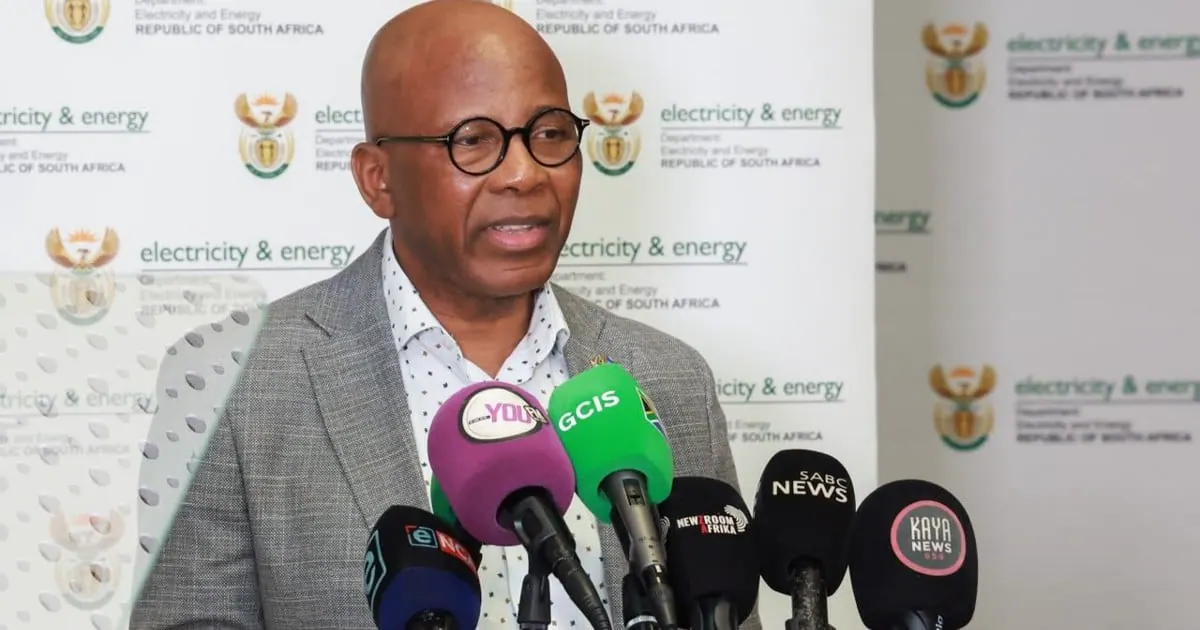
Ramokgopa outlined the government's expectations for Eskom during a media briefing in Pretoria. He emphasised the need for the utility to respond to the changing electricity ecosystem in South Africa. The minister acknowledged that Eskom's failure to fulfil its complete mandate has had far-reaching consequences for the economy and emphasised the importance of recalibrating its mandate to address these challenges.
The changing electricity market in South Africa is characterised by the entry of private players and concessions in transmission. Ramokgopa noted that Eskom could no longer operate as it had in the past, given the growing role of independent power producers and other players in the sector. The utility's long-term financial position depends on retaining customers through reliable service and developing demand through competitive, credible supply arrangements.
The government is seeking to ensure that Eskom remains financially and operationally sustainable while also being adaptable to the changing market. Ramokgopa highlighted the importance of continuity at the board level, with Nyati's extension seen as a key step in maintaining stability and driving the utility's transformation. The minister expressed confidence in Nyati's ability to lead the board and work with the group CEO, Dan Marokane, to deliver on Eskom's mandate.
The extension of Nyati's tenure and the government's efforts to support Eskom's transformation are seen as critical to addressing the challenges facing the power utility. The utility's ability to adapt to a changing electricity market and remain financially and operationally sustainable will be crucial in ensuring a stable and reliable electricity supply for South Africa. The government's support for Eskom's transformation is expected to have a positive impact on the economy and the country's energy sector.
Key points
- The South African government has extended Mteto Nyati's tenure as chairperson of Eskom's board by three years to support the utility's stabilisation and transformation efforts.
- Eskom faces significant challenges, including its failure to deliver affordable and reliable electricity, which has had a direct impact on South Africa's economy.
- The utility must undergo significant reforms to adapt to a changing electricity market and remain financially and operationally sustainable.