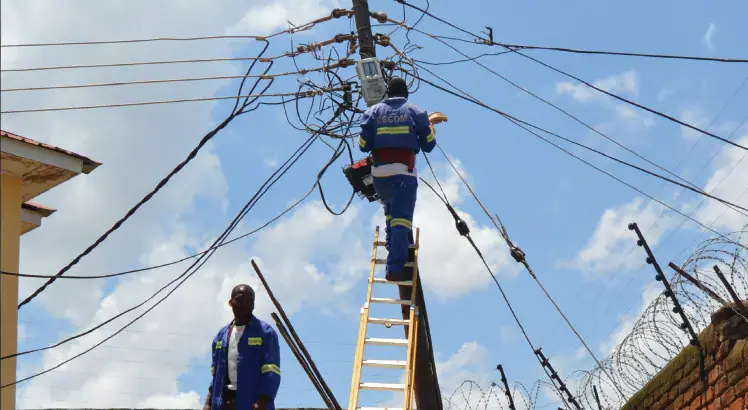
The Electricity Supply Corporation of Malawi (Escom) is set to conduct a nationwide disconnection exercise targeting post-paid customers with outstanding electricity bills. The exercise, scheduled to take place from tomorrow to Friday, will cover all regions and target accounts with unpaid balances that are 30 days or more overdue. This move aims to address the K77.7 billion in outstanding electricity bills accumulated over one month or more.
According to Escom acting director of finance Lawson Nakoma, the utility requires adequate liquidity to fulfil its mandate of powering the country’s development, maintaining a stable electricity grid, and improving service delivery. Government ministries, departments, and agencies (MDAs), the private sector, and individual customers owe the utility approximately K77.7 billion. MDAs account for about 60 percent of the debt, representing approximately K46 billion.
Water boards are among the major debtors, with Blantyre Water Board topping the list at K27 billion. Nakoma stated that as of November 25, Escom's receivables stood at K77 billion. The disconnection campaign aims to collect a substantial amount through this exercise. However, non-payment of electricity bills has affected Escom’s ability to meet its financial obligations to independent power producers (IPPs), including the Electricity Generation Company (Egenco).
Escom is required to pay Egenco K10.5 billion monthly in electricity generation fees but has struggled to meet the obligation due to unpaid bills. Consumers Association of Malawi executive director John Kapito stated that consumers should pay for the services they use. However, he argued that Escom had failed to provide reliable electricity supply and questioned the utility’s continued reliance on post-paid meters despite its financial challenges.
Kapito suggested that prepaid meters would enable Escom to collect revenue before supplying electricity. He expressed concerns about Escom's economic and social bankruptcy, citing the lack of common sense throughout the organisation. Centre for Social Concern programmes manager Agness Nyirongo stated that the situation exposed weak inter-agency accountability and a growing culture of impunity among MDAs.
Nyirongo proposed that the Treasury intervene and ensure that electricity bills are paid directly to Escom to resolve the issue. Earlier this year, the Malawi Energy Regulatory Authority approved a 12 percent electricity tariff increase, the third adjustment for Escom under its four-year tariff adjustment schedule. Following the increase, consumers began paying an average of K160.13 per kilowatt-hour (kWh), up from K142.98.
The disconnection exercise has raised concerns about the impact on consumers and the economy. Meanwhile, suspended Egenco chief executive officer William Liabunya told the Parliamentary Committee on Statutory Corporations and State Enterprises that K95 billion owed to Egenco by Escom had been written off since the unbundling of the two institutions. The situation highlights the need for a sustainable solution to Escom's financial challenges.
Key points
- Escom is owed K77.7 billion in outstanding electricity bills.
- The disconnection exercise aims to collect a substantial amount from post-paid customers.
- Prepaid meters could help Escom collect revenue before supplying electricity.
Reporting sources
- Escom owed K77bn in unpaid bills · The Nation