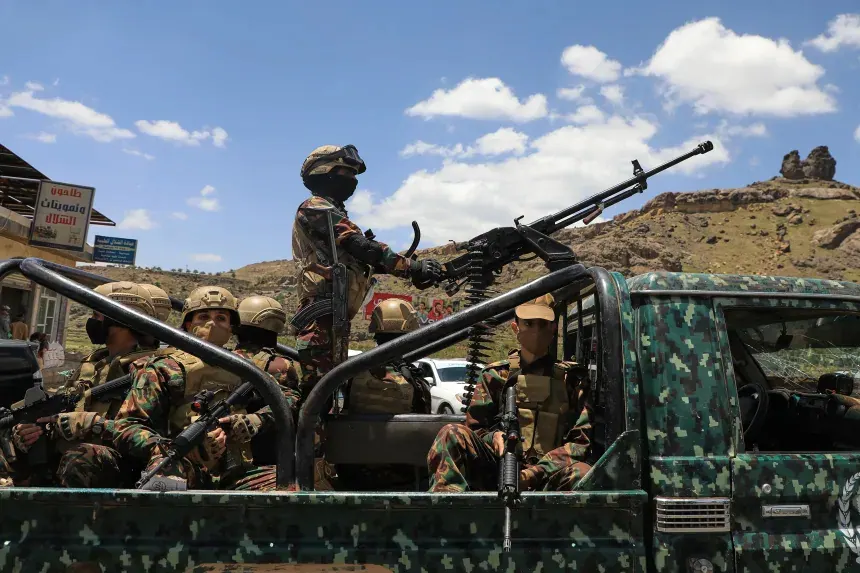
As the United Nations General Assembly (UNGA) prepares to convene in New York, multiple flashpoints across the Middle East are heightening concerns of a broader regional escalation. The conflict between Saudi Arabia and the Iran-backed Huthi rebels in Yemen has intensified, with the Huthis seizing key territory in recent weeks, including a strategic island in the Red Sea and coastal areas overlooking the Bab al-Mandab Strait. This waterway is crucial for global trade and energy shipments.
The Huthi offensive has raised concerns among US and Gulf officials, who fear the group seeks to establish greater control over the waterway. Despite increased US intelligence and targeting support, Saudi Arabia has struggled to halt the Huthi advance. According to reports, Gulf and American officials are increasingly doubtful that Riyadh can reverse the Huthi gains on its own. The situation has led to a significant increase in tensions, with Saudi Arabia accusing the Huthis of targeting Mecca, Islam's holiest city.
The conflict has also led to an exchange of warnings between Washington and Tehran. Iran's central military command reported receiving information suggesting the US, with support from regional partners, could be preparing new military action against Iran. In response, Iran warned that any new US attack would trigger sustained strikes on US bases and interests across the region. Tehran also warned that countries assisting such operations would be considered parties to the conflict.
US President Donald Trump further raised tensions with remarks indicating major decisions on Iran may be approaching. Speaking to Fox News, Trump said he was in "deciding mode" and that "very big things" could happen soon. According to reports, Trump outlined three possible outcomes for Iran: a deal with Washington, increased economic pressure, or military action. Meanwhile, Trump said his administration remains in contact with the Huthis and is still avoiding direct US military involvement in the group's conflict with Saudi Arabia.
The US State Department and several US diplomatic missions have urged Americans in the region to exercise increased caution amid the worsening security environment. The State Department warned that the conflict "has the potential to escalate rapidly" and advised heightened vigilance. Separately, the US Embassy in Saudi Arabia issued a security alert restricting travel by US government personnel to certain cities without special authorization.
Regional diplomacy is expected to dominate discussions at the UNGA, with a focus on Iran, Yemen, maritime security, and energy markets. Saudi Foreign Minister Prince Faisal bin Farhan is leading a delegation, while other regional countries, including Qatar, the United Arab Emirates, and Iran, are sending senior representatives. Iranian President Masoud Pezeshkian is also expected to attend the General Assembly after the Trump administration approved travel for a core Iranian delegation.
The escalating tensions in the Middle East have raised concerns about the potential for a broader regional conflict. With fighting intensifying in Yemen, threats escalating between Washington and Tehran, and energy markets remaining sensitive to disruptions, many diplomats arriving in New York see this year's General Assembly as taking place under one of the most volatile Middle East security environments in recent years.
Key points
- The conflict between Saudi Arabia and the Huthi rebels in Yemen has intensified, with the Huthis seizing key territory in recent weeks.
- The US and Iran have exchanged fresh warnings, heightening concerns of a broader regional escalation.
- The UN General Assembly is set to convene in New York, with regional diplomacy expected to focus on Iran, Yemen, maritime security, and energy markets.