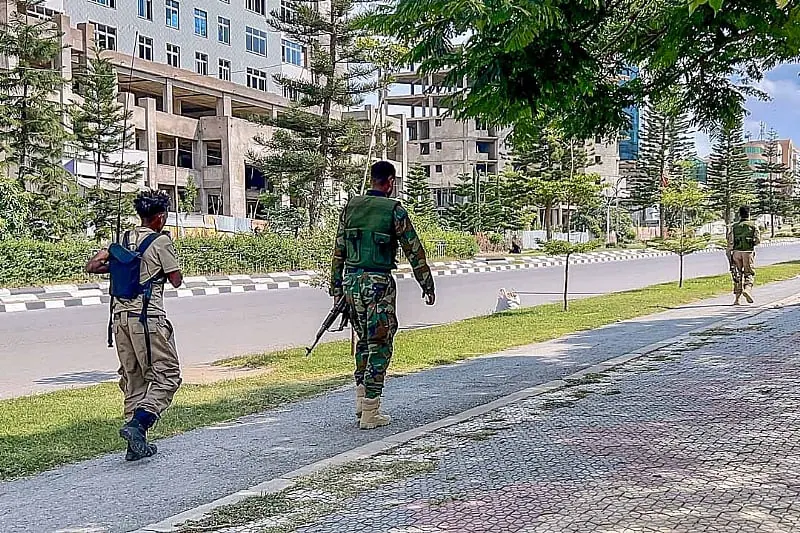
Northern Ethiopia is on the brink of renewed war as large-scale hostilities broke out between the Tigray People’s Liberation Front (TPLF) and Amhara Fano militias, on one side, and the federal government and allied Tigrayan forces on the other. The fighting, which began on September 23, has raised concerns that further escalation could draw in Eritrea and fuse with the war raging in Sudan. The conflict has its roots in the dramatic ascent of Abiy Ahmed to power in 2018, which ended the TPLF’s heavy-handed rule but presaged a new struggle.
The last war between the TPLF and Abiy’s federal government was one of the deadliest in the 21st century, killing hundreds of thousands. The 2022 peace deal, signed in Pretoria, ended the fighting but left several open wounds, including the status of contested territories seized by the Amhara region from Tigray. The TPLF felt aggrieved by the settlement, which it considered lopsided, and failed to honour its disarmament pledge. Eritrea, which had joined the anti-TPLF campaign, felt inadequately consulted on the final deal.
In late April and early May, the TPLF ousted Tigray’s interim administration and reinstalled its head, Debretsion Gebremichael, as regional president. The TPLF then launched a major conscription drive and made comments suggesting its goal was to remove Abiy from power. The federal government responded by cutting off federal funds and restricting fuel to the region, and launched occasional drone strikes on targets in Tigray. Shuttle diplomacy by the African Union’s envoy, former Nigerian President Olusegun Obasanjo, made little progress toward direct negotiations.
The regional climate has contributed to the escalation, with Eritrea now quietly aligned with its former enemy, the TPLF. Addis Ababa accuses Asmara of playing a central role in coordinating the opposition alliance against it. The conflict also has a Sudan angle, with Ethiopia’s leaders furious at the Sudanese army for hosting thousands of Tigrayan fighters. Ethiopia has reportedly responded by allowing arms flows to the Rapid Support Forces (RSF) and permitting it to operate from Ethiopian territory.
On September 20, the TPLF announced it was forming an Alliance for Survival with six other groups, including a major umbrella organisation of the Amhara Fano rebel movement. The alliance’s objective is to overthrow Abiy’s government. The federal government responded with its biggest drone attack since August, targeting an apparent build-up of Tigrayan forces close to the Wollo area of the Amhara region.
The conflict has sparked fears of a return to costly, bloody war, which could inflict suffering on civilians and embroil other states. African leaders, backed by the US and other outside powers, are urging both sides to de-escalate and return to the negotiating table. The situation remains volatile, with many fearing further escalation could have devastating consequences.
The international community is working to prevent a full-blown war, but the situation remains fragile. The conflict has already displaced many Tigrayans from contested territories, who are languishing in temporary camps. A lasting solution will require patient statecraft from outside actors pressing the former belligerents to compromise. The African Union and other regional players are working to facilitate dialogue and find a peaceful resolution to the conflict.
Key points
- The conflict in northern Ethiopia has its roots in the dramatic ascent of Abiy Ahmed to power in 2018.
- The 2022 peace deal left several open wounds, including the status of contested territories seized by the Amhara region from Tigray.
- African leaders and the international community are urging both sides to de-escalate and return to the negotiating table to prevent a full-blown war.