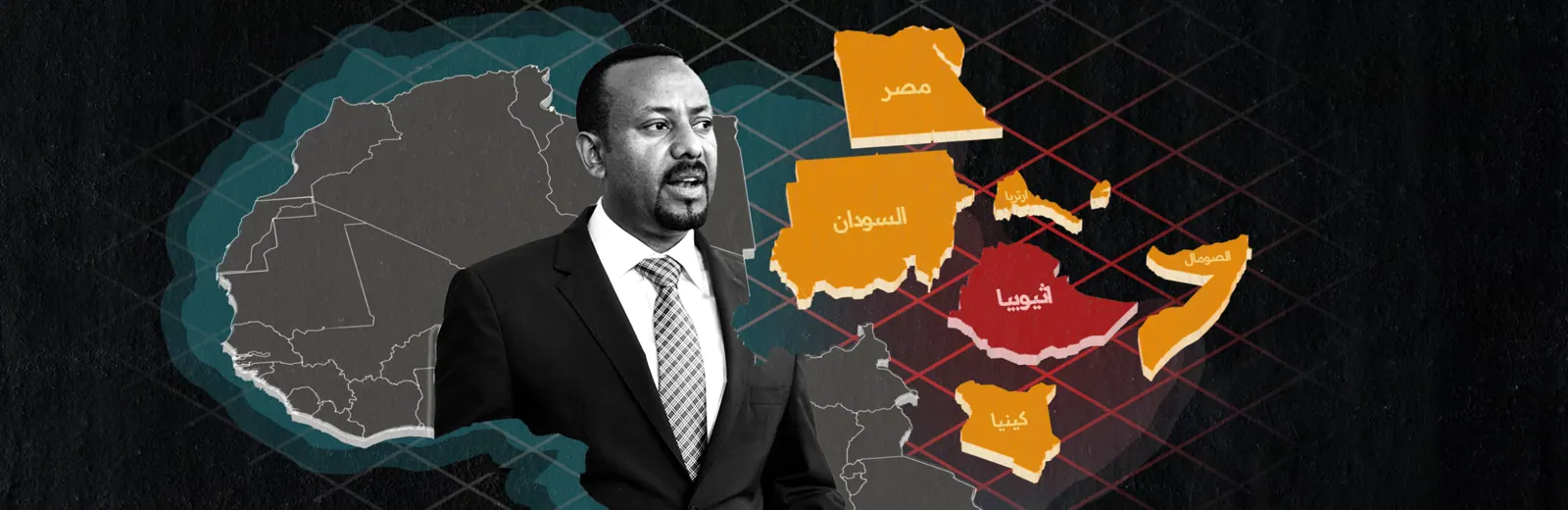
The conflict in Ethiopia's Tigray region has taken a concerning turn, with clashes between the federal government and Tigrayan forces intensifying in recent weeks. The violence has already resulted in significant humanitarian costs, with a recent drone strike killing over 41 tons of food aid for displaced persons. The escalation has raised concerns about the potential for a wider regional conflict, with neighboring countries such as Eritrea, Egypt, Somalia, and Sudan closely watching the situation.
The conflict in Tigray has been brewing for months, with tensions between the federal government and the Tigrayan authorities increasing steadily. The situation took a turn for the worse in September, when a drone strike hit a truck carrying food aid, killing its occupants. Three days later, Tigrayan forces took control of three airports in the region, leading to the suspension of Ethiopian Airlines flights to Tigray. The federal government accused the Tigray People's Liberation Front (TPLF) of launching the attack, while Tigrayan authorities claimed they were responding to federal aggression.
The conflict has also led to a new alliance between the TPLF and other armed groups in Ethiopia, including the National Movement of Amhara (FANO). The alliance, known as the Ethiopian People's Revolutionary Coalition, aims to overthrow the government of Prime Minister Abiy Ahmed and establish a transitional administration. The development has raised concerns about the potential for a wider conflict, with some analysts warning that the situation could spiral out of control.
The conflict in Tigray has also drawn in neighboring countries, with Eritrea and Sudan accused of providing support to the warring parties. Eritrean President Isaias Afwerki has been a vocal supporter of the TPLF, while Sudan has been accused of providing military support to the group. Egypt, which has long been concerned about Ethiopia's growing military power, has also been watching the situation closely.
The regional implications of the conflict are significant, with the potential for a wider conflict drawing in multiple countries. The Horn of Africa has long been a volatile region, with many countries having competing interests and claims. The conflict in Tigray has the potential to upset the delicate balance of power in the region, with some analysts warning that it could lead to a wider conflict.
Prime Minister Abiy Ahmed has been vocal about his vision for a new Ethiopia, with some analysts interpreting his comments as a call for a fundamental transformation of the country's politics and economy. However, his comments have also been seen as a provocation by some of his critics, who accuse him of seeking to consolidate power and suppress dissent.
As the conflict in Tigray continues to escalate, there are growing concerns about the humanitarian costs. The region is already home to hundreds of thousands of displaced persons, and the conflict has disrupted food aid and other essential services. The international community has called for a ceasefire and negotiations, but so far, the warring parties have shown little sign of backing down.
Key points
- The conflict in Tigray has the potential to draw in multiple countries and spark a wider regional conflict.
- The humanitarian costs of the conflict are already significant, with hundreds of thousands of displaced persons and disrupted food aid.
- The conflict has significant regional implications, with the potential to upset the delicate balance of power in the Horn of Africa.