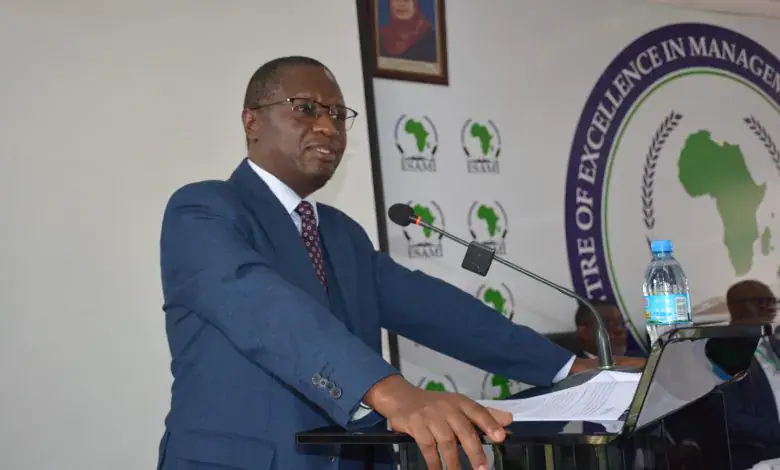
The East and Southern Africa Management Institute (ESAMI) has urged African countries to increase investment in research and innovation, and strengthen collaboration between research institutions and the private sector. This call was made during the 2nd ESAMI Global Research Colloquium, held in Arusha, Tanzania, as part of the institute's 50th anniversary celebrations. The colloquium brought together researchers, academics, policymakers, and private sector leaders to discuss research funding, systems, and infrastructure.
According to ESAMI's Director of Research and Professional Advisory Services, Dr. Henry Waruhiu, Africa has no shortage of experts and capable researchers, but lacks robust funding and collaboration systems to translate research into practical applications. Many high-quality research studies have been confined to libraries and academic publications, rather than being used to improve people's lives, drive industrial growth, and inform policy decisions.
The 2025 colloquium, which drew over 500 participants from 140 institutions, discussed research systems, governance, and impact on society. Dr. Waruhiu emphasized the need to invest in laboratories, data storage systems, and digital technologies to enable African researchers to compete globally. This investment is crucial for creating a supportive ecosystem for research and innovation.
ESAMI's Deputy Director-General, Professor David Kalaba, stressed that research should be directly linked to the challenges faced by leaders, governments, and the private sector. Research should not be an academic exercise, but rather a tool to inform decision-making and drive positive change in people's lives. ESAMI aims to integrate its leadership training programs with research to ensure that generated knowledge is used to address practical challenges.
In his opening remarks, ESAMI's Director-General, Professor Peter Kiruku, emphasized that Africa must develop its capacity to generate knowledge and technology, rather than relying on imported products and systems. The world is undergoing significant economic changes driven by technological advancements, climate change, and shifting production and distribution systems.
Professor Kiruku noted that in the 20th century, national wealth was largely measured by natural resources, but in the 21st century, it is increasingly dependent on knowledge generated in laboratories, universities, and research institutions. He emphasized that no continent can outsource its industrial autonomy and that Africa must take control of its own research and innovation agenda.
The ESAMI Global Research Colloquium aims to promote a culture of research and innovation in Africa, and to foster collaboration between researchers, policymakers, and the private sector. By working together, African countries can harness the power of research and innovation to drive economic and social development, and improve the lives of their citizens.
Key points
- ESAMI urges African countries to increase investment in research and innovation to drive economic and social development.
- Strengthening collaboration between research institutions and the private sector is crucial for translating research into practical applications.
- Africa must develop its capacity to generate knowledge and technology, rather than relying on imported products and systems.
Reporting sources
- ESAMI: Afrika haipaswi kutegemea maarifa, teknolojia za nje · habarileo.co.tz