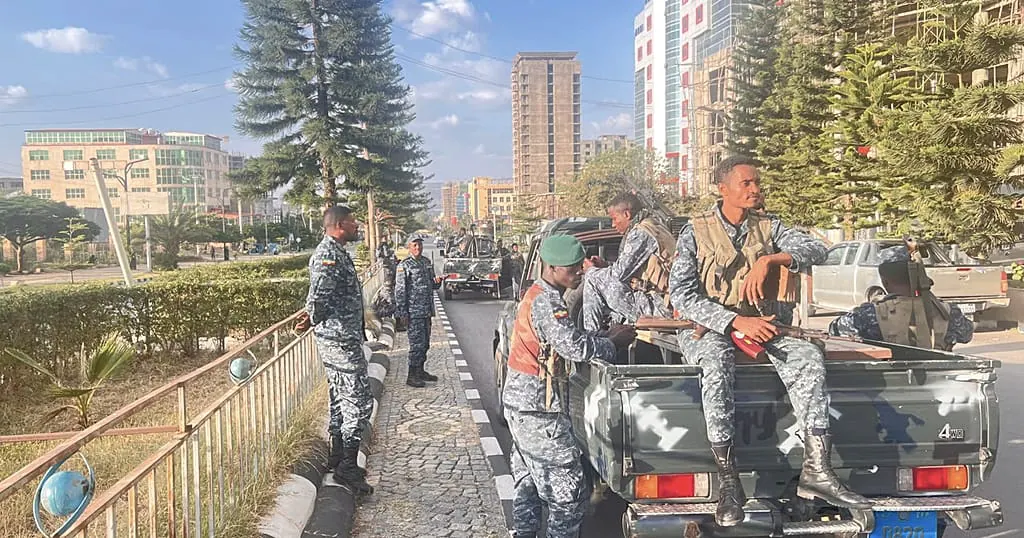
Eritrea's Foreign Minister Osman Saleh wrote to the United Nations, warning that Ethiopia's actions would cause "huge devastation" to both countries and destabilize the region. This move comes after Ethiopia accused Eritrea of launching an "all-out invasion" into the Tigray region. Eritrean troops allegedly advanced up to 60 kilometres into Tigray, sparking fears of a return to all-out war along Ethiopia's northern border.
The conflict between Eritrea and Ethiopia has a long history, with Eritrea gaining independence from Ethiopia in 1993. The two countries fought a deadly border war from 1998 to 2000, but relations improved after Ethiopian Prime Minister Abiy Ahmed came to power in 2018. However, tensions have soured again in recent years, with Ethiopia seeking direct sea access, which Eritrea sees as a threat to its port at Assab.
Residents in the Tigrayan city of Adigrat report that Ethiopian government forces and their militia allies have entered the city near the border with Eritrea. The city has faced a severe crisis, with people struggling with hunger and a lack of medical treatment. Resident Hagos Woldegebriel described the situation as dire, with children and the elderly suffering from hunger and sick people dying due to a lack of medical care.
The Tigray People's Liberation Front (TPLF), which controls the region, has been battling Ethiopian government forces, backed by Eritrea, in a devastating 2020-2022 war. The TPLF launched attacks against federal forces last month in the northern Ethiopian region, prompting Eritrean forces to invade Ethiopian territory. The Ethiopian army has pushed back the TPLF and seized their capital, Mekelle.
Eritrea has denied the incursion, saying the claim is part of Addis Ababa's plan to justify its war of aggression. However, people displaced from the region, such as Teame Lemlem, who was displaced from Zalambessa during a previous conflict, describe a dire situation. Lemlem says everything is running out, with banks closed, food supplies dwindling, and people dying without medical care.
The situation in Tigray remains critical, with residents urging Ethiopian authorities to help them. The conflict has raised fears of a return to all-out war along Ethiopia's northern border, with potential catastrophic consequences for the region. The international community is watching closely, as the United Nations considers Eritrea's request for intervention.
Ethiopian Airlines has announced plans to resume flights to Tigray's capital, Mekelle, from Sunday. However, the renewed violence in the region has left dozens of children wounded, and peace talks may be on the brink of collapse. The situation remains volatile, with Eritrea and Ethiopia locked in a standoff that shows no signs of easing.
Key points
- Eritrea has asked the UN to take "deterrent measures" against Ethiopia, describing Addis Ababa's actions as a "declaration of war" over the Tigray region.
- The conflict between Eritrea and Ethiopia has a long history, with tensions souring again in recent years over issues such as sea access and support for rebel groups.
- The situation in Tigray remains critical, with residents facing a severe crisis and urging Ethiopian authorities to help them.