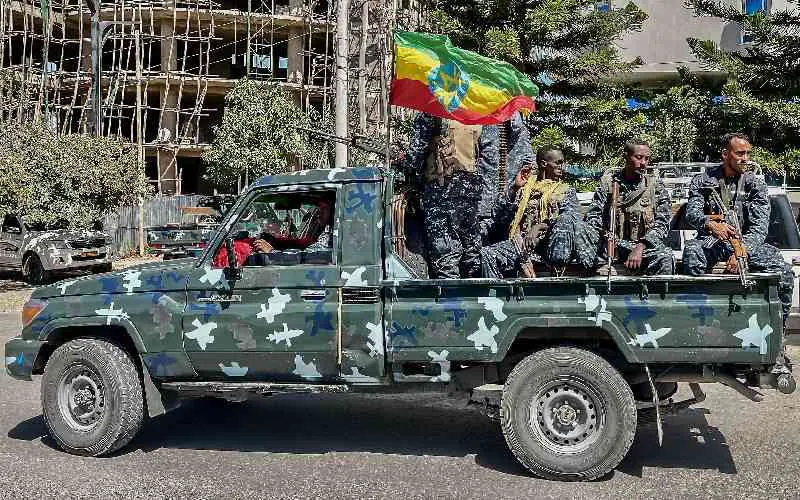
Eritrea's Foreign Minister Osman Saleh has written to the UN Security Council, requesting that they "forcefully condemn Ethiopia's deplorable declaration of war" and take "deterrent measures". This move comes after a significant escalation in tensions between the two countries over the Tigray region. Eritrea and Ethiopia have accused each other of aggression in the conflict.
The conflict between Eritrea and Ethiopia centers around the Tigray region, where Ethiopia claims Eritrea is supporting rebels. The Tigray People's Liberation Front (TPLF) launched attacks against federal forces last month, prompting a response from the Ethiopian army. Eritrean forces have since invaded Ethiopian territory, leading to a significant increase in tensions between the two nations.
The Ethiopian army has made significant gains in the conflict, pushing back the TPLF and seizing their capital, Mekelle. Additionally, Ethiopia has launched drone strikes against Eritrean troops in the region. Eritrea views these actions as a threat to its sovereignty and has called for international intervention.
Ethiopia's Foreign Minister Gedion Timothewos has accused Eritrea of "a blatant act of aggression" and stated that Ethiopia has a right to self-defense. This has further escalated tensions between the two countries, which have a complex history. Eritrea gained independence from Ethiopia in 1993, and the two countries fought a border war from 1998 to 2000.
Relations between Eritrea and Ethiopia had improved after Ethiopian Prime Minister Abiy Ahmed came to power in 2018. However, tensions have increased again in recent years, particularly over issues of sea access. Ethiopia is landlocked and claims a right to direct sea access, which Eritrea sees as a threat to its port at Assab.
The conflict between Eritrea and Ethiopia has significant regional implications. The two countries have a history of conflict, and their tensions can destabilize the entire region. The international community is closely watching the situation, with the UN Security Council being urged to take action.
The situation remains volatile, with both sides accusing each other of aggression. Eritrea is seeking international support to pressure Ethiopia to cease its actions, while Ethiopia claims it is acting in self-defense. The conflict has already caused significant humanitarian concerns, and a peaceful resolution is being sought.
Key points
- Eritrea has asked the UN Security Council to take action against Ethiopia, calling its actions a "declaration of war".
- The conflict between Eritrea and Ethiopia centers around the Tigray region, where Ethiopia claims Eritrea is supporting rebels.
- The situation has significant regional implications, with the potential to destabilize the entire region.