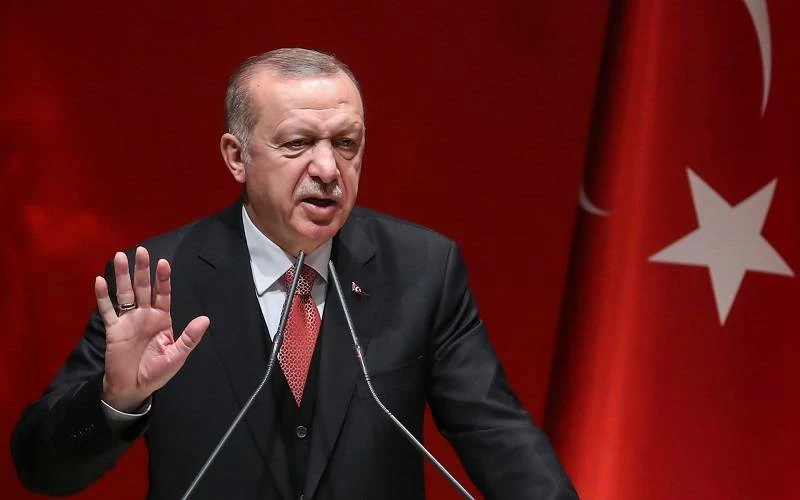
Turkish President Recep Tayyip Erdogan has stated that the Makkah Agreement on mutual defense, signed with Saudi Arabia and Pakistan, should not be viewed as a targeted alliance against Iran, Israel, or any other country. In an interview with Newsweek, Erdogan emphasized that the agreement represents a shared responsibility among the signatory parties to build a more secure, peaceful, and prosperous future. He highlighted Turkey's commitment to enhancing its security, deterrence capabilities, and supporting sustainable stability in the region.
Erdogan explained that the agreement is based on Article 51 of the United Nations Charter, which pertains to the right of self-defense. The pact considers any armed attack on one of the three countries as an attack on all parties. He noted that the nature of the response can be determined based on the requesting country's needs, which may include intelligence, logistical support, or military aid. Erdogan also mentioned that the agreement was signed on August 7 in Makkah, Saudi Arabia, with the aim of promoting regional and global security, stability, and prosperity.
The Turkish President discussed the current global landscape, describing it as a period of significant turmoil. He cited ongoing conflicts, including the Russia-Ukraine war and tensions in the Middle East, which directly impact regional security, economy, and stability. Erdogan stressed the importance of expanding diplomacy, rather than limiting it, to address these challenges. He emphasized Turkey's commitment to preventing the escalation of conflicts and maintaining open channels of dialogue.
Erdogan called for reforming the international system, citing rapid changes in global power dynamics and the emergence of new centers of influence. He argued that the United Nations, particularly the Security Council, must adapt to these shifts and become more representative and effective. Erdogan advocated for a more equitable distribution of responsibilities among nations and a stronger role for the General Assembly in decision-making processes.
Regarding tensions between Iran and the United States, Erdogan urged restraint and diplomatic engagement. He emphasized that a lasting solution can only be achieved through dialogue and negotiation. Erdogan noted that Turkey maintains open channels of communication with Iranian officials, which enables the country to contribute to de-escalating tensions. He highlighted the significance of these efforts for regional security and the global economy.
Erdogan discussed his relationship with US President Donald Trump, describing it as a direct and candid channel of communication. He noted that their dialogue allows for the discussion of sensitive issues, including tensions between Iran and the US. Erdogan expressed confidence in the strong and multidimensional alliance between Turkey and the US, citing areas of cooperation in defense industries, trade, and regional security.
Erdogan also addressed Turkey's relations with Israel, acknowledging significant differences in views on various issues. He criticized the promotion of rhetoric portraying Turkey as a threat within Israel, which he attributed to internal political dynamics and electoral considerations. Erdogan reaffirmed Turkey's commitment to peaceful coexistence and its opposition to anti-Semitic or anti-societal sentiments.
Key points
- Erdogan emphasizes that the Makkah Agreement is not targeted at Iran or Israel.
- The Turkish President calls for reforming the international system to reflect changing global power dynamics.
- Erdogan advocates for diplomatic engagement to address tensions between Iran and the US.