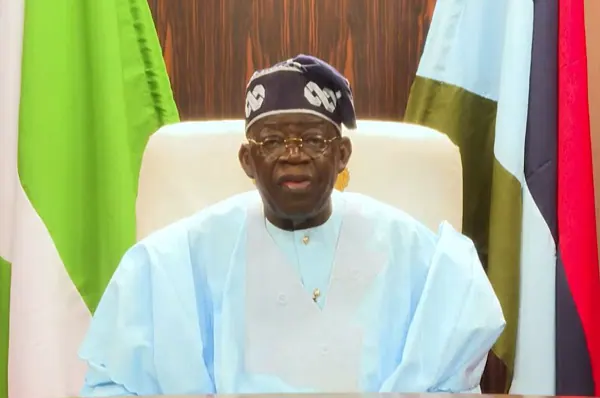
President Bola Ahmed Tinubu has declared that Nigeria has reached a turning point in its economic recovery, marking the end of painful reforms and the beginning of an "age of prosperity". In his Independence Day address to Nigerians, Tinubu stated that the period of reforms has accomplished its purpose, and the country is now focused on ensuring that the gains translate into lower living costs, jobs, increased production, and broadly shared prosperity.
Tinubu likened the state of the economy his administration inherited in 2023 to a cancer patient requiring painful treatment. He said the government had completed what he called the "emergency treatment" of the economy and repaired its foundations. The President's central task now shifts from correcting structural economic distortions to ensuring that the gains of the reforms benefit all Nigerians.
The President's vision for prosperity is not merely about headline economic growth or improved statistics, but about creating conditions under which Nigerians can afford food and transportation, access education and healthcare, secure productive employment, and confidently plan their future. He outlined plans to increase agricultural production through mechanized irrigation, dry-season farming, improved access to seeds and fertilizer, and greater mechanization.
Tinubu also highlighted ongoing investments in roads, railways, and ports, which will reduce the cost of moving produce and manufactured goods from farms and factories to markets. He believes that when a farmer produces more cheaply, and a truck reaches its destination faster, the savings will ultimately find their way into the price of goods in the market.
The President emphasized that job creation, enterprise development, and industrial expansion will be at the center of government policy. He wants to see more Nigerians making things, more Nigerian farms feeding cities and supplying factories, and Nigerian businesses selling goods to the world. Tinubu aims to convert Nigeria's huge youthful population into an engine of economic production by equipping young people with in-demand skills.
Defending the economic reforms undertaken since his assumption of office, Tinubu rejected calls for a reversal of some policies, particularly subsidies. He argued that the measures did not create Nigeria's economic weaknesses but were introduced to confront them. The President acknowledged that the reforms imposed hardship on Nigerians but insisted that they must distinguish between the medicine and the disease.
Tinubu reported that three and a half years after the reforms began, Nigeria's economic outlook has improved, citing economic growth of more than four percent this year, contributions from both oil and non-oil sectors, and declining inflation. He also mentioned that Nigeria recorded its highest non-oil export revenue in 2025, exceeding $6 billion, and that increased foreign direct investment and private sector activity reflect improving confidence in the economy.
Key points
- President Tinubu marks the end of painful economic reforms and the beginning of an "age of prosperity" in Nigeria.
- The President outlines plans to increase agricultural production, invest in infrastructure, and promote job creation and industrial expansion.
- Tinubu defends economic reforms, citing improved economic outlook and increased foreign investment.