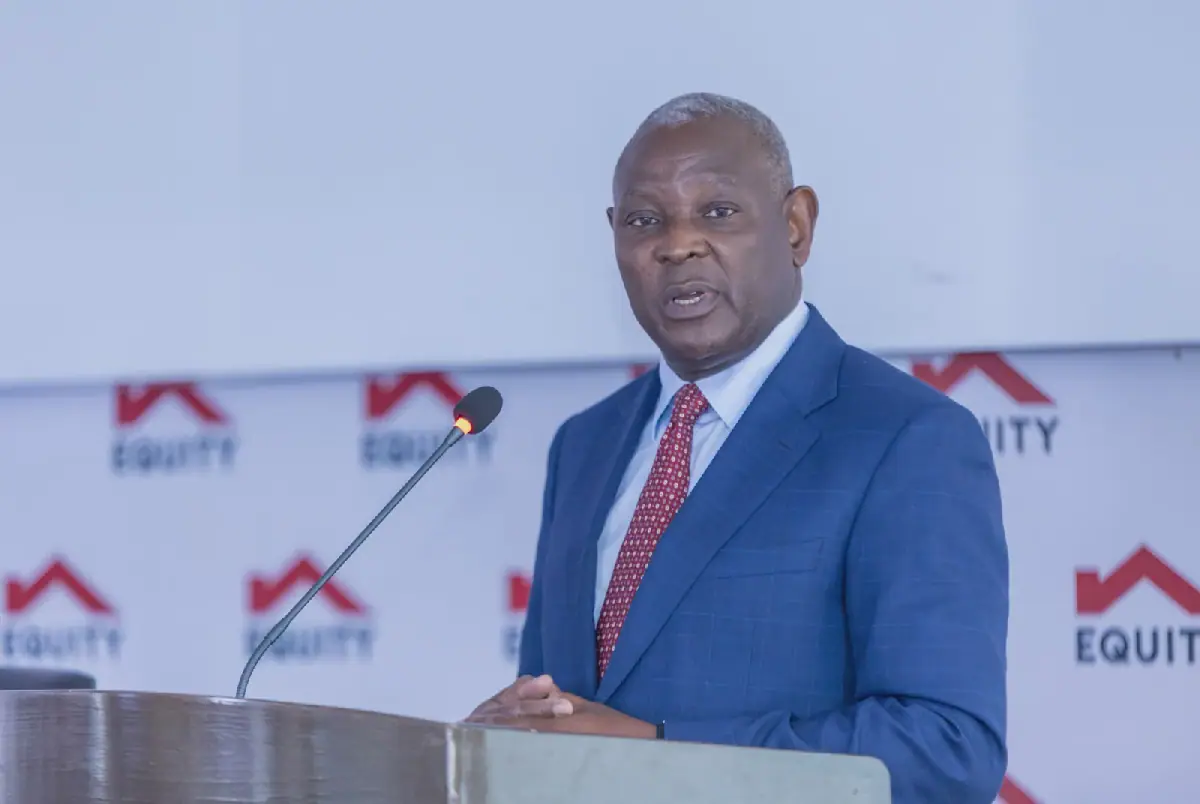
Equity Group Holdings Plc, one of East Africa's largest financial institutions, reported a 32% increase in net profit to KSh71.5 billion for the nine months through September 2026. This growth was driven by stronger lending, expanding operations outside Kenya, and rising income from fees and other services. The Nairobi-based lender's profit before tax climbed 37% to KSh89.8 billion from KSh65.6 billion a year earlier.
The performance was supported by growth in customer deposits, improved loan quality, and higher contributions from its regional banking subsidiaries. Total assets rose 18% to KSh2.15 trillion from KSh1.82 trillion, while customer deposits increased 19% to KSh1.58 trillion from KSh1.32 trillion. Net loans grew 17% to KSh1.01 trillion from KSh859.8 billion, reflecting increased lending to corporations, small and medium-sized businesses, retail customers, and public-sector borrowers.
Equity Bank Kenya, the group's largest subsidiary, recorded a 31% increase in profit after tax to KSh40.7 billion, supported by a 10% expansion in customer deposits and 12% growth in loans. The Kenyan business accounted for approximately 57% of group net profit, underscoring its continued importance even as subsidiaries in other markets expand. Equity Bank Tanzania reported a 60% increase in profit after tax, the fastest growth among the subsidiaries highlighted in the results.
The growing contribution from regional markets is helping Equity reduce its dependence on Kenya, where banks face competition for deposits, pressure on lending margins, and changing credit conditions. Tanzania, DRC, and Uganda also led loan-book expansion across the regional franchise. Fee income and digital banking are becoming increasingly important, with non-funded income rising 34% to KSh84.3 billion and its contribution to total income increasing to 44% from 40.1% in the corresponding period last year.
The lender said 98.3% of customer transactions now take place outside physical branches, with digital channels accounting for 89.5% of transactions. The growing adoption of digital services is central to Equity's strategy of expanding customer activity without a corresponding increase in the cost of operating its branch network. Operating efficiency improved during the period, with the group's cost-to-income ratio declining to 47.9% from 50.6% a year earlier.
Equity also reported an improvement in asset quality, a closely watched indicator for investors assessing the health of banks' lending portfolios. The group's non-performing loan ratio declined to 9.3% from 12.1% a year earlier, while its cost of risk fell to 1.5% from 1.9%. Non-performing loan coverage stood at 71%, indicating the extent to which the bank has made provisions against troubled credit.
Group Managing Director and Chief Executive Officer James Mwangi attributed the performance to the company's transformation strategy, regional expansion, and investments in digital financial services. The results position the lender for another year of earnings growth, with regional expansion, increased lending, and transaction-based income emerging as important drivers of profitability.
Key points
- Equity Group's net profit increased by 32% to KSh71.5 billion for the nine months through September 2026.
- The group's regional expansion and digital banking services drove growth, with total assets rising 18% to KSh2.15 trillion.
- Equity's non-performing loan ratio declined to 9.3% from 12.1% a year earlier, indicating improved asset quality.