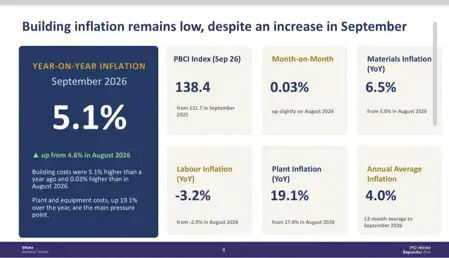
Ghana's construction sector inflation rate increased to 5.1 percent in September 2026, according to the Ghana Statistical Service's (GSS) Prime Building Cost Index (PBCI). This rise is primarily attributed to the surging costs of plant and equipment. The construction sector is a significant contributor to Ghana's economy, and this increase in inflation may have implications for the sector's growth and development.
The construction sector is vulnerable to fluctuations in equipment costs, which can impact project costs and timelines. The GSS's PBCI is a widely used indicator of construction costs in Ghana, and the recent increase in inflation may signal a challenging period for the sector. Industry stakeholders will be closely monitoring the situation to assess the potential impact on construction projects and the overall economy.
Ghana's inflation rate has been rising, and the construction sector is not immune to these pressures. The sector has experienced relief in labour costs, but this has been offset by the increase in equipment costs. The Ghanaian government and industry stakeholders will need to work together to address these challenges and ensure the continued growth and development of the construction sector.
The construction sector plays a vital role in Ghana's economic development, and its performance has a significant impact on the overall economy. The sector has been growing steadily, driven by government investment in infrastructure projects and a thriving private sector. However, the recent increase in inflation may pose challenges to the sector's growth and development.
The Bank of Ghana (BoG) is exploring new approaches to assessing price pressures, including the use of artificial intelligence (AI) and online prices to estimate changes in consumer costs. This data-driven approach may provide monetary policymakers with faster signals of inflationary pressures, allowing for more timely interventions. The BoG's efforts to improve its inflation assessment tools are crucial in the current economic climate.
Ghana's economy has been experiencing significant growth, driven by various sectors, including construction, energy, and finance. The country's inflation rate has been rising, and the BoG is working to address these pressures through monetary policy interventions. The construction sector's performance will be critical in determining Ghana's economic growth trajectory.
The Ghanaian government's efforts to promote economic growth and development are being supported by various initiatives, including investments in infrastructure projects and the promotion of private sector growth. The construction sector is expected to play a vital role in these efforts, and its performance will be closely monitored by stakeholders.
Key points
- Construction sector inflation in Ghana rose to 5.1% in September 2026.
- The increase in inflation is primarily attributed to surging plant and equipment costs.
- The construction sector's performance will be critical in determining Ghana's economic growth trajectory.