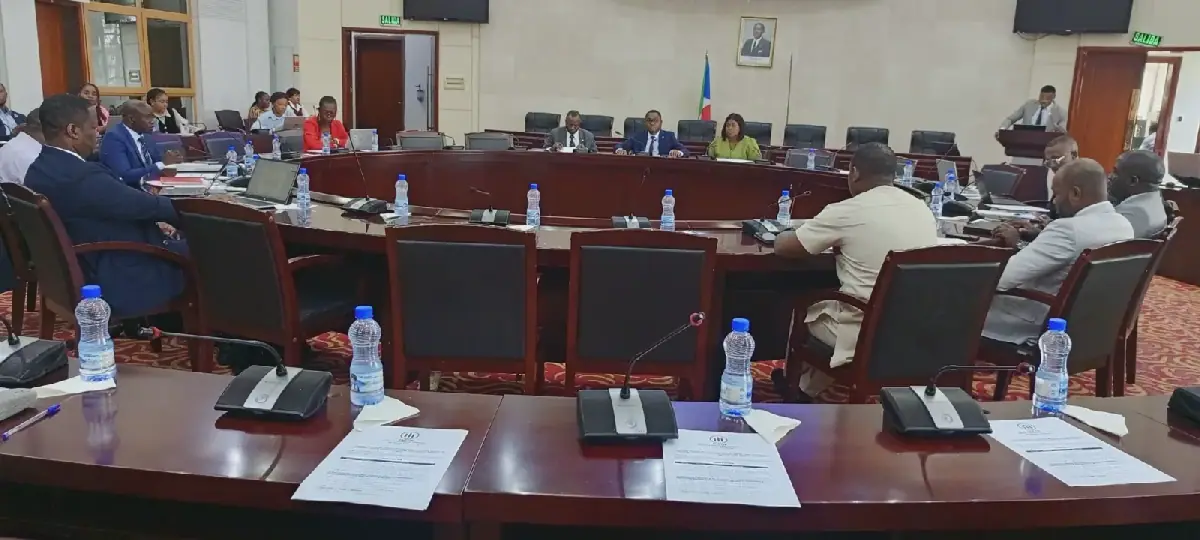
The Scientific Committee of Equatorial Guinea's 5th Population and Housing Census and 1st Agricultural Census has validated technical documents for the census execution. The committee's president, Ricardo Nsue Ndemesogo Obono, emphasized that the census value depends on data quality, coverage, coherence, and reliability. He highlighted the need for coordinated work to obtain data that meet the country's needs and inform public decisions.
The committee examined revised documents incorporating observations and recommendations from a technical workshop held from October 26 to November 6. The workshop involved technicians from various ministries, the Central Census Office, and specialized partners. They analyzed initial proposals, discussed methodological options, and suggested improvements to questionnaires and data collection instruments.
The validated documents include census mapping and general enumeration strategies. The census mapping strategy establishes territorial bases for fieldwork and delineates enumeration areas. The general enumeration strategy guides population and housing registration procedures. The committee also validated pilot census and post-census survey strategies to test organization and tools and evaluate data coverage and quality.
The committee approved data processing and analysis strategies, publication, dissemination, and data archiving. These strategies cover census operations from data collection to treatment, conservation, and user availability. Field instruments validated include questionnaires for ordinary and collective households, community questionnaires, and post-census surveys.
The session also approved the census logo and slogan, along with a synthesis of observations. The 5th Population and Housing Census and 1st Agricultural Census will be conducted jointly to optimize resources and coordinate operations. Each census will maintain its objectives, methodological particularities, and technical requirements.
The 1st Agricultural Census has a broader scope than the 2015 agricultural census, including livestock, fishing, and aquaculture. This expansion will provide information on productive activities necessary for sectoral planning. The process is supported by strategic documents approved by the National Statistics Council on August 27 and has technical and financial backing from the UNFPA.
The validated documents and strategies will guide the census execution, ensuring accurate and reliable data for Equatorial Guinea's development planning. The census will provide essential information for informed decision-making and resource allocation.
Key points
- The validated documents include strategies for census mapping, general enumeration, pilot census, and post-census surveys.
Reporting sources
- El Comité Científico del quinto Censo de Población y Vivienda y del primer Censo Agropecuario valida los documentos técnicos para su ejecución · AHORAEG Guinea Ecuatorial - Diario online líder de noticias