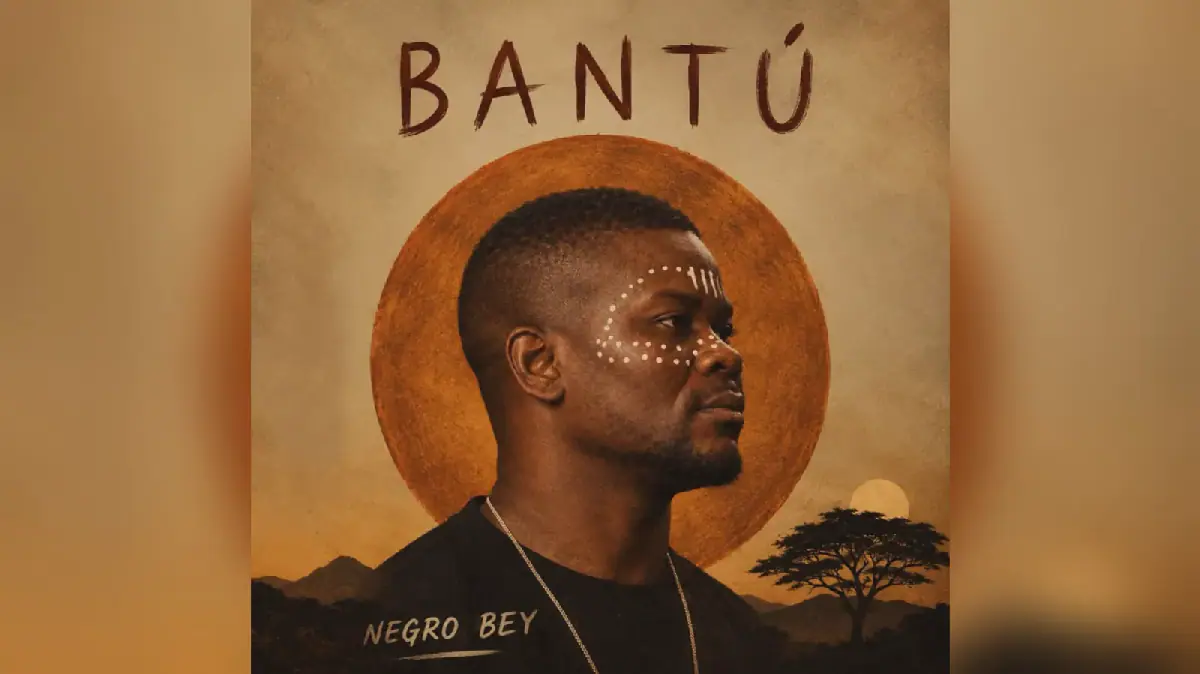
Negro Bey, a prominent figure in Equatorial Guinea's music scene, has unveiled his latest album "Bantú". This new project marks a significant chapter in his career, which began with the group Verso Roto and continued as a solo artist. With "Bantú", Negro Bey embarks on a musical journey that explores themes of memory, identity, and African reality. His music has been shaped by his experiences and the cultural landscape of Equatorial Guinea.
Negro Bey's musical journey started with Verso Roto, a group he was part of before pursuing a solo career. In 2009, Verso Roto released "Erosión", their debut album. However, the group's members went their separate ways due to academic and professional commitments, leading Negro Bey to continue his musical project solo. His first solo album, "Cicatriz", was released in 2011, followed by "Reliquia" in 2013, and "El Trovador" in 2019. Through his music, Negro Bey has consistently used rap as a platform to share experiences, raise questions, and address social issues.
Negro Bey's evolution as an artist has been characterized by his experimentation and commitment to representing Equatorial Guinea's culture. In an interview with AhoraEG in 2020, he explained that his albums represent different stages of his artistic growth. With "El Trovador", he entered a new phase of maturity, marked by a strong sense of reivindicación, or advocacy. This album showcased his ability to blend rap with traditional Equatoguinean music elements, creating a unique sound that has become a hallmark of his career.
Negro Bey's music has gained international recognition, with performances at festivals in Spain, Morocco, Cabo Verde, Nigeria, Cameroon, Gabon, the Dominican Republic, El Salvador, Germany, and Macao. In 2015, he shared the stage with Spanish rapper El Chojín, further solidifying his reputation as a talented artist. His participation in the Festival Internacional Malabo Hip Hop has also contributed to his growing international presence.
In addition to his music, Negro Bey is also a writer and has explored the intersection of music, writing, and culture. In 2018, he appeared on RTVE to discuss his album "Reliquia" and his book, "Cultura Urbana de Guinea Ecuatorial", which chronicles the history and evolution of hip hop in Equatorial Guinea. Through his writing, Negro Bey provides a unique perspective on the cultural landscape of his country and the role of hip hop within it.
Negro Bey's commitment to promoting Equatorial Guinea's culture and identity through his music and writing has earned him recognition within the country and beyond. His ability to blend traditional and modern elements has created a distinctive sound that resonates with audiences. As a prominent figure in Equatorial Guinea's music scene, Negro Bey continues to push boundaries and explore new themes in his work.
With "Bantú", Negro Bey invites listeners to embark on a musical journey that explores the complexities of African reality. Through his music, he aims to spark conversations, raise awareness, and promote understanding. As a talented artist and advocate for Equatorial Guinea's culture, Negro Bey's latest album is a testament to his dedication to his craft and his community.
Key points
- Negro Bey's album "Bantú" represents a new chapter in his career, exploring themes of memory, identity, and African reality.
- Negro Bey's music blends traditional Equatoguinean elements with modern styles, creating a unique sound that has gained international recognition.
- Negro Bey is also a writer and has published a book on the history and evolution of hip hop in Equatorial Guinea.