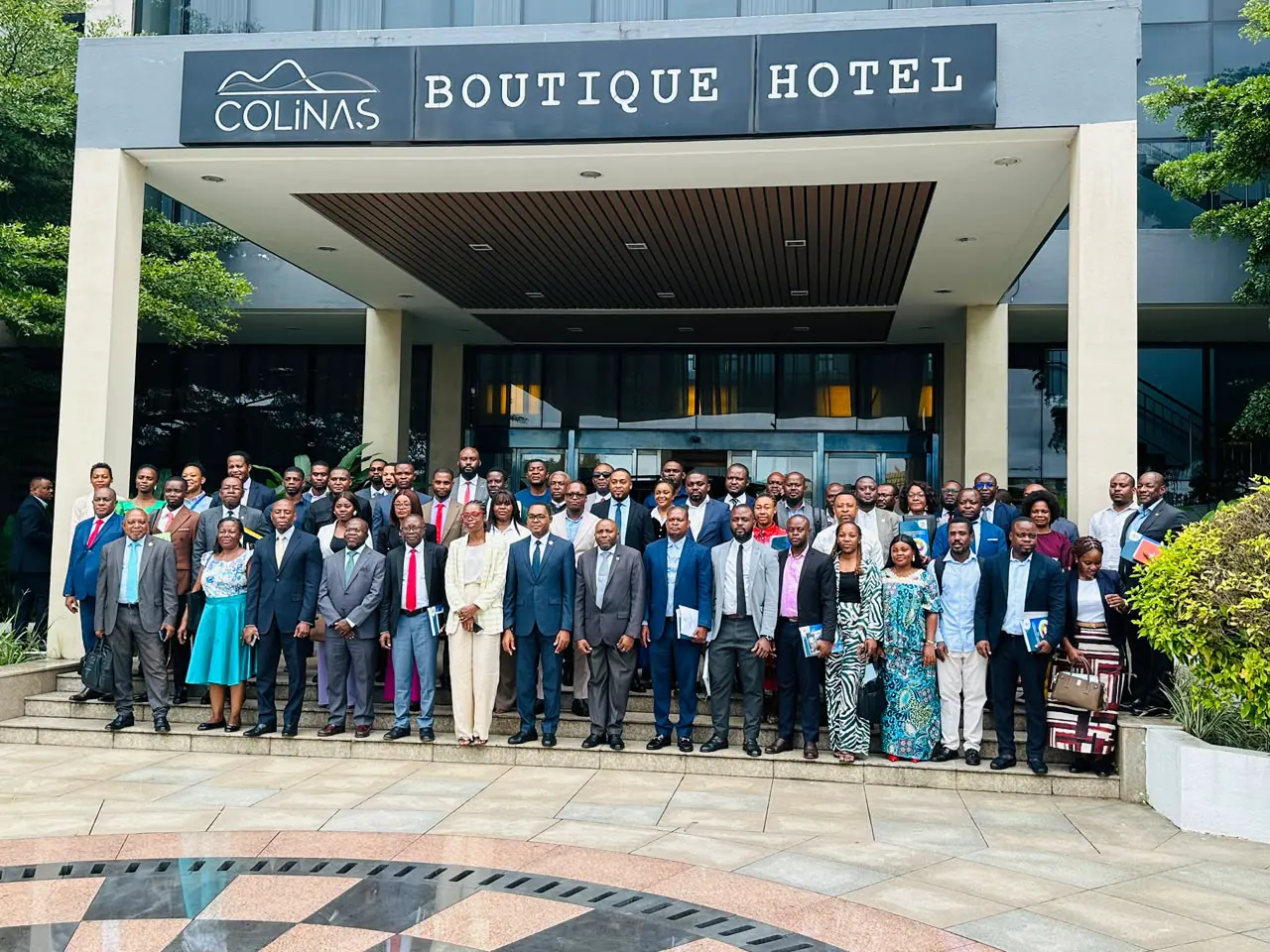
The National Institute of Statistics of Equatorial Guinea (INEGE) recently presented the ninth edition of its Statistical Yearbook, an event attended by high-ranking officials from various government ministries and institutions. The yearbook is a comprehensive compilation of statistical data that provides insights into the country's economic, social, demographic, and environmental trends. The presentation highlighted the importance of statistics as a public good and a shared responsibility that requires the participation of all stakeholders in society.
The Statistical Yearbook is more than just a collection of numbers; it is a tool for identifying needs, understanding the country's transformations, and guiding institutional responses. In a rapidly changing context, having access to reliable, relevant, and timely information is crucial for public planning, policy evaluation, and research. The yearbook's ninth edition is a result of collaboration between various government departments, public entities, autonomous organizations, and companies that have provided information.
The production and use of statistics require the coordinated participation of all actors in society, as reflected in the diverse range of institutions present at the presentation. These include representatives from diplomatic missions and United Nations agencies accredited in the country. The yearbook contributes to building a national statistical culture, where data is not only produced but also understood and used to improve decision-making.
The INEGE director-general, Ricardo Nsue Ndemesogo, emphasized that producing statistics is about knowledge, sharing them is about coordination, and using them is about transforming knowledge into decisions. He expressed his desire for the 2026 Statistical Yearbook of Equatorial Guinea to be widely consulted and used. The publication's quality depends on the quality of its sources, and the INEGE has thanked the various institutions that have contributed to this edition.
Despite progress, several challenges remain, including strengthening administrative records for statistical purposes, digitalizing and modernizing processes, improving the interoperability of information systems, and enhancing the technical capacities of data-producing institutions. To address these challenges, the INEGE plans to execute the Fifth General Population and Housing Census and the First General Agricultural Census.
These censuses will provide updated information on the population, households, territory, and productive activities in the country. Their implementation will require financial resources, technical capacities, and the coordinated participation of national, regional, and international institutions. The INEGE has acknowledged the support of the United Nations system, the Economic and Monetary Community of Central Africa (CEMAC), international financial institutions, and friendly countries.
The presentation concluded with a call to use statistics to plan, evaluate, investigate, identify population needs, and make informed decisions. The INEGE aims to promote a culture of data-driven decision-making, and the ninth edition of the Statistical Yearbook is a significant step towards achieving this goal. The publication is expected to be a valuable resource for policymakers, researchers, and stakeholders seeking to understand and address the country's development challenges.
Key points
- The INEGE has called for the use of data to inform decision-making in Equatorial Guinea.
- The ninth edition of the Statistical Yearbook provides insights into the country's economic, social, demographic, and environmental trends.
- The INEGE plans to execute the Fifth General Population and Housing Census and the First General Agricultural Census to update information on the population, households, territory, and productive activities.