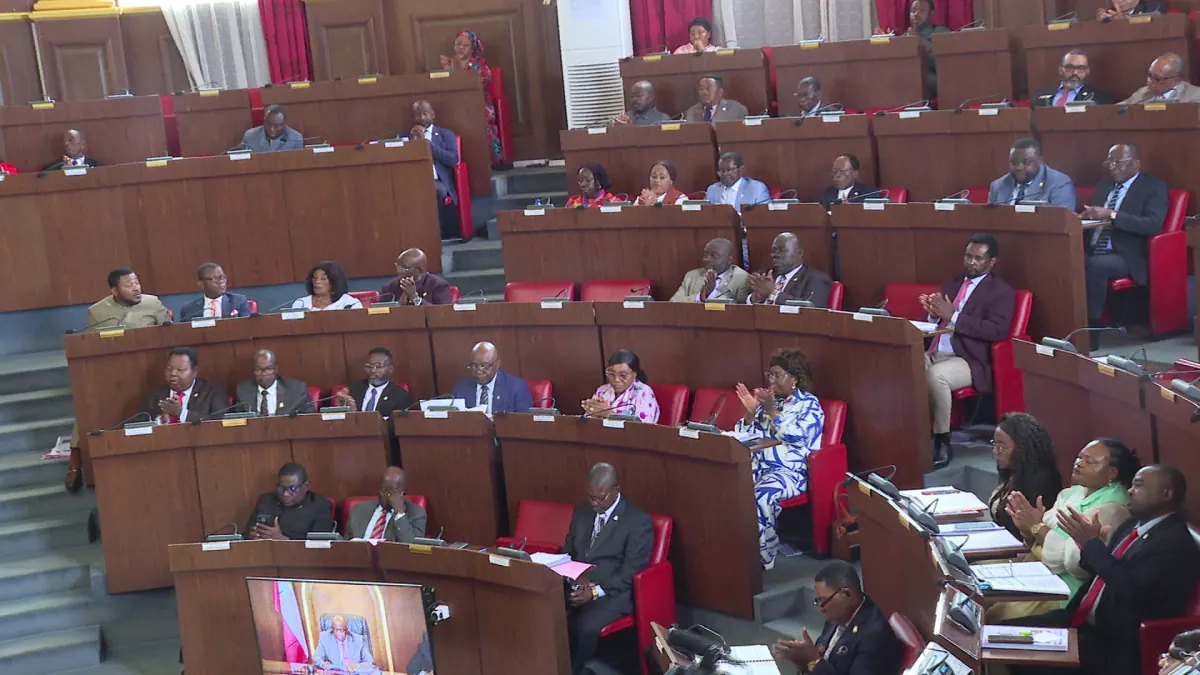
The Ministry of Environment and Blue Economy in Equatorial Guinea recently appeared before parliament to outline its plan to revitalize the country's fishing industry. This move follows a similar presentation by the Minister of Agriculture, Livestock, and Forests, Benjamín Mitogo Bielo. The plan aims to increase fish production through sustainable development of industrial and artisanal fishing, as well as aquaculture.
According to Esono Mba, the Minister of Environment and Blue Economy, the project seeks to ensure a better supply of fresh and smoked fish in local markets, reduce imports, and explore export opportunities to neighboring countries. The project, known as the Program for the Sustainable Development of Artisanal and Industrial Fishing and Aquaculture (PASPA), is being implemented across all provinces with a budget of 45.896 billion CFA francs.
The PASPA project is being financed 79% by the African Development Bank and 21% by the Equatorial Guinean government. The ministry expects the project to contribute to food security, job creation, and access to clean water and sanitation in its areas of intervention. Additionally, the project will provide training for young specialists and entrepreneurs in the sector.
The ministry has already completed several initiatives under the project, including the rehabilitation and launch of fish complexes in Elasock (Mongomo) and Ayantangan (Micomeseng), as well as the construction of another in Oveng. Other completed projects include a unit for the conservation, sale, and transformation of seafood in Minang (Ebebiyin), the acquisition of a fishing boat, and the drilling of 78 wells for clean water.
The ministry has also reported progress in other areas, including the construction of school latrines in 34 districts and the formalization of 370 small operator groups. However, Esono Mba noted that the project faces several challenges, including insufficient operating funds, a reduction in personnel due to months of unpaid salaries, delays in some works, and slow approval of files by the African Development Bank.
Despite these challenges, the national coordination of the project remains committed to executing the planned activities. The ministry's efforts aim to boost the country's fishing industry, which is expected to have a positive impact on the economy and the livelihoods of local communities.
The project is expected to have a significant impact on the country's food security and economy. With the support of the African Development Bank and the government, the ministry is confident that the project will achieve its objectives and improve the lives of Equatorial Guineans.
Key points
- The project aims to increase fish production and reduce imports.
- The project is being financed 79% by the African Development Bank and 21% by the Equatorial Guinean government.
- The project faces several challenges, including insufficient operating funds and delays in some works.