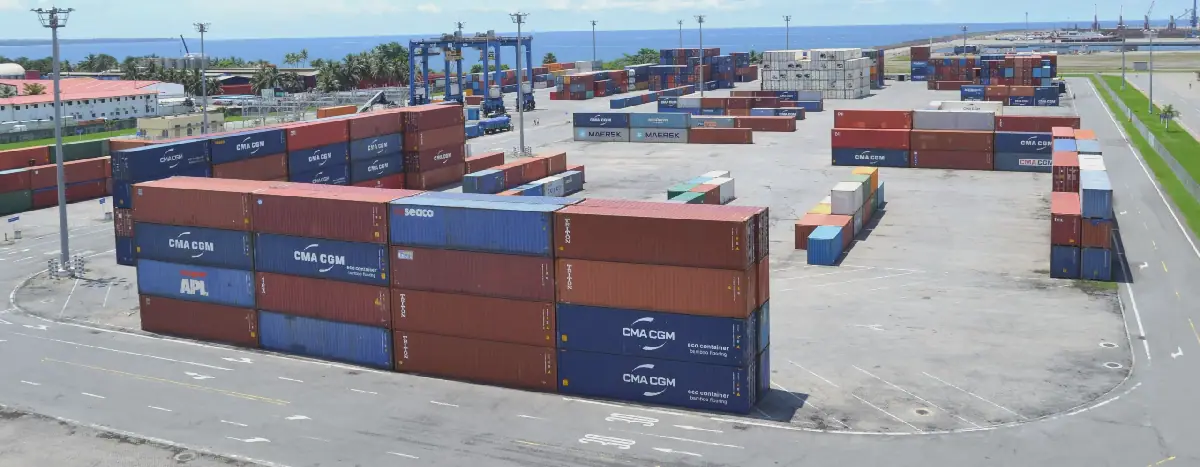
Equatorial Guinea's export sector experienced a decline in 2025, with total exports reaching 2.520.441 billion CFA francs, representing an 8.7% decrease from 2024. The country's primary export commodities included crude oil, natural gas, and wood products. Crude oil accounted for 30.5% of total exports, followed by liquefied natural gas at 25%, and wood and its manufactures at 7.7%.
The Institute for National Statistics of Equatorial Guinea (INEGE) reported that the decline in exports was accompanied by a significant increase in imports. In 2025, imports totaled 1.271.755 billion CFA francs, marking a 34.6% rise from the previous year. This increase is largely attributed to improved customs declaration coverage following the implementation of the SIDUNEA system in Bata, Malabo, and Luba.
The SIDUNEA system, which was introduced to modernize customs services, has led to more comprehensive reporting of import data. As a result, refined petroleum products, including gasoline, diesel, kerosene, and lubricants, comprised 57.6% of the total import value. Medicines accounted for 8.7% of imports.
In terms of trade partners, Equatorial Guinea exported goods to 75 countries in 2025. The United States was the leading destination for these exports, accounting for 26.6% of the total export value. China, Spain, the Republic of Korea, and Italy followed as major export markets, with shares of 17.5%, 6.6%, 6.1%, and 6%, respectively.
On the import side, 96 countries supplied goods to Equatorial Guinea. Togo emerged as the primary source of imports, making up 56.9% of the total import value. Spain, the United States, Belgium, and China were the next major import partners, with shares of 13.7%, 9.3%, 3.7%, and 3.3%, respectively.
Despite the decline in exports and the rise in imports, Equatorial Guinea maintained a positive trade balance in 2025. The country's trade surplus stood at 1.248.685 billion CFA francs for the year. This positive balance indicates that the value of goods exported still exceeded the value of goods imported.
The INEGE data suggests that Equatorial Guinea's economy continues to be influenced by its significant hydrocarbon reserves. The country's trade performance in 2025 reflects both global market trends and domestic production capacities. Moving forward, the impact of global economic conditions and energy market dynamics on Equatorial Guinea's trade balance will be closely watched.
Key points
- Equatorial Guinea's exports declined 8.7% in 2025, primarily due to decreased crude oil and natural gas exports.
- The country's imports surged 34.6% in 2025, driven by improved customs declaration coverage and increased demand for refined petroleum products.
- Despite the decline in exports and rise in imports, Equatorial Guinea maintained a positive trade balance of 1.248.685 billion CFA francs in 2025.
Reporting sources
- Las exportaciones de Guinea Ecuatorial caen un 8,7 % en 2025, mientras que las importaciones aumentan un 34,6 % · AHORAEG Guinea Ecuatorial - Diario online líder de noticias