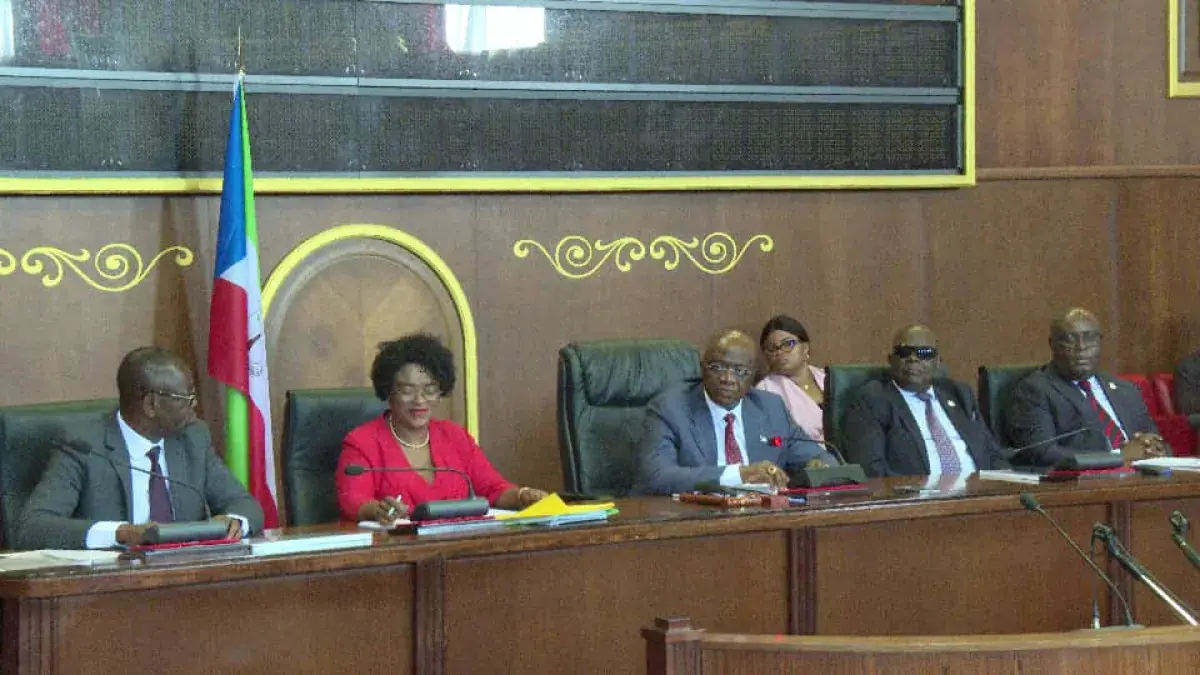
The government of Equatorial Guinea has taken a significant step towards safeguarding the intellectual property rights of its citizens by introducing a bill to the Chamber of Deputies. This proposed legislation seeks to reinforce the protection of copyright and folklore, covering a wide range of creative works including literature, music, drama, art, and more. The bill aims to bring the country's laws up to date with the current technological and social landscape.
The need for this legislation is underscored by the profound transformations that have taken place over the last century. The government believes that an updated law is necessary to align with the nation's cultural policy and to effectively manage the collective rights of authors. The proposed bill establishes a framework for the protection of original works, including those expressed through various media such as books, music compositions, and digital programs.
A key aspect of the bill is the recognition of both public and private property rights, with an emphasis that property is inviolable. The government can only deprive individuals of their goods and rights for reasons of public utility and with corresponding compensation. This underlines the commitment to protecting the intellectual property of creators while also ensuring that the law serves the broader public interest.
The legislation also focuses on the collective management of copyright and the regulation of new technological modes of dissemination and consumption of protected works. It outlines different forms of infringement and violation of these rights, providing a clearer legal framework for enforcement. This move is expected to encourage the development of art and culture by ensuring that creators receive adequate recognition and protection for their work.
A special protection clause has been included for traditional cultural expressions and folklore, which are considered part of the national cultural heritage. Any exploitation of these for profit will require prior authorization from a national collective management body, which is set to be established, and the payment of a prescribed fee. This measure aims to preserve and promote Equatorial Guinea's rich cultural heritage.
The process of adopting this bill has involved analyzing and approving articles that define its object, the content of copyright, exclusions, and definitions of relevant concepts. However, the article specifying the scope of application of the future law is pending reformulation. Once finalized, the law is expected to provide comprehensive protection for creators and contribute to the country's cultural development.
The government's initiative reflects its commitment to fostering a conducive environment for artistic and intellectual creativity. By protecting the rights of authors and preserving cultural heritage, Equatorial Guinea aims to promote a vibrant cultural scene. The bill's progression through the legislative process will be closely watched by stakeholders in the creative industry.
Key points
- The bill aims to update Equatorial Guinea's laws on copyright and folklore to align with current technological and social changes.
- The proposed law includes special protections for traditional cultural expressions and folklore, treating them as national cultural heritage.
- The legislation establishes a framework for the collective management of rights and the regulation of new technologies in the dissemination of protected works.