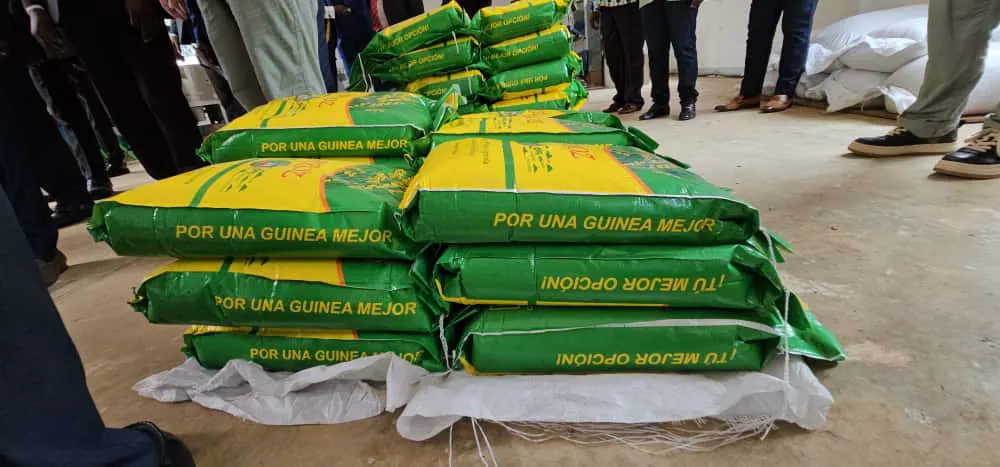
Equatorial Guinea's Deputy Minister of Agriculture, Diosdado Obiang Mbomio, has praised the country's collaboration with China in improving rice production. The initiative has yielded high-quality rice with stable yields, earning recognition locally. Mbomio attributed the success to the long-standing friendship and practical cooperation between the two nations. The project involved China's State Administration for Market Regulation (SAMR) connecting its agricultural expertise with standards applicable to local producers.
The partnership is part of China's technical assistance project for Equatorial Guinea, which leverages the strengths of Jiangxi Province in rice varieties and agricultural technology. The goal is to adapt these practices to local conditions, a process that required years of experimentation. In 2018, Chinese technical teams, guided by experts from the Chinese Academy of Sciences, conducted successful rice cultivation tests. These trials enabled the definition of three adapted association standards for Equatorial Guinea.
The standards cover manual rice transplanting, dry-seeded rice cultivation in wet conditions, and ratoon rice cultivation during the dry season. To promote the use of these methods, Chinese experts have provided technical training and on-site guidance to nearly 3,000 participants. The SAMR reports that demonstrations and regular agricultural extension support are helping local workers apply standardized methods to rice and other crops.
The project aims to develop the necessary skills to sustain production beyond a single harvest. By adapting Chinese agricultural practices to Equatorial Guinea's climate, soil, and water conditions, the partnership seeks to ensure long-term benefits. The collaboration is part of China's Belt and Road Initiative, which promotes connectivity in agricultural standards and norms.
The success of the project is attributed to the close cooperation between Chinese and Equatorial Guinean experts. The technical assistance provided has enabled local farmers to improve their yields and produce high-quality rice. The partnership has also facilitated the transfer of knowledge and skills, which will continue to benefit the local agricultural sector.
The use of improved seeds and adapted agricultural standards has significantly enhanced rice production in Equatorial Guinea. The project's impact is expected to extend beyond the current harvest, with the potential to increase food security and improve the livelihoods of local farmers. The collaboration between China and Equatorial Guinea serves as a model for future partnerships in the agricultural sector.
As the project continues to yield positive results, it is likely to attract further investment and cooperation in the agricultural sector. The success of the initiative will be closely monitored, and its findings may be applied to other countries seeking to improve their agricultural productivity. The partnership between China and Equatorial Guinea has demonstrated the potential for international cooperation to drive sustainable agricultural development.
Key points
- China and Equatorial Guinea collaborate to improve rice production with adapted seeds and farming practices.