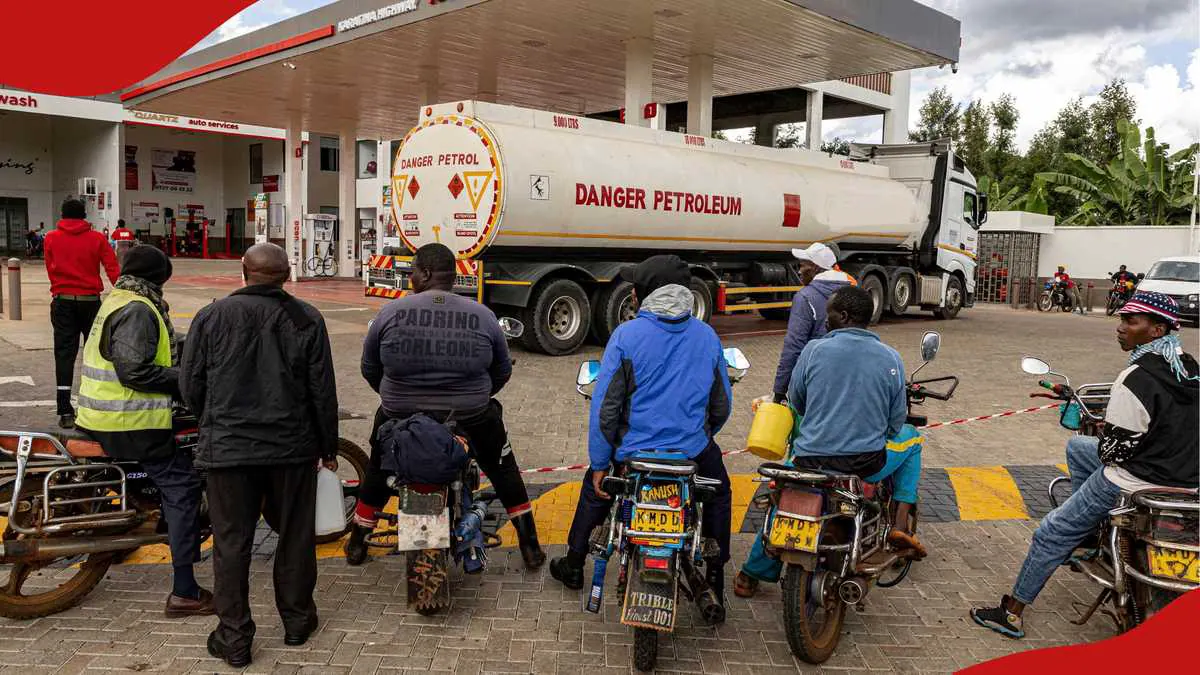
The Energy and Petroleum Regulatory Authority (EPRA) in Kenya has introduced new regulations for the petroleum road transportation business, requiring applicants to meet 10 specific requirements before receiving a licence. These regulations, gazetted in May 2025, aim to establish a three-layer authorisation system covering the business itself, each tanker, and each driver. The new rules are part of the Petroleum (Licensing of Petroleum Road Transportation Business) Regulations, 2025.
To obtain a business licence, applicants must submit a completed Form 1 with business registration details, county of operation, and contact information. They must also provide company shareholder and director records, identification documents, and disclose parent company information if applicable. Additionally, applicants need to obtain a valid work permit for foreign directors, a tax compliance certificate, and a county trade licence.
The regulations also require applicants to have an emergency response plan, a signed environment liability policy, and pay a prescribed fee. Licences will be valid for 24 months, and EPRA must process applications within 30 days. The application fee for a licence is KSh 10,000, with renewal costs at KSh 5,000 and amendments to an existing licence attracting KSh 1,000.
A company licence alone does not authorise operations; each tanker must carry its own permit, which costs KSh 1,000 to obtain. The permit application requires a roadworthiness inspection certificate, a vehicle registration certificate, a tank calibration certificate, and proof of a GPS tracking device installation. Every driver must separately obtain a driver's certificate, also at KSh 1,000.
Petroleum trucking companies in Kenya determine their earnings through a regulated formula set by EPRA, which controls the maximum margins that oil marketing companies are permitted to pay transporters for moving fuel. The regulated transport margin functions as a ceiling, not a fixed rate. A trucking firm negotiates its actual payment with an oil marketing company but cannot charge above the EPRA cap.
For short-haul routes below 40 kilometres, the margin for transporting petrol was raised to KSh 1.18 per litre from KSh 0.54. For long-distance routes above 40 kilometres, the rate is calculated per cubic metre per kilometre and was increased to KSh 19.28 per m³/km from KSh 11.98. A standard tanker carrying 30,000 litres has gross earnings of KSh 35,400 for a short trip within 40 km from the depot.
The impact of these adjustments feeds directly into pump prices. A company's gross earnings are determined by multiplying the applicable regulated margin by the total volume of fuel transported. EPRA convened a stakeholder forum in Nairobi on September 23 to discuss the Petroleum (Lubricants Facility Construction and Business Licensing) Regulations, 2025, bringing together industry players to review compliance requirements and implementation.
Key points
- Applicants must meet 10 requirements, including submitting emergency response plans and tax compliance certificates.
- The application fee for a licence is KSh 10,000, with renewal costs at KSh 5,000.
- Petroleum trucking companies determine earnings through a regulated formula set by EPRA.