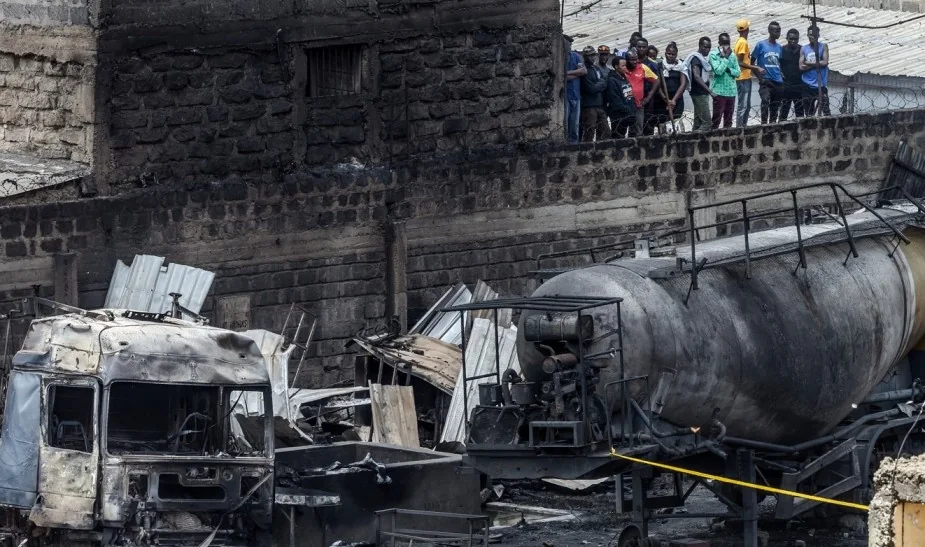
According to the Energy and Petroleum Regulatory Authority (EPRA), 121 accidents involving petroleum and LPG were recorded in Kenya during the year ending June 30, 2026. These incidents resulted in 22 fatalities and 188 injuries. The accidents involved various types of vehicles and sites, including petroleum tankers, LPG tankers, and retail stations. EPRA's report highlights the risks associated with the transportation and handling of petroleum and LPG products in the country.
Petroleum tankers were involved in 77 accidents, accounting for 63.6% of all reported cases. These incidents resulted in 17 deaths and 135 injuries. LPG tankers, on the other hand, were involved in 19 accidents, representing 15.7% of the total, and injured 16 people, but no deaths were recorded. Additionally, nine accidents involving LPG among domestic users were reported, resulting in two deaths and seven injuries.
The EPRA report also reveals that human error by drivers was the most common cause of accidents, accounting for 46.3% of cases. Third-party involvement or other vehicles contributed to 20.7% of accidents, while gaps in transporters' safety management systems accounted for 14%. Equipment and vehicle maintenance problems, as well as unsafe LPG handling and siting, also contributed to the accidents.
The counties with the highest number of accidents were Kakamega (16), Bungoma (13), Nakuru (11), and Uasin Gishu (11). Bungoma recorded the highest number of injuries (55) and fatalities (5), followed by Kakamega (3 fatalities, 11 injuries), Nakuru (1 death, 23 injuries), and Uasin Gishu (2 deaths, 13 injuries). Other counties, such as Busia, Makueni, Nairobi, Kisumu, Murang'a, and Kilifi, also reported accidents, injuries, and fatalities.
In addition to petroleum and LPG-related accidents, EPRA reported a decline in electrical accidents during the year, with 129 incidents recorded, down from 141 in the previous year. Despite the decline, electrical accidents resulted in 82 human deaths, 43 human injuries, and 19 animal deaths. To improve compliance and safety, EPRA conducted 4,845 inspections during the reporting period, covering retail and wholesale sites, LPG road tankers, and storage and filling plants.
EPRA also carried out technical audits at 65 LPG storage and filling plants to ensure they met safety, environmental, health, and regulatory requirements. The regulator received 489 complaints and resolved 482 of them, while seven complaints were still being reviewed. EPRA also dealt with 187 disputes, resolving 161 (86.1%) by the end of June 2026.
Kenya Power was involved in the largest share of disputes (165 cases, 88.2%), followed by KETRACO (8 disputes, 4.3%), and REREC (3 cases, 1.6%). The majority of disputes (72 cases) were related to billing, followed by disconnections (50 cases) and infringement-related disputes (30 cases). EPRA's report highlights the need for continued efforts to improve safety and compliance in the energy sector.
Key points
- 22 people died and 188 were injured in petroleum and LPG-related accidents in Kenya from July 2025 to June 2026.
- Human error by drivers was the most common cause of accidents, accounting for 46.3% of cases.
- EPRA conducted 4,845 inspections during the reporting period to improve compliance and safety.