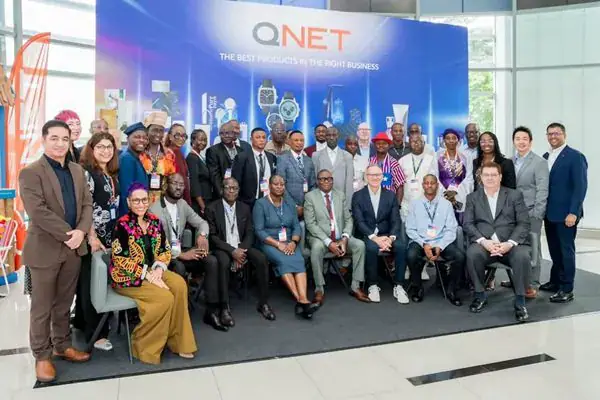
The Economic and Organised Crime Office (EOCO) recently led a delegation of law enforcement officials from 12 West and Central African countries to Kuala Lumpur, Malaysia. The fact-finding mission, organised with the International Criminal Police Organisation (INTERPOL), aimed to understand how criminal networks use recruitment messages and marketing structures to lure vulnerable people into human trafficking and financial exploitation. This trip followed a Regional Coordination and Case Resolution Workshop held in Accra from July 6 to 9, 2026.
The delegation included representatives from the National Central Bureaus of 12 INTERPOL member countries and officials from INTERPOL's General Secretariat in Lyon, France. During the visit, delegates received briefings from QNet's team on how direct-selling structures and brands are allegedly being exploited by criminal groups. They learned about cases involving the impersonation of brands, including fake scholarship schemes and fraudulent job offers falsely linked to Quest International University (QIU).
The delegation participated in strategic roadmap sessions facilitated by INTERPOL, focusing on human trafficking, migrant smuggling, and the growing connection between these crimes and online scams. These sessions provided an opportunity for law enforcement officials to engage directly with QNet's leadership and discuss practical ways of working together to tackle online scams and deceptive recruitment practices.
EOCO reaffirmed its commitment to working with INTERPOL, participating countries, and other international partners to combat human trafficking, migrant smuggling, and related economic crimes. The office recognised the importance of collaboration in addressing these complex issues. By working together, law enforcement agencies can share intelligence, best practices, and strategies to disrupt and dismantle human trafficking networks.
The "Model Q" syndicate has been linked to various human trafficking and migrant smuggling cases in West and Central Africa. EOCO and INTERPOL have been working to disrupt the syndicate's operations and bring those responsible to justice. The fact-finding mission to Malaysia was a key step in this effort, providing valuable insights into the tactics and strategies used by the syndicate.
Human trafficking and migrant smuggling are significant challenges in West and Central Africa, with many countries in the region affected by these crimes. The issue is complex, involving multiple factors such as poverty, lack of opportunities, and weak border controls. Addressing these challenges requires a coordinated and sustained effort from law enforcement agencies, governments, and international partners.
The EOCO-INTERPOL collaboration is a significant step towards addressing human trafficking and migrant smuggling in West and Central Africa. By working together, law enforcement agencies can make a meaningful impact in the region and bring those responsible for these crimes to justice. The effort will continue, with ongoing collaboration and coordination between EOCO, INTERPOL, and participating countries.
Key points
- EOCO led a delegation of 12 West and Central African countries to Malaysia to combat human trafficking and migrant smuggling.
- The fact-finding mission aimed to understand how criminal networks use recruitment messages and marketing structures to lure vulnerable people into human trafficking and financial exploitation.
- EOCO reaffirmed its commitment to working with INTERPOL and international partners to combat human trafficking, migrant smuggling, and related economic crimes.