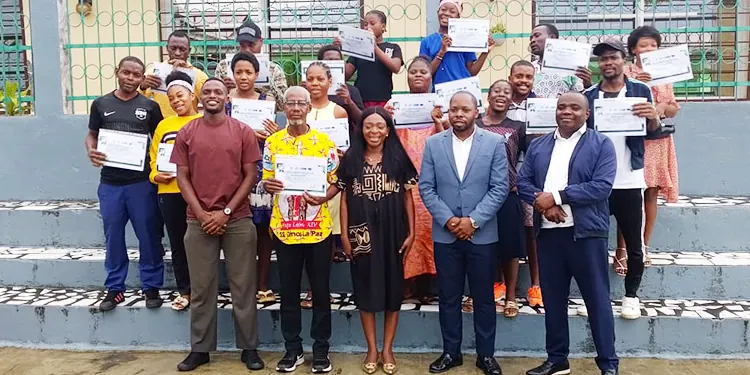
The Centro Virgen del Carmen in Campo Yaude hosted the workshop, titled "Recycling of Waste for the Manufacture of Decorative Objects and Environmental Entrepreneurship Training," from August 24 to September 25, 2026. This initiative aimed to promote environmental education, responsible waste management, and sustainable entrepreneurship opportunities. Participants gained practical skills in transforming waste into decorative objects and products with potential for use and commercialization.
The workshop covered environmental entrepreneurship, encouraging creativity, initiative, and exploration of economic alternatives linked to environmental protection. The program equipped participants with the skills to convert discarded materials into valuable products. This hands-on approach enabled them to develop innovative solutions for sustainable waste management.
The closing ceremony was led by Miguel EBAHA EHATE, president of Guinea Flores NGO, alongside members of the Centro Virgen del Carmen's directive board and local authorities. They recognized the participants' efforts and acknowledged the importance of promoting a culture of recycling, reuse, and environmental protection, particularly among young people and local communities.
In his closing remarks, EHATE emphasized that waste can become a resource when combined with education, creativity, and civic commitment. He encouraged continued support for initiatives that contribute to sustainable development, environmental protection, and community strengthening. The NGO expressed gratitude to the Government of Equatorial Guinea for its ongoing support and to the European Union for its financial backing.
The workshop was made possible through collaborations with various organizations, including Aldeas Infantiles SOS and the newspaper AhoraEG, which contributed to the dissemination of social and environmental initiatives. Guinea Flores NGO reaffirmed its commitment to promoting environmental education, circular economy, recycling, green entrepreneurship, and community participation.
The organization aims to build cleaner, more sustainable communities that prioritize environmental protection. By equipping participants with practical skills and knowledge, the workshop has empowered them to drive positive change in their community. The initiative has also fostered a sense of responsibility and ownership among participants, encouraging them to adopt environmentally friendly practices.
The successful conclusion of the workshop marks a significant milestone in Guinea Flores NGO's efforts to promote sustainable development and environmental protection in Equatorial Guinea. The organization will continue to implement initiatives that support the country's environmental goals and promote a culture of sustainability.
Key points
- The workshop provided practical training on recycling and transforming waste into decorative objects and products.
- The initiative aimed to promote environmental education, responsible waste management, and sustainable entrepreneurship opportunities.
- The NGO plans to continue promoting environmental education, circular economy, and green entrepreneurship in the region.