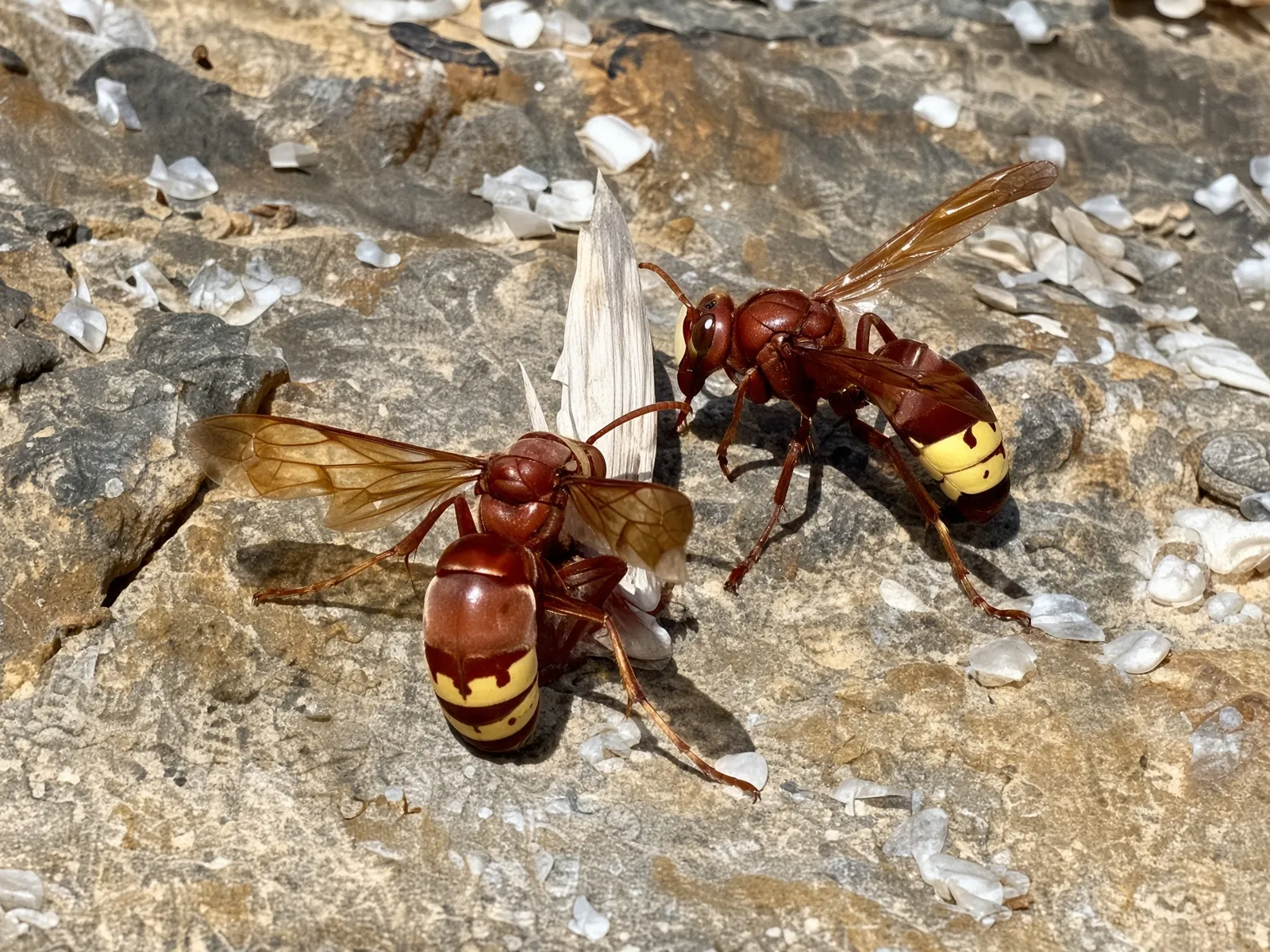
Morocco's environmental watchdog, OPEMH, has issued an urgent warning following the spread of the Eastern yellowjacket wasp (Vespa orientalis) in several northern regions, including Tangier, Tétouan, and Fnideq. The wasp, characterized by its distinctive red-brown and yellow coloration, is larger and more aggressive than common wasps. According to OPEMH, the warning is based on a 2026 scientific study that documented the presence of the Vespa genus in Morocco for the first time, following field observations in 2025.
The study confirmed the establishment of both the Eastern yellowjacket and the European hornet (Vespa crabro) in northern Morocco, highlighting the need for enhanced monitoring to assess the impact on beekeeping, ecosystems, and public health. OPEMH noted that the Vespa genus was previously undocumented in Morocco, despite its presence in parts of northeastern Africa and the Sahara Desert. The organization's warning suggests that the wasp's presence in the northern coastal region indicates a significant geographical expansion, facilitated by climate change and increased trade with southern Spain.
The Eastern yellowjacket is a social, predatory insect that targets honey bees (Apis mellifera). It not only kills worker bees at the hive entrance but also causes continuous stress to the colony, reducing foraging activity and potentially spreading bee viruses. International studies have found that the wasp's body can carry common viruses such as deformed wing virus, acute paralysis virus, and black queen cell virus. In Spain, the wasp's invasion led to significant losses, with thousands of beehives destroyed in Cadiz and southern Seville.
In addition to the risks to beekeeping, the wasp's presence in urban areas poses a threat to public health. In Tétouan, a large nest was discovered near an elementary school, raising concerns about potential attacks on children and passersby. Beekeepers have also reported incidents of people being stung, with one woman allegedly losing consciousness and being hospitalized. The wasp's sting can be painful and, in some cases, life-threatening for individuals with severe allergies.
OPEMH and beekeepers are urging people not to approach or attempt to remove wasp nests on their own. Disturbing the colony can trigger a collective defense response, leading to attacks. Instead, they recommend reporting sightings to the authorities and leaving removal to trained professionals. The correct approach involves reporting, documenting the location if possible, and allowing specialized teams to assess and intervene.
OPEMH is calling on authorities to take immediate action, based on scientific knowledge, to mitigate the risks associated with the invasive wasp. The organization's proposals include conducting an urgent, coordinated field survey in Tangier and other northern regions to map the wasp's distribution, establishing a regional monitoring and early warning system, and developing a comprehensive management plan that involves scientific assessment, professional intervention, and support for beekeepers.
The situation in northern Morocco is being closely monitored, with OPEMH emphasizing that the current reports are an early warning, rather than a comprehensive assessment of the wasp's spread. The organization stresses that delaying action will allow the wasp to establish itself, making it more challenging to control. The experience in Spain and Italy serves as a warning, highlighting the importance of swift and coordinated action to prevent the wasp's establishment and minimize its impact on the environment, economy, and public health.
Key points
- The Eastern yellowjacket wasp poses significant risks to beekeeping and public health in northern Morocco.
- OPEMH is urging authorities to take immediate action to mitigate the risks associated with the invasive wasp.
- The correct approach involves reporting sightings, documenting locations, and allowing specialized teams to assess and intervene.