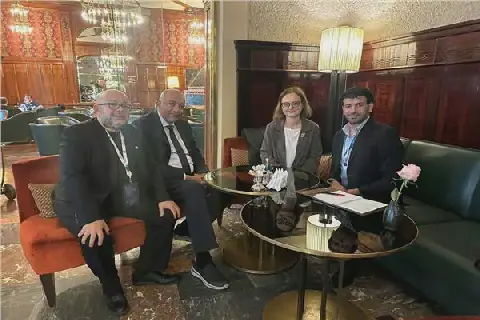
Prof. Oladapo Ashiru, Secretary General of the International Federation of Fertility Societies (IFFS), has emphasized the need for greater attention to environmental toxins as a possible factor in infertility and assisted reproductive treatment. He made this call during the second African Federation of Fertility Societies (AFFS) and 16th Association for Fertility and Reproductive Health (AFRH) meeting in Abuja. Ashiru urged couples to undergo appropriate assessment before conception to minimize the risks associated with environmental toxins.
Exposure to chemicals in air, water, food, soil, and everyday products can significantly affect sperm, eggs, and developing babies. Endocrine-disrupting chemicals (EDCs) are particularly concerning, as they may interfere with reproductive health. Ashiru's presentation highlighted that routine semen analysis does not explain an estimated 30 to 40 per cent of male-factor infertility. Instead, factors such as sperm DNA damage, oxidative stress, and epigenetic changes are increasingly recognized as influences on embryo development and live birth.
Research has linked sperm DNA fragmentation above 30 per cent with reduced blastocyst formation during IVF. Agricultural workers exposed to organophosphate pesticides have recorded about 50 per cent higher sperm aneuploidy, while pesticide exposure has been associated with poorer IVF outcomes. Furthermore, occupational exposure to bisphenol A (BPA) has been linked with a higher risk of low sperm concentration, and associated phthalates with poorer semen quality.
The presentation also identified lead, cadmium, and mercury as substances capable of accumulating in reproductive tissues. Sperm DNA fragmentation was reported to rise by about eight per cent for every doubling of seminal cadmium. Additionally, exposure to air pollutants, including PM2.5 and nitrogen dioxide, in the 90 days before semen collection was linked to reduced sperm motility. These findings underscore the need for awareness and action to mitigate the effects of environmental toxins on fertility.
Ashiru highlighted environmental exposure risks in Nigeria's oil-producing Niger Delta, including oil spills and pollution of air and water. Climate change, mining, deforestation, pesticides, and industrial chemicals are broader environmental factors requiring attention. He emphasized that every couple deserves to begin their journey to parenthood in the healthiest possible environment, free from the adverse effects of toxins.
On preconception detoxification, Ashiru's presentation described an approach used at the MART/MARTLIFE Detox Clinic based on Modern Mayr Therapy. This approach combines measures including lymphatic drainage enhancement, infrared cabin sessions, hydrotherapy, oxygen-based therapies, antioxidant therapy, and orthomolecular supplementation. Patients are referred to based on their medical history, occupational exposure, or unexplained IVF failure.
The presentation reported findings from a comparison involving 131 patients who underwent detoxification and 87 who did not. Pregnancy rates were 41.2 per cent and 31 per cent respectively, while clinical pregnancy rates were 27.5 per cent and 21.8 per cent. Live birth rates were reported as 23.7 per cent among those who underwent detoxification, compared with 15 per cent among those who did not. Ashiru called for greater advocacy, public and clinician education, as well as further research into environmental exposures and fertility.
Key points
- Environmental toxins, such as endocrine-disrupting chemicals, can significantly impact fertility and IVF success.
- Exposure to certain chemicals and pollutants has been linked to poorer IVF outcomes and reduced sperm quality.
- Preconception detoxification may help improve fertility and IVF success rates by removing nutritional toxins and heavy metals.