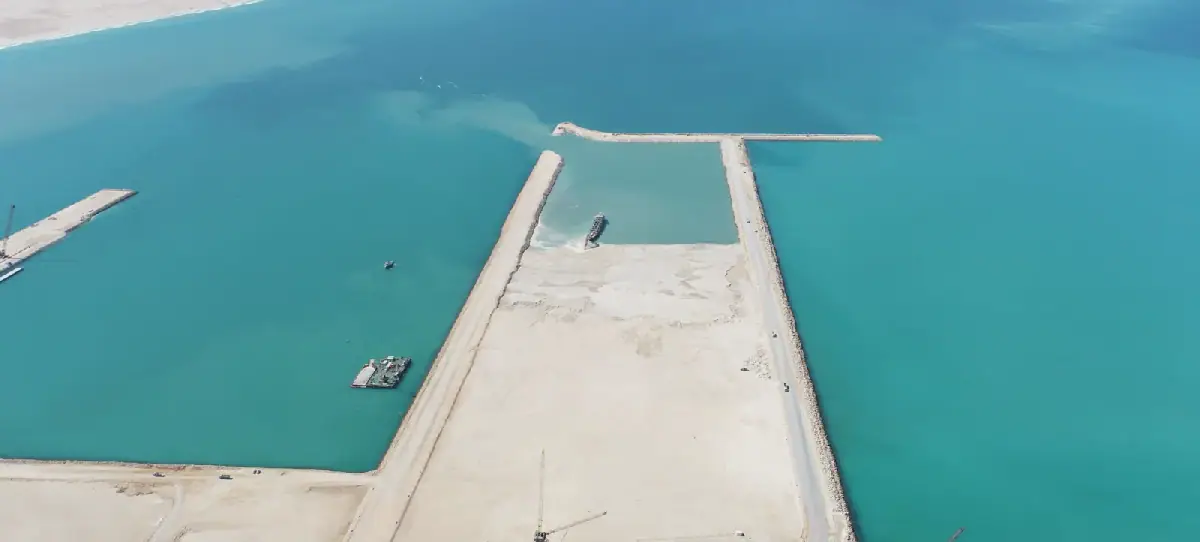
The Port Dakhla Atlantique project, located on the Atlantic coast north of Dakhla, Morocco, presents significant environmental challenges due to its oceanic setting. The construction process involves dredging, filling, and building marine structures, raising concerns about seabed changes, ocean current circulation, and sediment transport. According to Nisrine Iouzzi, the project's environmental considerations have been integrated into its design. The project's location on a dynamic coastline demands a thorough understanding of natural phenomena and careful planning.
The port's design is based on studies of wave patterns, ocean currents, and sediment transport. These studies utilize numerical modeling to simulate various oceanic conditions, including severe storms, and assess the potential effects of the port on the coastline. One key design decision is the port's island configuration, connected to the mainland by a 1.330-meter-long bridge. Iouzzi states that this design addresses operational and environmental concerns, aiming to preserve natural ocean current circulation and sediment transport along the coast.
The port's configuration is intended to minimize disruption to the natural flow of currents and sediment along the coast. Iouzzi emphasizes that sediment dynamics are complex and influenced by multiple factors, including wave patterns, ocean currents, and weather events. The models used must identify potentially sensitive areas, anticipate coastline changes, and evaluate the effectiveness of planning decisions. These projections must be interpreted with consideration for the uncertainties inherent in oceanic phenomena.
Environmental measures for the project are based on prevention and impact reduction principles, as required by the environmental impact study. The approach prioritizes solutions that avoid harm to sensitive environments and limit effects that cannot be entirely eliminated, particularly those related to dredging, filling, and construction of protective structures. Environmental monitoring will continue after the infrastructure is completed.
Iouzzi highlights the importance of ongoing environmental monitoring and evaluation. The project's design and implementation have incorporated measures to mitigate potential environmental impacts. The port's construction will require careful management of dredging and filling operations to minimize harm to the marine environment.
The Port Dakhla Atlantique project demonstrates Morocco's efforts to balance economic development with environmental protection. The project's environmental considerations reflect a commitment to responsible planning and management of oceanic resources. Iouzzi's expertise in hydrodynamics has been instrumental in shaping the project's design and implementation.
As the project moves forward, ongoing monitoring and evaluation will be crucial to ensuring that environmental concerns are addressed. The Port Dakhla Atlantique project serves as a model for sustainable development in Morocco and beyond. Effective management of environmental impacts will be essential to the project's long-term success.
Key points
- The Port Dakhla Atlantique project incorporates environmental considerations into its design to minimize harm to the marine environment.
Reporting sources
- Port Dakhla Atlantique : les enjeux environnementaux d’un chantier en milieu océanique · La Nouvelle Tribune