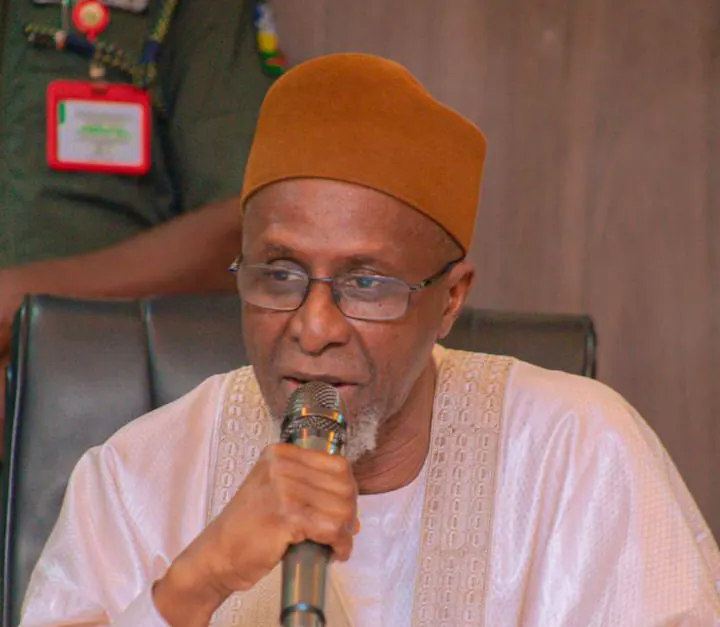
Nigeria's Minister of Environment, Balarabe Abbas Lawal, has urged state governments to strengthen climate governance institutions, integrate climate priorities into budgets and development plans, and mobilise investments to accelerate climate action. He made the call at the launch of the Third Edition of the Subnational Climate Governance Performance Rating and Ranking Report (SCGPRR 3.0) in Abuja. The minister stressed that Nigeria's climate ambitions could only be achieved through effective implementation at the state and community levels.
Lawal described climate change as a development, economic, social, and security imperative, noting that its impacts were increasingly evident in flooding, excessive heat, drought, pressure on agriculture and food systems, water resources, infrastructure, livelihoods, and human settlements. He said the Subnational Climate Governance Performance Rating and Ranking provides an evidence-based mechanism for assessing states' progress in climate governance and identifying areas requiring improvement.
The minister said the initiative evaluates whether states have functional climate governance structures, incorporate climate priorities into plans and budgets, mobilise resources, implement projects, and deliver measurable benefits to citizens. He noted that the initiative had recorded encouraging progress, including stronger climate institutions, improved policy and planning frameworks, better coordination, and increased implementation of climate-resilient and low-carbon initiatives.
Lawal identified stronger state climate institutions, increased integration of climate priorities into development plans and budgets, greater mobilisation of climate finance, improved pipelines of bankable projects, and effective implementation of adaptation and mitigation measures as key priorities. He also emphasised the need to ensure that climate interventions delivered tangible benefits to communities.
The minister urged governors to make climate action an integral part of their development and investment priorities, strengthen institutions responsible for implementation, and create an enabling environment for climate finance, private investment, and strategic partnerships. He encouraged every state to establish a clear pathway from policy to budget, from budget to projects, and from projects to measurable results.
Lawal commended high-performing states for their achievements, urging them to deepen implementation and share successful approaches with others. He also encouraged states still developing their climate governance systems to consolidate their progress and accelerate action, stressing that the exercise was designed to promote improvement rather than stigmatise states.
The Subnational Climate Governance Performance Rating and Ranking Report is an initiative of the Society for Planet and Prosperity (SPP) designed to assess and promote climate governance performance across Nigeria's states and the Federal Capital Territory. The minister reaffirmed the need for collective action to build a more resilient, low-carbon, and prosperous Nigeria.
Key points
- The Nigerian government is committed to supporting states through technical assistance, capacity development, and collaboration with relevant stakeholders.
- The Subnational Climate Governance Performance Rating and Ranking Report provides an evidence-based mechanism for assessing states' progress in climate governance.
- The minister urged stakeholders to use the third edition of the ranking to promote constructive learning, strengthen accountability, and translate climate commitments into tangible outcomes.